The social bear

The social bear

Bears are introverted animals, but they spend their lives trying not to feel lonely

READING TIME 11 MIN

The main mission of all living beings is to pass their genes on to the next generation and bears have amazing strategies to achieve this.

After months spent in the den, with the arrival of spring, the bears come out of their long torpor and prepare for their annual love ritual. Monogamy is unknown among these animals. Between April and July, males and females take part in a passionate game of partner swapping, at times with violent overtones and sometimes even with a tragic ending. It’s an exhausting few weeks for an adult male. First he must defend each conquered female from her other suitors, then he must convince her to mate. But for female bears, the most important task is to choose the best father for their offspring and to do this, they use very subtle tactics. Breeding is a really complex issue for bears, and the quality of their reproductive life is influenced not only by other individuals, but also by the environment they live in.

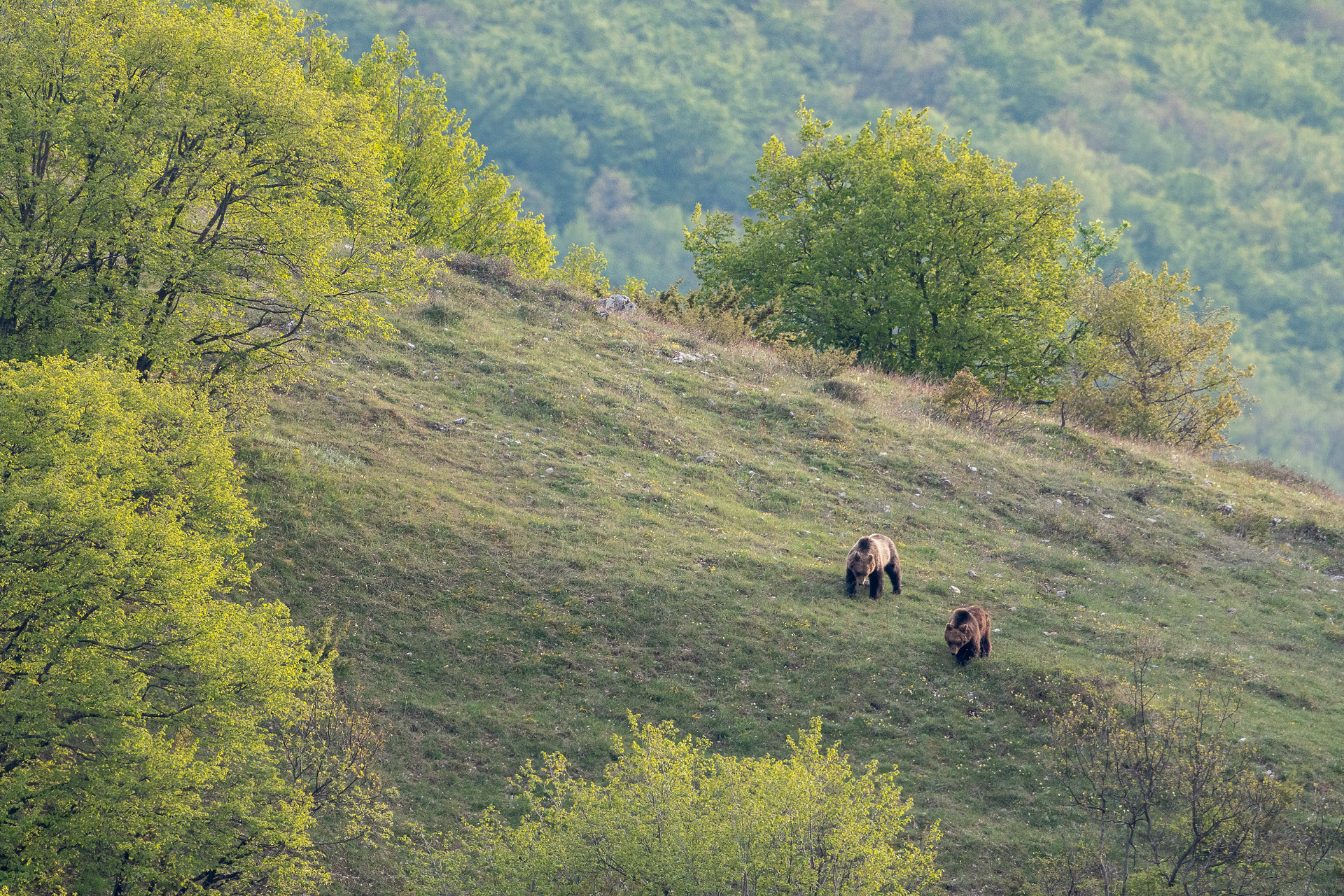
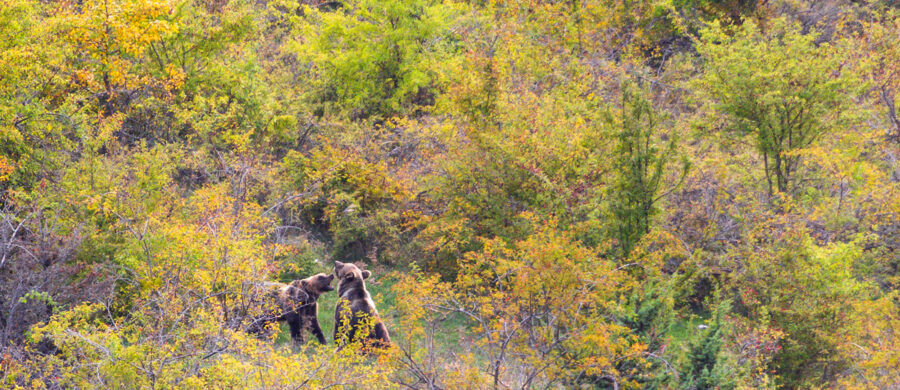
Effusions between two bears in early spring. The breeding season for these animals is quite long and can start as early as April.

If she’s lucky, a female bear will manage to carry no more than three or four pregnancies to term during her lifetime, each usually with two or three cubs. Sheltered inside a den, protected from predators and cold winter winds, a female bear gives birth to cubs weighing just over 500 grams. More than eight months pass from fertilisation to birth. However, after mating, the development of the embryo actually pauses, then if all goes well, resumes when the mother falls asleep and is then completed in just a couple of months.

Not all females are able to breed or successfully carry a pregnancy to term and the mortality rate of the cubs is high. Only half the young survive the first year of life.

In the Abruzzo, Lazio and Molise National Park with a population of about fifty individuals, an average of no more than three or four females give birth each year. For the new-born cubs, life is never easy. Competition between siblings begins from the first feeds and even before they turn two years old, the cubs are left alone by their mother. Cubs born to healthy mothers are certainly more likely to survive, but the quality of a young bear’s life is influenced by its resourcefulness and ability to adapt to living in a world of danger and changing seasons.
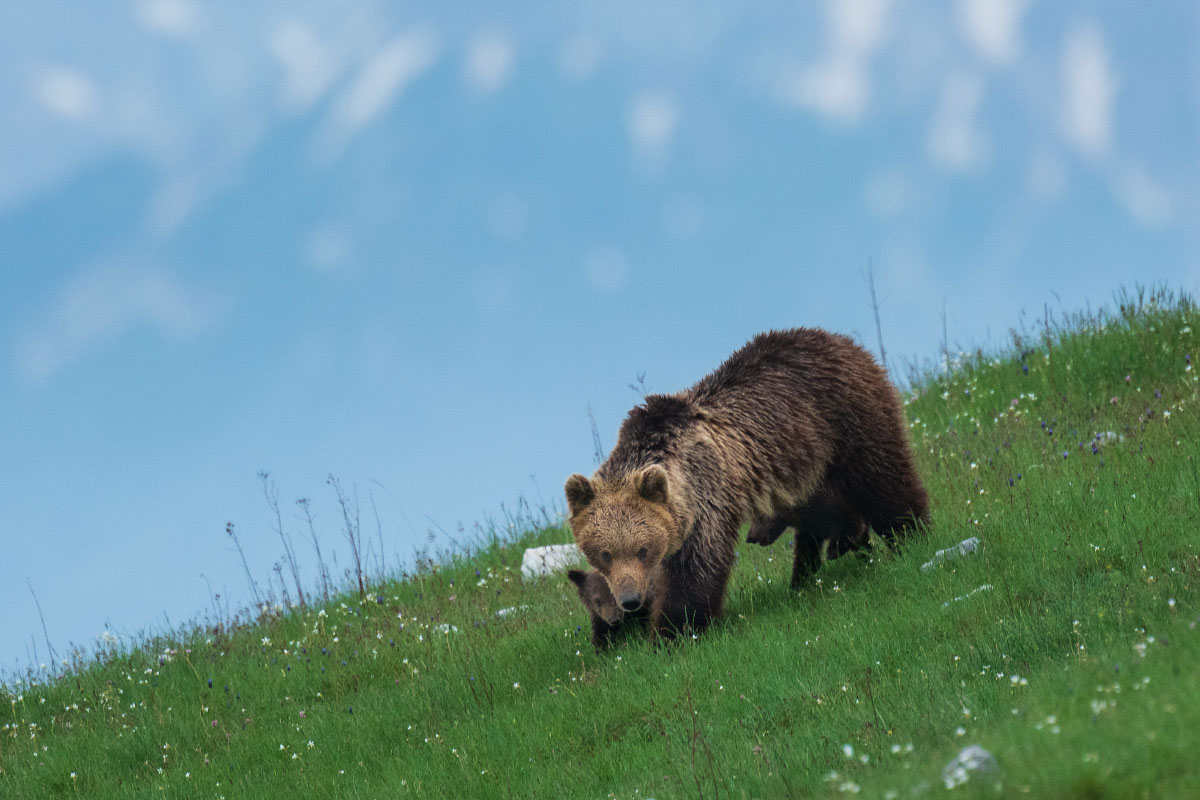
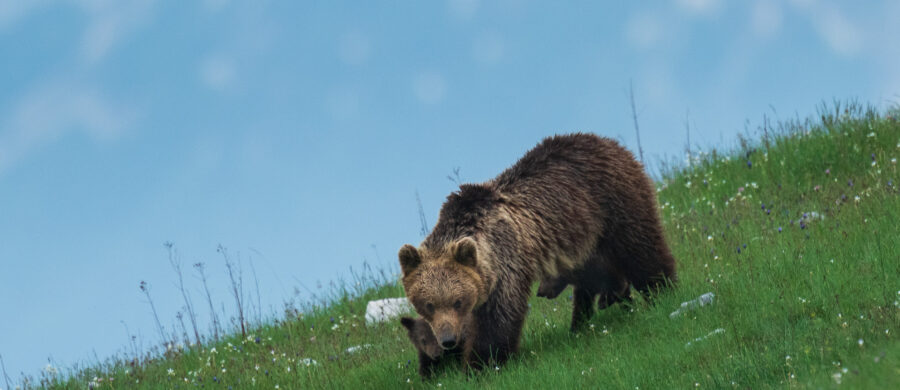
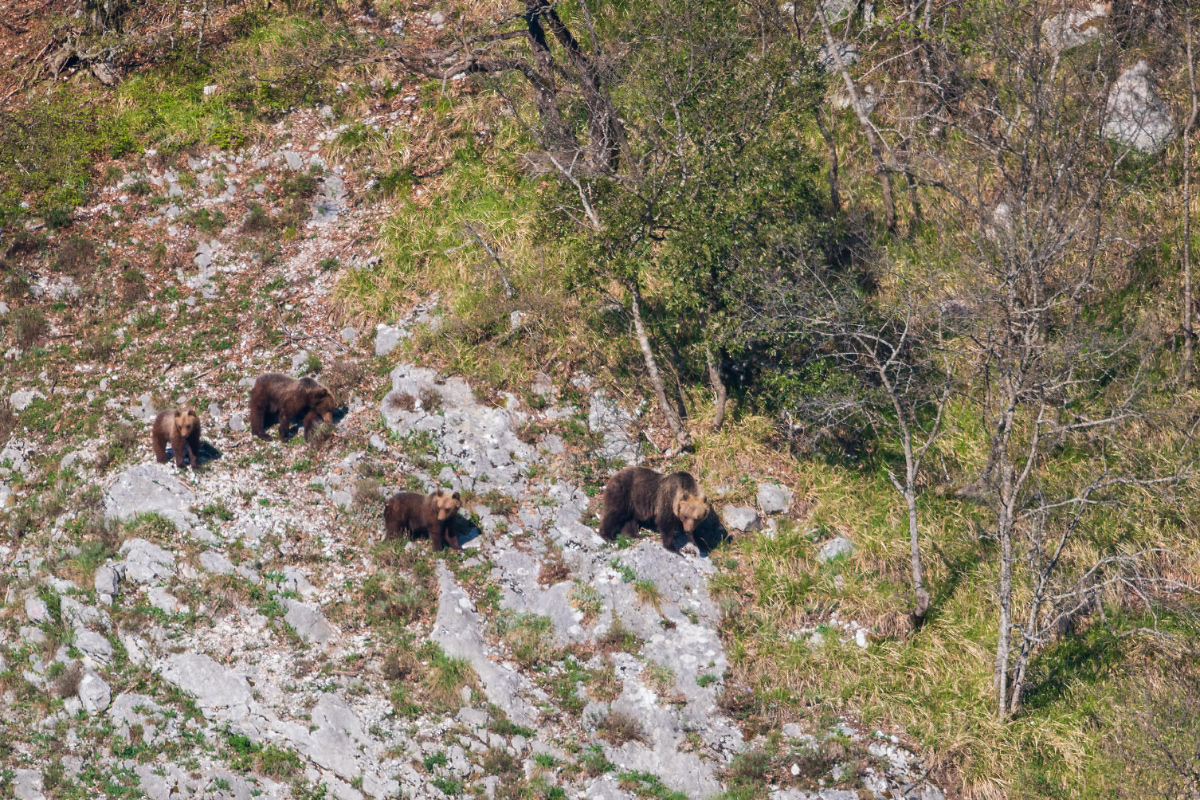
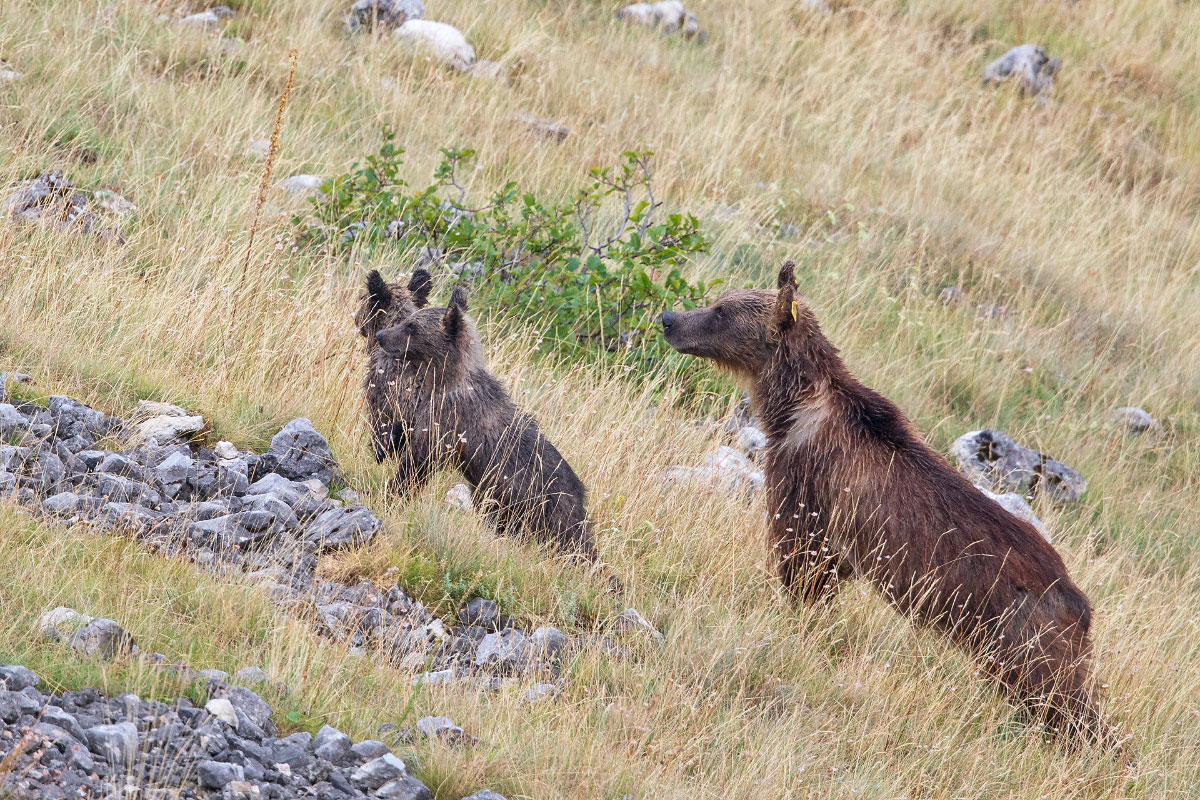
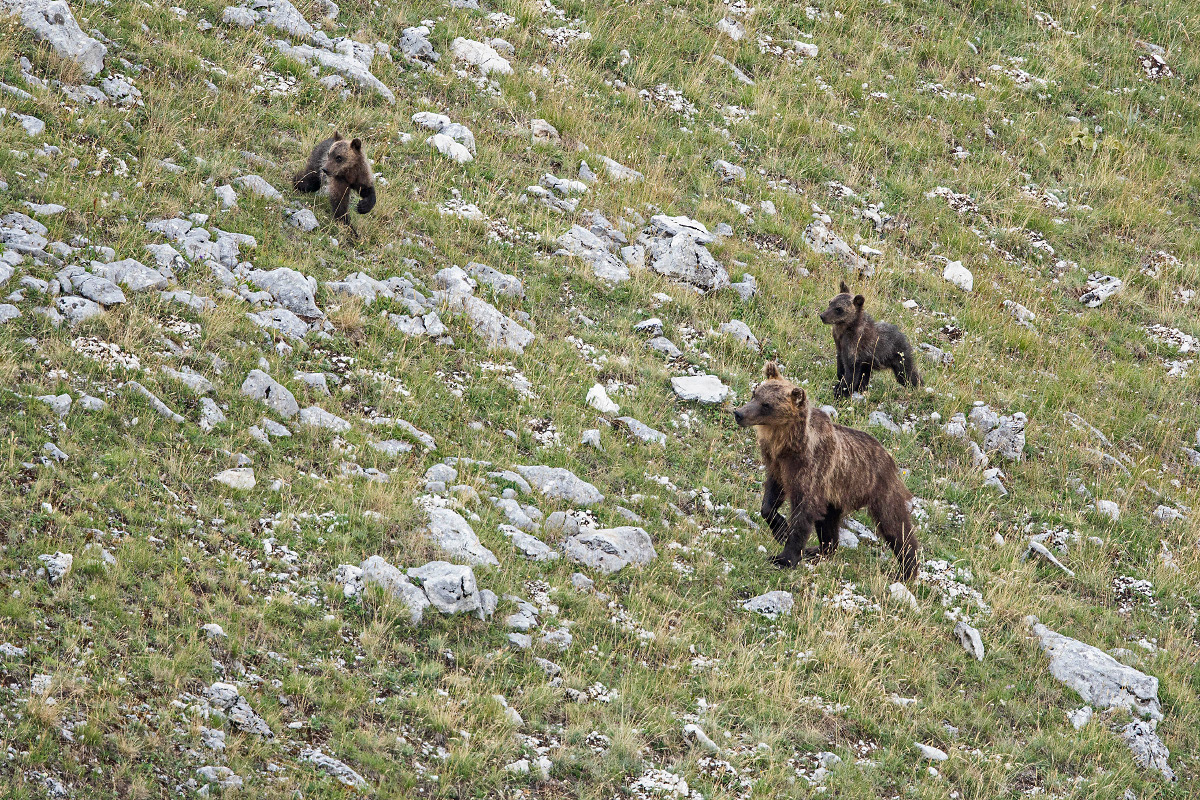
A female bear with her two cubs crosses a mountain ridge in spring. In the first months of life, the young are very vulnerable and the mother never loses sight of them.

Bears are considered solitary animals by definition, but that doesn’t mean they are “antisocial”.

With the exception of a female bear with her offspring or adults during the mating season, it is rare to see a number of bears together. But on the mountain scree covered by alpine buckthorn bushes laden with nourishing berries between the end of July and early August, bears pass from solitude to genuine gregarious gatherings. These concentrations are certainly not comparable to those occurring along the famous Alaskan rivers during the salmon runs. But sometimes some dozen or so bears (in other words, about a fifth of the entire population) may find themselves feeding on the same scree. Under these circumstances, bears show a great capacity for socialising, or rather, for controlling the tensions that could arise from this forced sociability. As we’ll see, all this is actually the result of a long process of mutual familiarity which begins for the youngest as early as spring and many years ago for the adults. Bears are, in fact, able to recognise each other individually and establish hierarchies.
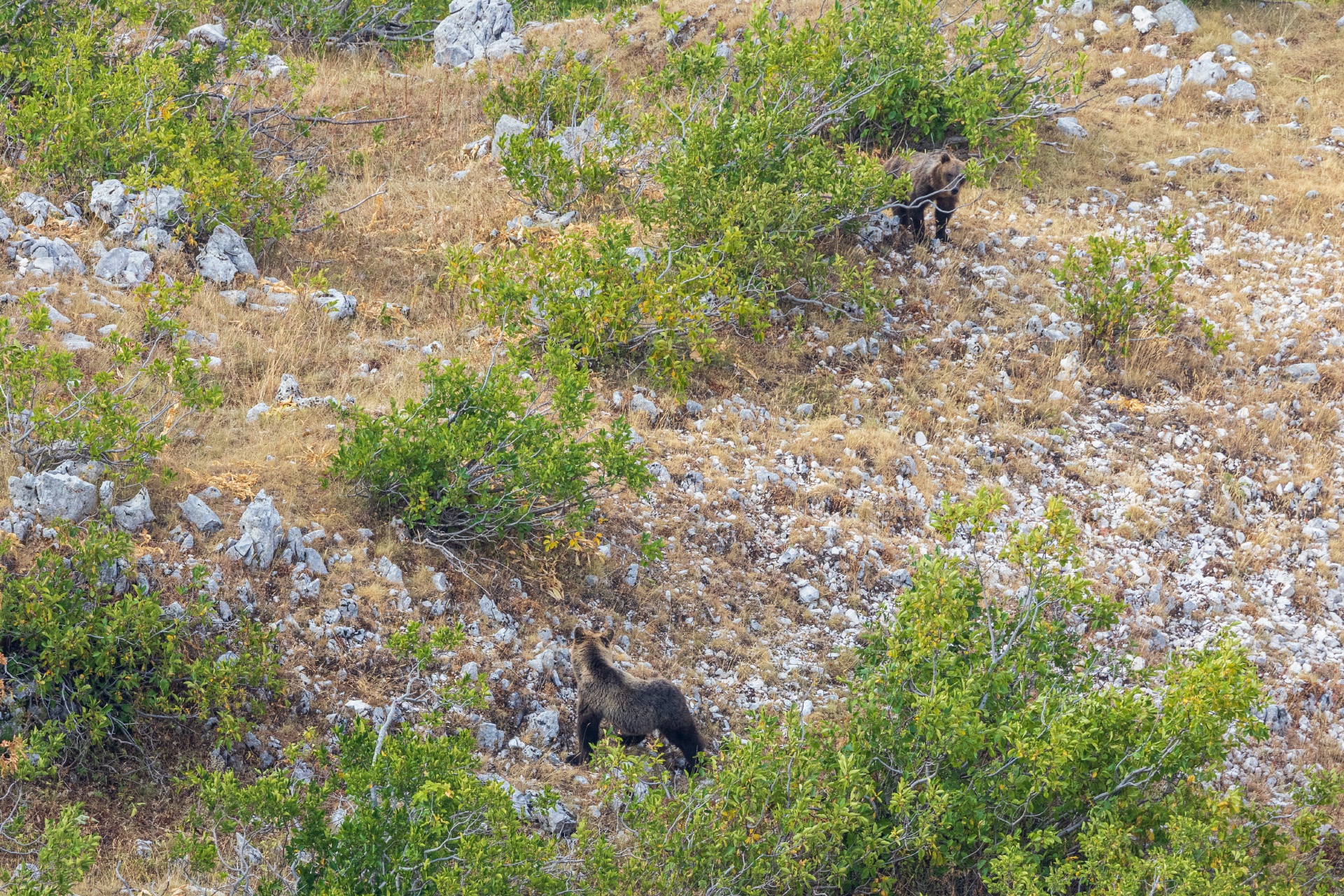
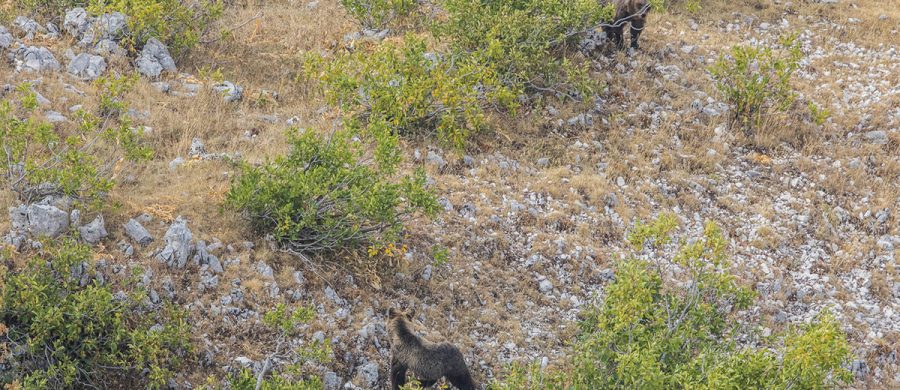
Encounter between two adult bears who study each other to share the alpine buckthorn bushes. As the berries of this plant ripen in summer, numerous individuals may feed simultaneously in certain areas.

From an early age, play helps bears get to know each other and test their physical abilities, but it continues among adults as well.

Two bear cubs just a few months old chase each other playfully on the branches of a hornbeam tree.

When a bear comes face to face with another bear, it first tries to recognise its smell by sniffing the air. To do this it moves closer, or if the wind is right, it can also keep its distance. To express its state of mind or declare its social position, a bear uses its gaze, posture and a rich repertoire of vocalisations. The basic strategy is to avoid unnecessary risks, relating in a non-competitive way, for example by playing. That said, even bears have behavioural rules that cannot be broken. When play is not enough, confrontation is inevitable. But bears try to avoid direct contact until the last moment by using threatening or conciliatory signals.

The skill with which bears manage relationships at a distance is amazing.
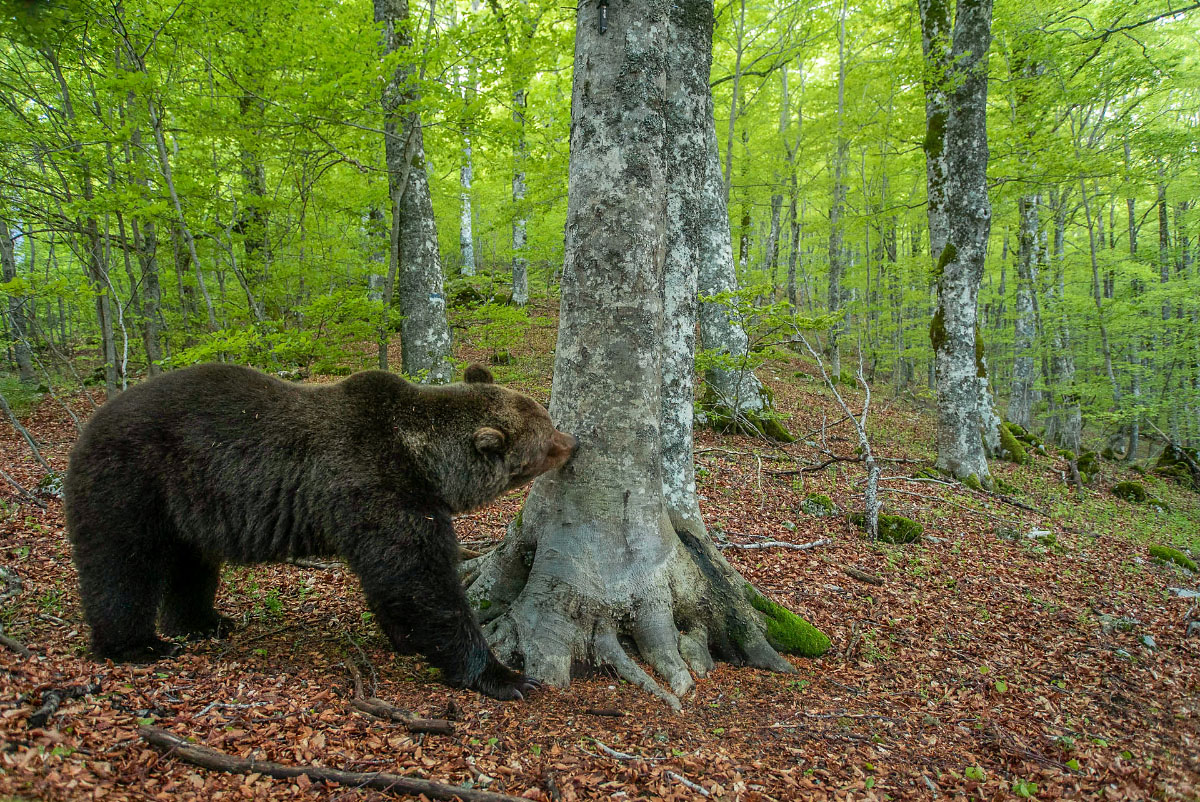
During the breeding season, a large dominant male lingers to sniff the odours left by other bears on a scratching tree.

With the exception of the summer gatherings, bears spend most of the year alone and require a lot of space to live. For example, an adult male needs an average of about 180 square kilometres of territory, an area as big as the city of Milan. So although bears tolerate the proximity of other individuals, it is certainly not easy for two animals to come into contact. But bears need both to avoid each other and to meet. For instance, males and females have to meet up during the mating season, while young bears and females with cubs try in every way they can to avoid aggressive adult males. Bears have a good sense of smell and use it to communicate with each other. They mark trees, logs on the ground and rocks by scratching themselves, or with bites and scratches. They also leave odorous and visual trails, thanks to the numerous glands present on their feet. All these form a genuine map able to let other bears know not only the identity of the author, but also the best places to find food or shelter.
The social map of bears

The social map of bears

Bears are very good at managing social relationships at a distance by using their eyesight and sense of smell

READING TIME 15 MIN

As naturally solitary animals, bears need a great deal of space to live. Even though under these conditions meeting up is certainly not easy, bears nevertheless have a lot to say to each other.

They are not territorially exclusive animals in the sense that they tolerate the proximity of other individuals, but they defend what they consider to be theirs, whether it be food, a refuge area or a mate. This means they need to mark boundaries and leave warning signs to induce other competing bears to keep a distance. If they are obliged to share the same space, they prefer doing so with their own blood relatives. Related animals living in the same territory must therefore be able to recognise each other. Bears also have to breed, so males and females must be able to meet and, especially for males, to know which and how many rivals are in the vicinity. Juveniles in dispersion and females with cubs born that year need to play their cards early and astutely to defend themselves against aggressive adult males, so they need to know where, how and when to avoid them. How do bears manage to spatially define their social relationships without direct contact? They have developed the ability to leave olfactory and visual clues and these can convey a surprising amount of information to others. How does this communication and marking work? Bears leave odorous footprints and mark trees, trunks on the ground and rocks by rubbing against them, leaving bite or scratch marks or scraping the ground.

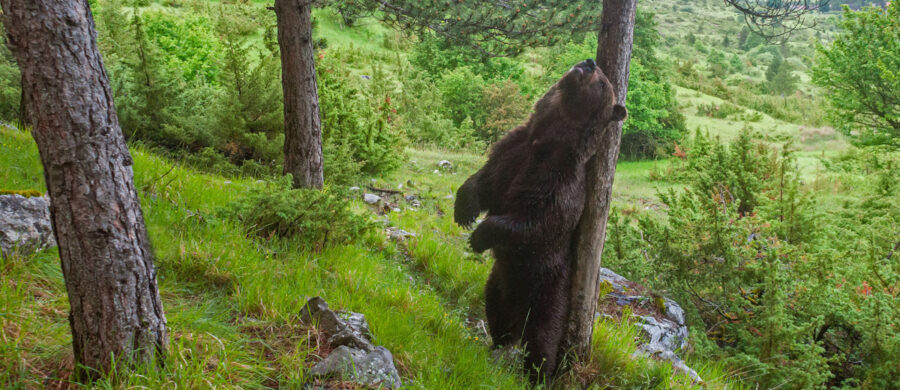
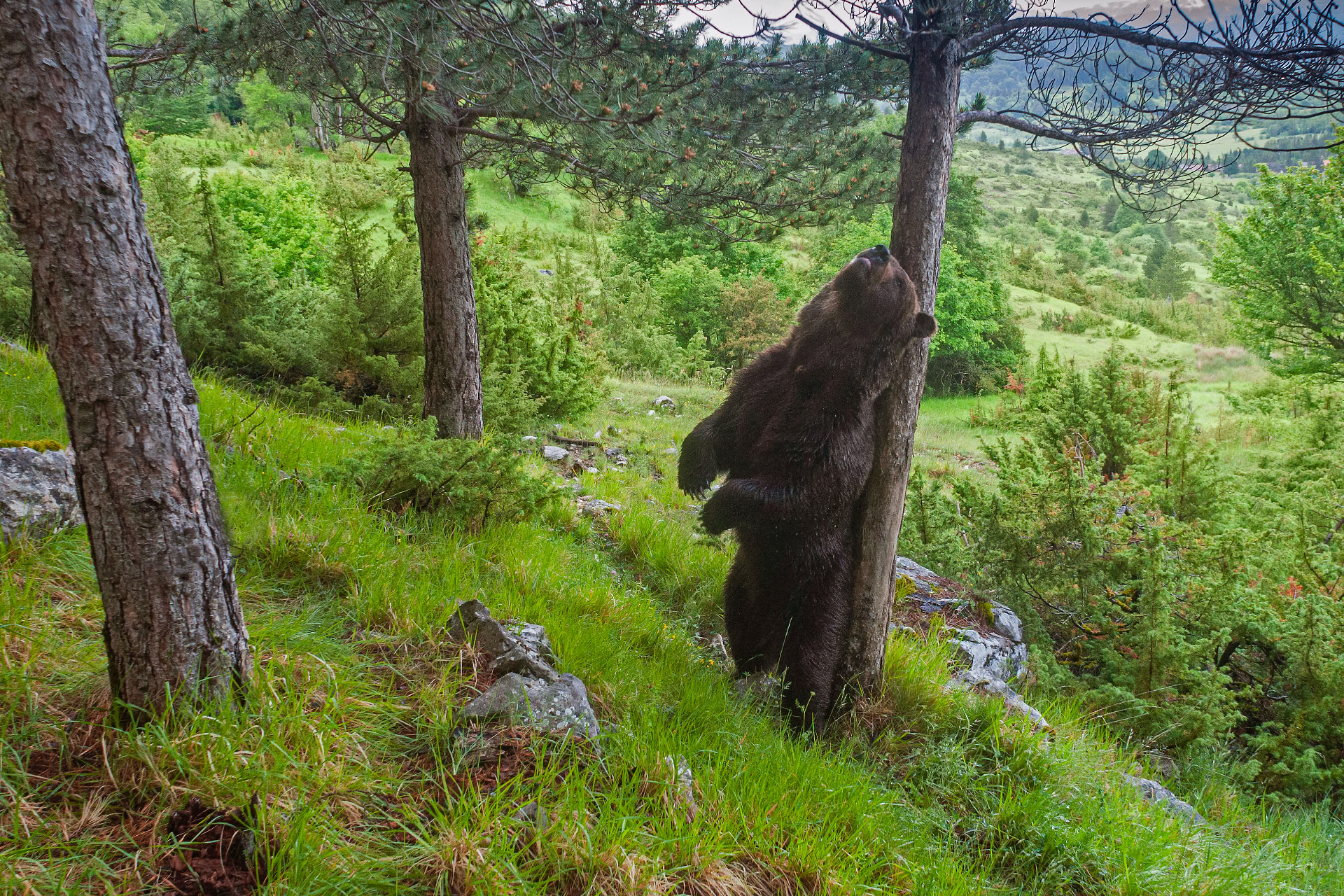
And adult male Apennine bear during the mating season rubs its back against the bark of a young pine tree.

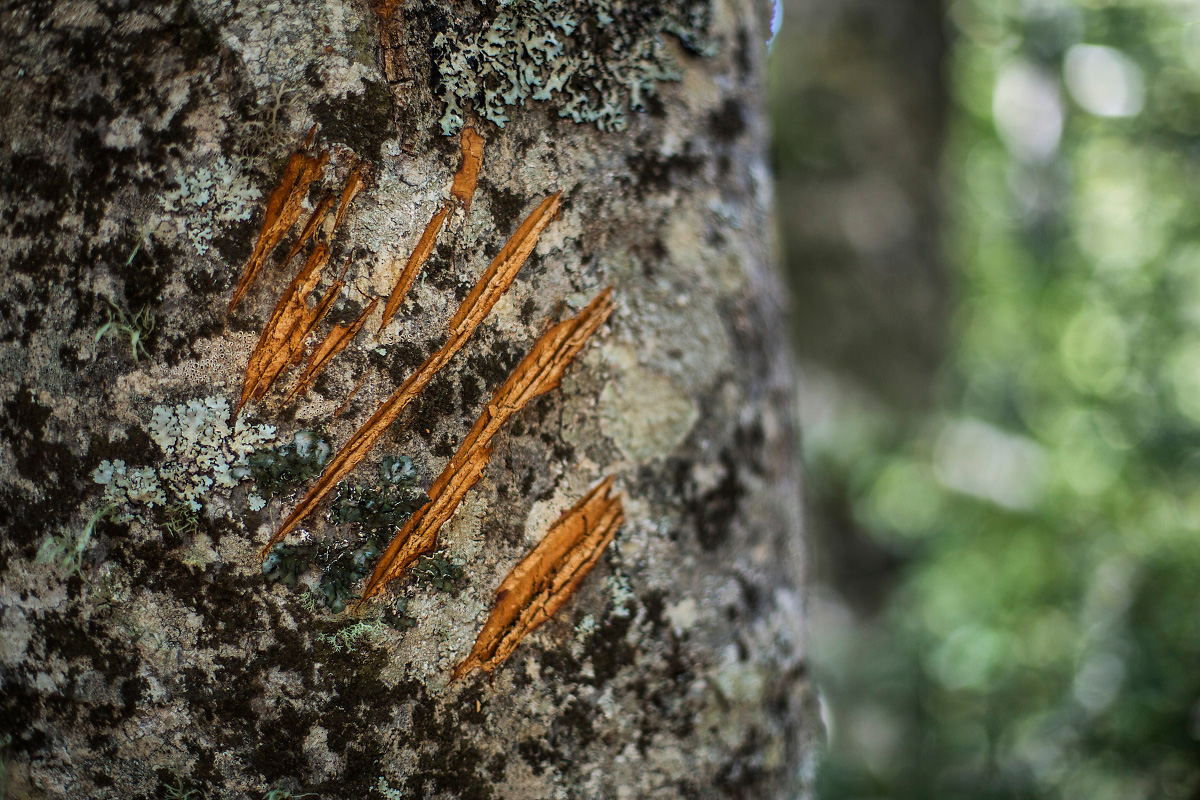
It’s mid-June and I’m walking up the rocky bed of a dry stream. From there, a mule track winds its way into the heart of the green, leafy beech forest. Where the track branches off, I come across a large beech tree that watches over the path. I feel a shiver run down my spine, but my lips curve into a smile of satisfaction. Four diagonal furrows at a height of about one and a half metres have recently left the pinkish flesh of the wood exposed and it now stands out against the grey-green tones of the bark with its moss and lichen. Without even realising, I reach out with my right hand and brush my fingers over that three-dimensional signature. With almost intimate gestures, I observe and sniff every inch of the bark, searching for possible clues. Undoubtedly he had approached the tree and reached out his neck to sniff attentively, seeking the scent of his fellow bears. Then he must have stood up on his hind legs, digging in his feet and stretching his back to a height of almost one and a half metres. That’s where the last hairs are. The splinters of bark must have creaked, crushed and shaken by that weight and that force. Then he would probably have turned round, hugging the trunk and scratching it with his right paw. That mark would always be there. It would last for decades, until either the tree fell or the harsh weather detached the bark completely . Anyone passing by, man or other animal, would notice it and know who was boss in those parts.

Bruno

Bears mark trees, a beech in this case, by peeling back the bark with their powerful claws.

For a bear, sniffing a tree is like going to the registry office. In practice, sniff by sniff, each bear creates its own “bank of smells” with all the related information, valuable to either prevent or encourage certain encounters.

This type of communication is very effective, because bears have a sense of smell 2000 times better than humans. They live and survive by “following their nose”. For example, polar bears, the most strictly carnivorous of bears, move at night following the winds to intercept and locate their prey. But bears also use their sense of smell to become skilled “detectives”. With just a few sniffs of the ground or a particular tree, they can build up a true “identikit” of the other bears that have passed there before them. And of course, if they want, they can also leave their own mark. It seems that each bear has its own identifying smell and, as we’ll see, by playing with how, when and where they leave their odour, they can convey many other messages, such as size and social status.

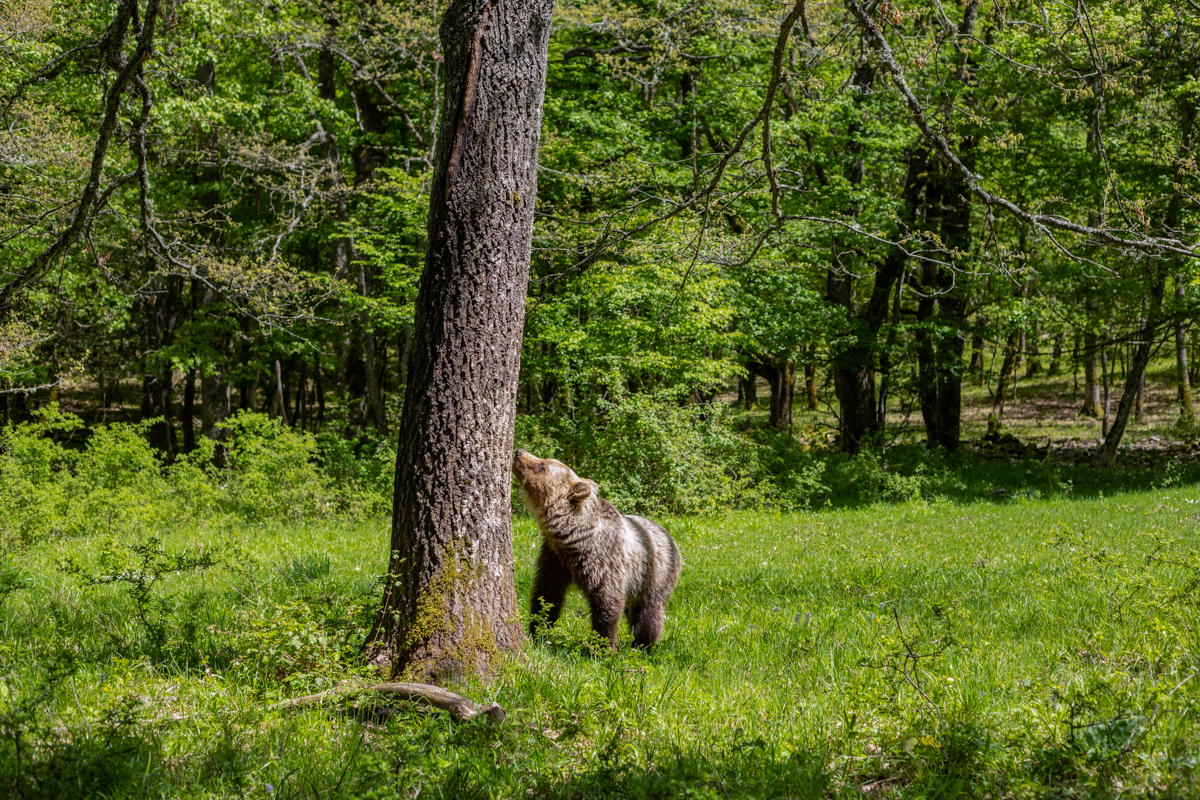
An Apennine bear smells the bark of an oak tree used as rubtree. To detect and differentiate odours, a bear curves its upper lip and extends its muzzle. This movement facilitates the transfer of odorous chemicals to their vomeronasal or Jacobson’s organ.

Researchers have recently confirmed that bears can actually recognise each other chemically. Brown bears have numerous apocrine and sebaceous glands (able to produce odorous secretions) connected to the hair bulbs all over the skin covering their toes. Under the sole of the foot, there are other “exocrine” glands that produce a secretion similar to sweat. According to scientists, these glands produce a cocktail of fatty, liquid and volatile secretions that can last up to several months. The secretions produced by these glands can contain up to twenty-six different organic compounds, six exclusive to males. In fact, it is mainly the adult males that leave a scent trail and they do so most frequently during the breeding season to warn rivals or as an amorous invitation to future mates. Some of the components identified have also been found in the secretions of primates, including humans, and others even in the pheromones produced by ants and termites for orientation and recognition.

A male never misses a step as he approaches a marking site such as a tree. He goes over and over his own footprints, pressing his foot down with a slight twist to create deeper and deeper depressions. And that is where he leaves his identity.

The bears dance a real twist in close contact with the tree bark. Standing on two legs, or sitting on their rump, they rub their backs and bellies. But they can also do so on all fours and on their side. Lying down or curled up. If they find a branch within reach of their paw, they hang on to it and bend it down with force, rubbing their backs convulsively up and down. Each has his own choreography. Adult males do their utmost to rub themselves ever higher, showing off their physique to all passers-by.

When a male bear visits a rub tree, he first sniffs the base where there are depressions left by the paws of other bears, then he too leaves his mark with a little twist of his foot, sniffs the bark and finally rubs against the tree. That’s how he leaves his identity.

More than 180 trees used by bears as marking sites have been located in the Abruzzo, Lazio and Molise National Park. Some researchers claim that the functional role of marking can vary over time and according to the particular phase in the bear’s life cycle. In practice, each tree has many roles and is used by bears to convey or receive different messages depending on who is passing by, the season and the location.

Both sexes indulge in rubbing, but the adult males do so more frequently during the breeding season from April to July. In this way, the trees are used to attract and locate possible mates and, particularly for males, to signal their reproductive dominance. Females with cubs and sub-adults rarely rub, as they aim for a lower profile. On the other hand, they are equally interested in investigating the marks on the so-called “rub trees”. Especially during the mating season, this would help them avoid males and other conflict situations. But bears also rub outside the breeding season and males in particular seem to use this behaviour to exert control over a territory and adult females throughout the year. The same marking activity is used by adult males and females to exert dominance in areas particularly rich in food and which may thus attract other bears who compete indirectly. Based on the freshness of the markings, lower-ranking individuals can assess whether or not to take advantage of a certain time window to access the same resources. In the Apennines, alpine buckthorn scrub is one example of these particularly attractive areas.

Researcher Melanie Clapham, from the Department of Geography at the University of Victoria in British Columbia, talks about the results of research on the social behaviour of bears.

How the bears leave their mark is anything but random and they take great care when selecting the areas and trees on which to rub. They prefer trees located at transit points: roads, paths, crossroads, bends, passes, ridges or areas of transition from one environment to another. All places where the marking is most likely to be intercepted by another bear. In general, the characteristics of the trees used generally seem to favour both the pleasure of scratching (such as convenience or effectiveness) and the visual or olfactory retention of the marking. The favourite are sloping trees with a wrinkled knotty bark and generally large diameter. However, sometimes thin and completely anonymous trees are targeted because they are located at very strategic points, such as the junction of several paths. In general, the bears choose one of the species that predominate in the given area. In the Park, more than 60 per cent of “rub trees” are beeches with diameters ranging from 10 to 140 centimetres, followed by oaks, conifers and maples.

Bears choose characteristic trees and places to leave their signs, usually where there is the greatest likelihood of other animals coming across them.

Bears also direct their “rubbing” not over the entire surface of the trunk, but over the most prominent and convenient parts, always using the same route to reach them. This creates paths followed by one or more bears every year, always in the same way. Some trees can be considered genuine totems. These can be recognised by their worn bark and the absence of vegetation at the base of the trunk, the so-called “platform”, where the bear presses down on its paws or body to rub itself,

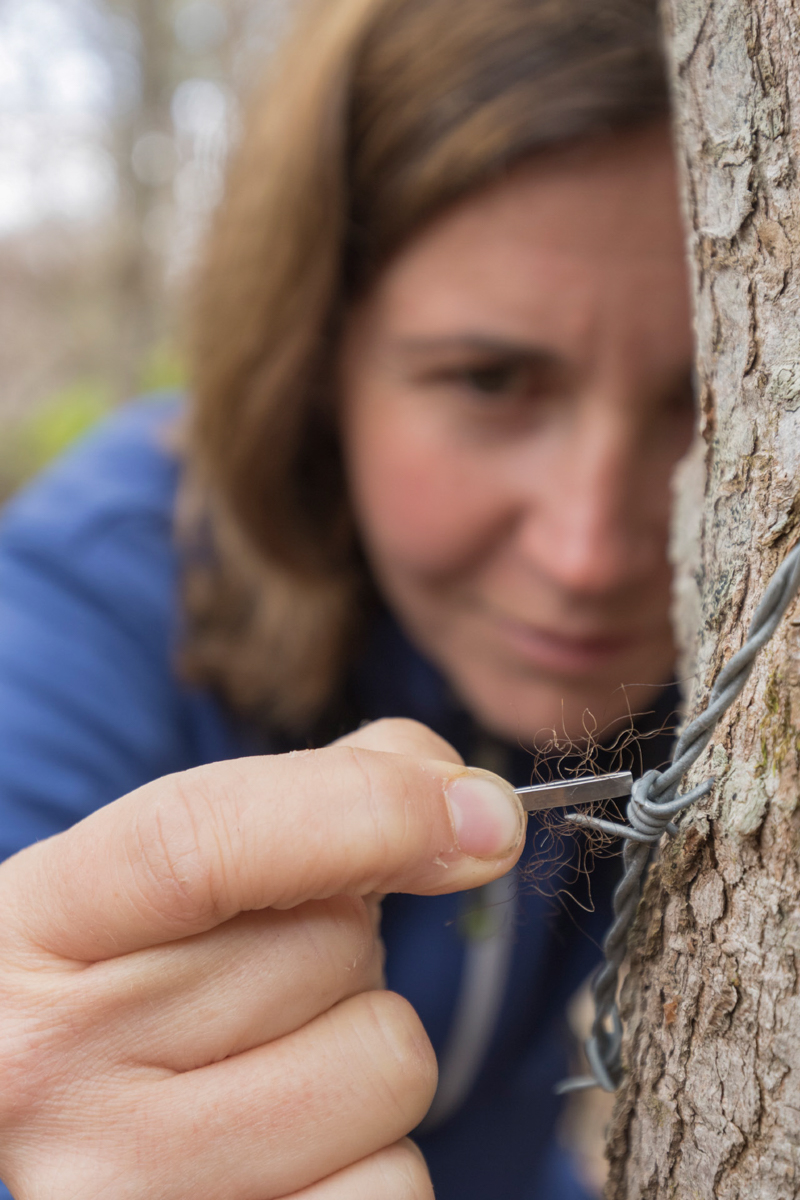
Using genetic survey techniques, it is possible to identify individual bears from their hair. A researcher collects a sample from barbed wire specially fixed on a rubtree to retain the hair without harming the animal.

In 2011, as part of a study to estimate the number of bears present in the Park through non-invasive genetic monitoring techniques, 100 “rub trees” were equipped with barbed wire. This study made it possible to identify the bears rubbing on the trees by collecting and analysing their hairs. The study gathered a great deal of evidence confirming the communicative and marking function of the “rub trees” in the Park. The analyses also showed that both males and females mark trees, although more than 80% of the hairs collected were attributable to males. The peak use for both sexes is between June and July. Males and females continue rubbing until the beginning of autumn, although with less intensity than during the breeding season. In particular, use of the “rub trees” peaked in September, when the bears congregate in the buckthorn scrub and probably compete for access to the best feeding sites.

The probability with which males and females mark trees varies over the months and between the sexes.

A recent study in Alberta, North America, found that, regardless of gender, the individuals who scratch the most (more frequently and on more trees) are also those who will have the most opportunities to mate (and with different partners) and have the most cubs. From the odour left on the trees, the females in particular could obtain useful “clues” to identify not only the most genetically valuable males, but also those that are not related. In the Park over the years, a number of “rub trees” have been seen to be used exclusively by one or more individuals, suggesting that the bears divide up the space and that some exercise dominance or control over others throughout the year.

Duels and courtships through rubbing

The lives of many animals revolve around a tree

Rub trees are a hub for communication between many species. Territorial animals mark them to exercise their right of ownership, while prey animals examine them to avoid predators

The use of scent markings as a communication system is widespread among mammals. Carnivores produce many sources of odour, ranging from glandular secretions to elements such as saliva, excrement and urine. In particular, canids such as wolves and foxes, together with mustelids such as badgers, mark their territory with these odours, both asserting their “ownership” and as a courtship technique. These animals also include rub trees among their marking sites. In the case of prey animals such as red and roe deer and wild boar, rub trees can provoke a real aversion and flight reaction. When they come across them, these animals behave as if faced with danger. They sniff, go on the alert and flee if the odour of a wolf or bear is recent.

It would be wonderful to get inside a bear’s head for a moment and understand how it perceives its surroundings: how and what it learns along the way. And from whom? Perhaps bears are faced with a network of paths and routes in which they learn to move around by smelling the lives of the bears that preceded them.

K. Noyce

As the bears move about, they create maps of scent paths that create “involuntary” flashmobs, where the bears unwittingly find themselves visiting the same places at the same times.

Bears are very habitual in their choice of routes. Over the years, bear after bear and step by step, a complex network of customary scent trails and paths forms in which each bear can freely orient itself. A ten-year study in Minnesota showed that black bears migrate in late summer to areas rich in acorns and crops, travelling up to tens of kilometres. The bears spend about six weeks there feeding, then in most cases, return to their place of departure and hibernate. Some areas can be considered traditional, as they are visited by the same bears for several years; others may be visited by several bears in the same year, although never at the same time in the same spot. Migration routes change every year in intensity and direction, explained by natural fluctuations in the productivity of fruit-bearing plants. The surprising thing is that every year the bears coordinate their movements, following each other at a distance along the same routes, or even associating.

“In mid-April we went back to a valley with precipitous slopes and large centuries-old trees on one side. The impervious nature of the terrain had probably made logging difficult and those extraordinary plants had thus managed to survive to a ripe old age. A month earlier, in the late afternoon, we had spotted a bear, probably just out of hibernation, moving slowly and curiously through that primordial landscape. It emerged from the forest and clambered up onto a rocky rampart, then “dived” headfirst into a steep gully, sliding on the dead leaves. This time, at 17:00, with the first leaves on the trees and against a background of hundreds of birdsongs, another bear much larger than the first appeared in exactly the same spot among the trees, then followed exactly the same path as the first bear, making the same movements. We knew that bears often follow each other, but watching two different animals, a month apart, behave and move identically through that maze of boulders, overhanging ledges and walls amazed us. It is this respect for tradition that makes bears both fascinating and so extremely vulnerable.”

Bruno e Umberto

By marking their own paths, bears have thus evolved an effective way of passing on knowledge and learning at a distance. Bears learn from each other, following each other at a distance. For example, crossing new territory can be very risky for a young bear if it fails to find food. However, by following in the footsteps of the most experienced, it will be able to quickly construct a cognitive map of the territory it is crossing with all its environmental and social components. Adult males play a key role as “teachers of orientation”. Thanks to their extensive movements, their knowledge of the territory is unparalleled and they can pass this on to the entire population. This same mechanism would also seem to facilitate the recolonisation of new areas by large territorial and social carnivores such as the wolf. For example, in Yellowstone Park, after an absence of 70 years, the reintroduced wolves used the same routes and marking sites as their predecessors.

Bears have innate communication skills: they can listen, observe and relate even at a distance. When young bears reach two years of age, they spend some time hardly ever stopping to rest. By looking around, they learn about the physical and social landscape of their future.

Competition, antagonism and play

Competition, antagonism and play

Learning how to behave in different contexts means surviving

READING TIME12 MIN

In situations of forced sociability, even animals considered “asocial” such as bears can behave very flexibly, adopting tactics to reduce any tension.

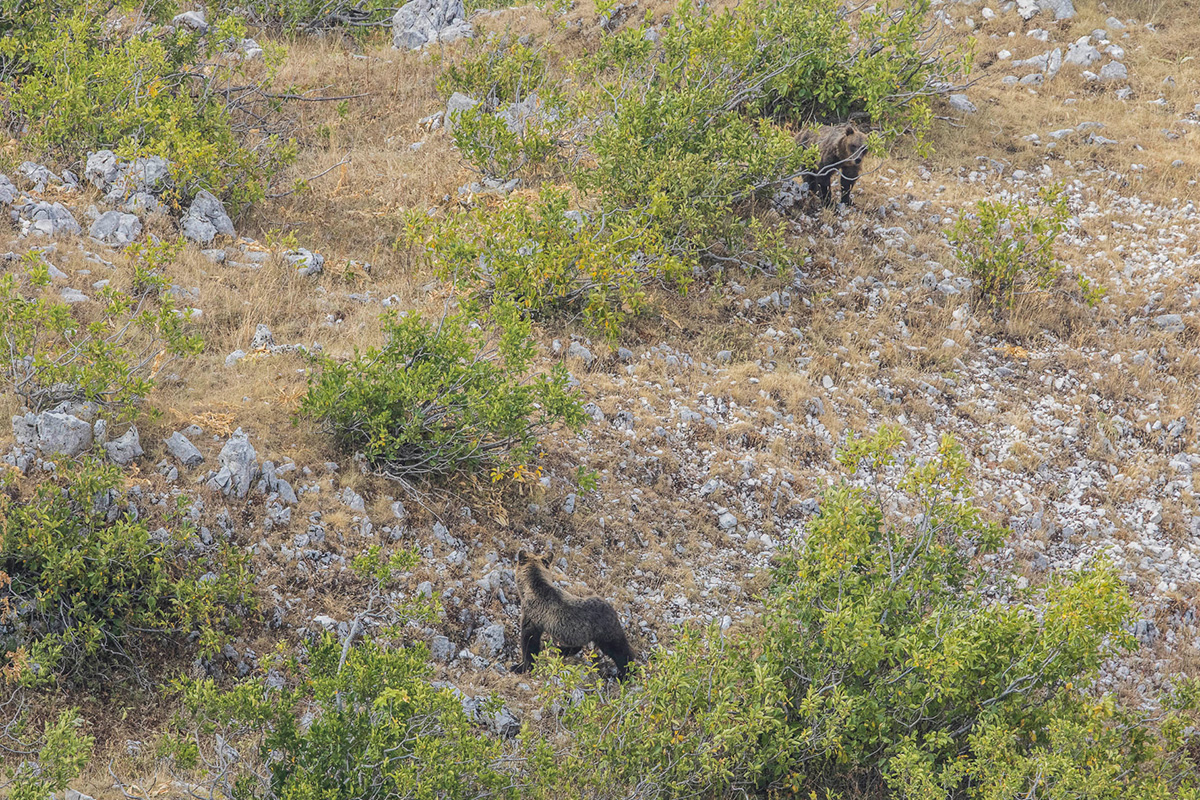
Between the end of July and beginning of August, the bears in the Park face a sudden change. They move from a rather solitary life to a more social one. This happens on the high altitude scree, covered with alpine buckthorn bushes, loaded at this time of year with fleshy, nutritious berries, an irresistible attraction for the bears. But the alpine buckthorn scrub covers a greatly fragmented area of just 16 km2. So in order to take advantage of this nutritious and easy food concentrated in a small space, bears inevitably risk “treading on each other’s toes”. Summer also coincides with the onset of hyperphagia, the period when bears accumulate fat in preparation for winter and need to consume up to 20,000 Kcal per day. For females, this also means ensuring the development and birth of their cubs. The bears therefore face a difficult dilemma: on one hand they have at their disposal an abundant and inexpensive meal (just the effort of moving from bush to bush), while on the other, they are more at risk of exposure to possible violence from other bears. How to behave? Which to choose?

Bears show an amazing ability to adapt and are able to reduce the tensions that may arise from the close presence of other members of the same species.

So in contexts of forced close co-existence, such as the famous salmon runs in the rivers of Alaska, bears do, yes, have more opportunities for interacting between individuals, but they do so in an unexpectedly non-aggressive way. The calm is more than just apparent, as when the levels of the so-called “stress” hormone, cortisol, were measured in the animals’ blood, the values were found to be low. In these situations, bears remain apparently calm and cool-headed. Bears are also creatures of habit and seem to stick to the same feeding areas year after year. According to researchers, this familiarity helps the bears study and thus get to know each other over the years, so they know when and how to move to minimise interactions. This is why confrontations usually take place at a distance and apparently peacefully. Bears may, in fact, be able to establish hierarchies that ensure everyone has a place and time to feed.

This also seems to occur in the Park’s alpine buckthorn scrub. With the exception of the breeding season and family groups, summer is the only period when several bears can be observed in the Apennines interacting together. These are the only areas where it is possible to witness the amazing behavioural repertoire bears have at their disposal to cope with their social life.

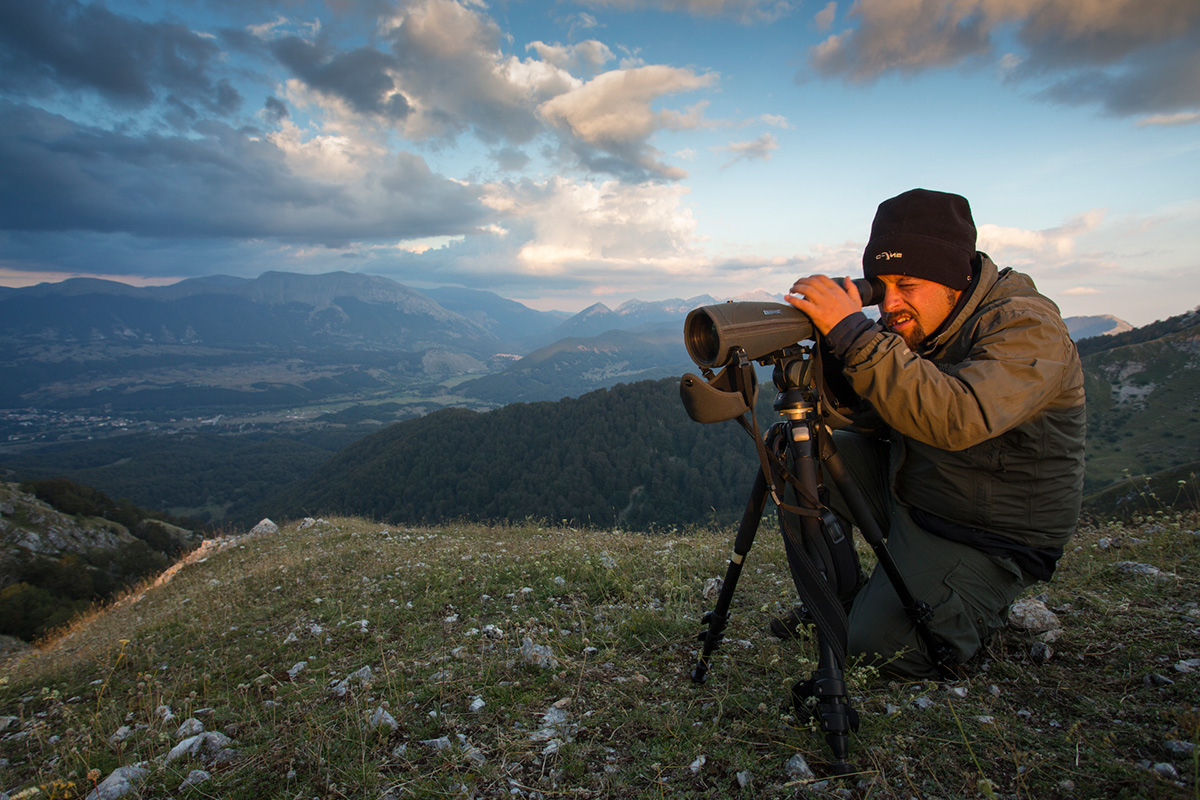
From 2006 to 2007, researchers spent hundreds of hours observing the life of bears in areas of alpine buckthorn scrub.

They use a wide range of facial expressions, body postures and vocalisations to express emotions.

By observing their reactions (from a distance), the researchers were able to interpret the bears’ facial expressions. For a bear, attention to detail is very important, as it takes just a rotation of the ears, or a lip raised to show the teeth, for playful wrestling to turn into an aggressive fight in an instant. An inactive bear, in other words, a bear that is simply resting, walking or feeding, usually has its ears laid back and never looks fixedly at one point. When, on the other hand, it is on the alert, it holds its head up, ears pointed forwards, eyes wide open and mouth closed. While socialising, an animal keeps its ears laid back, opens its mouth and puckers its nose and upper lip. An aggressive or frightened bear lowers its ears along its neck until they almost disappear, closes its mouth and avoids eye contact with the potential rival. If the tension grows to the point of attack, the animal puckers its lips and nose, this time also showing its canines.

A pair of bears are fighting playfully, but at a certain point the female appears disturbed, lowers her ears and shows her canines to the male.

Bears also convey much clearer messages through their body posture. This enables a dominant to be distinguished from a subordinate.

When a dominant enters the scene, it never goes unnoticed. This often occurs in the alpine buckthorn scrub. A dominant is recognisable by its gait. It advances confidently in the direction of the alpine buckthorn bushes without showing any apparent “emotion”. When it appears, the other bears stop, then either change direction or run away. But if a bear hesitates or lingers too long to observe it, the dominant quickly turns and confronts its rival, stretching out its neck, twisting its nose and flashing its canines. In most cases, the other bear desists and moves or runs away. Whatever the case, a subordinate never shows aggression. It generally assumes a lateral position with respect to the other, drops its head to one side and lets it dangle and sits or lies down. The dominants certainly include the adult males who spend their lifetime competing and establishing hierarchies to secure food and reproductive success. They make their posture even more effective by emphasising their size and physical performance. After the males, it is the females with young cubs that dominate the most, particularly over adolescents and adult males, showing their dominance with a high degree of aggression. On the other hand, females on their own and smaller males tend to avoid or submit to these categories, although they sometimes pick on each other. Among adolescents, the males are the most inexperienced and reckless and are therefore often attacked, while adolescent females are more reserved and almost always shy away from uncomfortable situations.

Two bears interact, re-establishing a mutual hierarchy.

Bears also have their own verbal language. Sounds and vocalisations are very rich, especially between a mother and her offspring.

Right from birth, the cubs make a wide variety of noises and sounds: yelping, whining, grunting, snorting and emitting moaning sounds, together with a distinctive pulsating hum. This hum consists of a very rapid sequence of very short sounds emitted during a prolonged expiratory phase of breathing, interrupted by very short silent inhalations. Production of the sound is associated with body vibrations. This vocalisation is exclusive to bears and not phylogenetically related to any other type of vocalisation known among living carnivores. Its function is unknown. It may be a sign of gratification, or a stimulus to demand milk from the mother. The cubs often seek their mother’s attention by hissing or emitting moaning sounds. The female responds with grunts. When frightened and separated from their mother, the young emit high-pitched calls for help. Adult bears, on the other hand, show tension by snorting and panting during a close encounter with another bear. When very frightened, they snort loudly and gnash their teeth. But during an attack, or aggressive interaction, bears can emit outright roars and growl-like sounds.

Mother and cubs interact with each other both physically and by vocalising. This holds the group together and ensures the survival of the young.

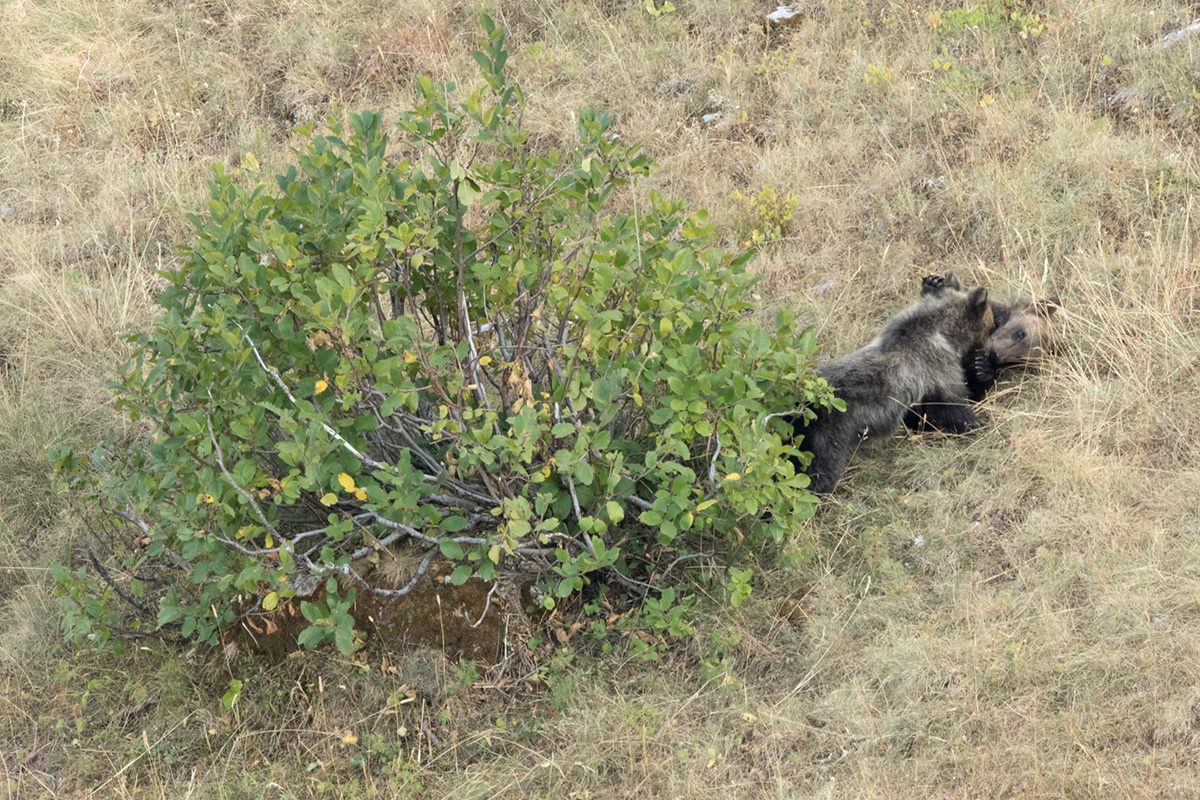
All bears play, not just the cubs. Play is one of the ways bears relate to each other in a non-competitive, risk-free way, regardless of social rank.

Play is a very common social behaviour in the family group, especially between siblings in the same litter. It often seems like a friendly fight. But play has also been observed between yearlings from different litters and between groups of individuals of different ages and genders. Studies have shown that the more cubs under two years of age engage in play, the more likely they are to survive. Intense and prolonged stressful situations, such as interactions with especially aggressive adult bears, can induce chronic stress in inexperienced youngsters. This can lead to excessive physiological activation, pushing the body into a state of physical exhaustion and thus vulnerability. The young bears may waste away to such an extent that they become easy prey, or die of starvation. Developing the ability to interact with others non-competitively can therefore be beneficial for a young bear. For example, resourcefulness, flexibility and the ability to co-operate and coexist with adult bears are qualities that can enable a young bear to remain longer in its home territory. This strategy can be particularly advantageous for young females. Playing is a training ground for life from the very first months. Cubs use it to get fit, learn codes of conduct and behaviour with adults and test their own physical ability as they develop.

Play between bears resembles a fight in which the roles are often reversed and no one gets hurt.

Play modes and tactics vary between adults and youngsters. Play between individuals of different ages and sexes can help familiarisation, assess the level of kinship and test the physical abilities of potential rivals.

Play follows precise patterns of movement and there is generally no vocalisation. One bear walks up to the other with lips and nose puckered and ears perpendicular to the head and facing downwards. It then opens its mouth and starts giving the other bear light bites and blows with its paws, together with sometimes convulsive head butts. It also rears up on its hind legs. The other bear responds in the same way. When they have finished playing, the bears keep their lips puckered, close their mouths and run away. The fights may be preceded, or followed by, submissive behaviour by one or both bears. Especially during their first year of life, the cubs spend more than half their day playing. But as they grow up, they devote more time to eating. Everyone can take part in the game: mother, brothers and sisters. In adults, it is usually individuals of different ages and ranks that let themselves go in a playful fight. The interaction is usually initiated by the lowest-ranking bear. But during the game, roles change and dominants voluntarily hold themselves back. They submit, do not resist and orient themselves lower than the younger animal. Perhaps a way to prolong the fight and clearly codify that the interaction is entirely friendly.

Researcher Melanie Clapham, from the Department of Geography at the University of Victoria in British Columbia, talks about the results of research into the social behaviour of bears.

Driven by extreme curiosity and intelligence, bears not only play or interact with each other, but also with objects. Bears can also predict and resolve even complex situations.

There is an evolutionary explanation for this. Since the first pioneering studies in the 1950s, researchers have devoted their lives to observing brown and black bears closely in order to understand their intelligence, in other words, their cognitive abilities and thus their understanding of the world around them. Like chimpanzees, bears are able to use tools to solve problems. In experimental studies conducted in captivity, bears are able to place differently shaped objects in the right place to obtain food as a reward. Bears can count and categorise photographs according to content, showing an amazing ability to formulate concepts and make abstractions. In the wild, a bear has been observed making repeated use of stones fished out of the water to scratch and clean its face after feeding on a whale carcass. Anecdotes gathered over the years of monitoring have shown the bears in the Park to be highly intelligent. Some bears, particularly females, have learnt to trigger the nooses used to catch them, sending weeks of preparation up in smoke. The bears have learnt to recognise people in uniform and vehicles and to predict circumstances, defying every strategy deployed to persuade them to move away from the villages. From an evolutionary point of view, the force of selection that fostered development of these cognitive and manipulative skills is the same that enabled bears to become ever more adept at feeding on high-calorie foods and thus sustaining their metabolism and long winter fast. Young bears are without doubt the most curious and every natural and non-natural object is a reason for study, exploration and play.

A young bear that has recently left its mother seems to test its physical abilities by jumping and climbing from tree to tree. But then an unfamiliar object catches its eye. It is amazing how aware this animal is of the change induced in the camera trap after its manipulation.

But in some situations play is not enough and confrontation is inevitable, even though the bears try to avoid direct physical contact right to the end. This happens when their space has been violated, during encounters with a strange bear, when frustrated and in competition for food.

The bears avoid physical contact, by using threatening or conciliatory signals. Clashes are rare and occur when a bear, especially if a stranger, violates another bear’s space, if the loser in a confrontation decides to redirect aggression towards a third bear, or if there is strong competition for the same food (for example, a carcass). In the vicinity of the alpine buckthorn scrub, actual attacks against other bears were only observed in the case of females with cubs. In most cases, bears study, observe and “dialogue” with each other at a distance. When approaching the scrub, subordinate bears sit and wait for the dominant to move away from the feeding area, or if they are feeding, they stop eating and become alert. Alternatively, they may advance towards the other to study or intimidate it. Some bears avoid any kind of interaction, moving around the edge of the scrub, trying to keep as far away from the others as possible. Other bears choose to feed at times when there is less risk of other individuals being present, such as during the day.

Two bears feed at a distance of about 20 metres. The two animals are aware of each other’s presence, but continue to feed quietly, although they occasionally raise their heads to investigate.

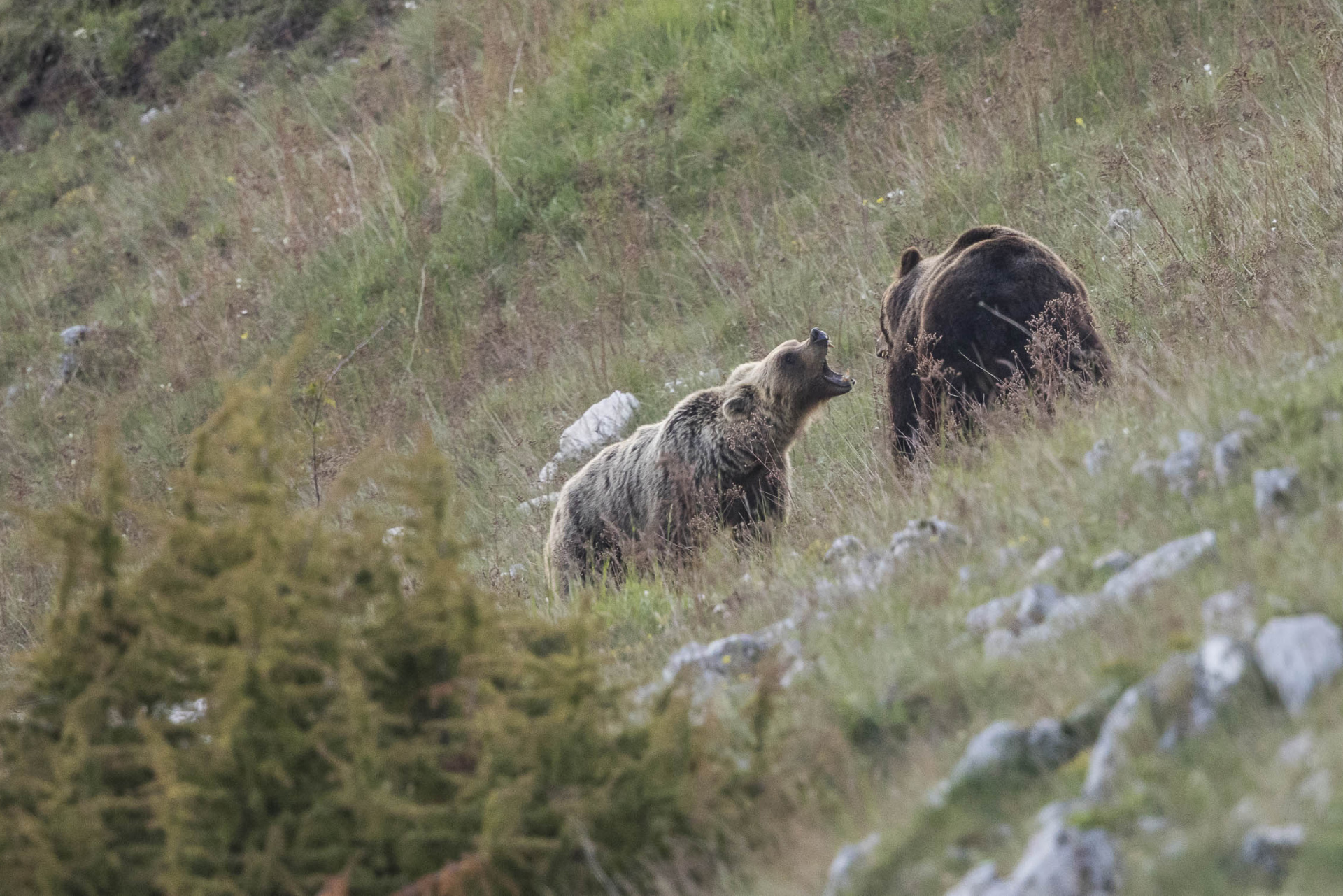
When confrontation is unavoidable, all peaceful tactics are in vain. The two animals face each other directly with their front legs stiff, they lower their heads slightly and begin moving in slow motion. Both bears face each other with their mouths open, exposing their canines. If neither drops back, the attack begins. One or both start charging, head lowered by 30-45 degrees, ears back, mouth slightly open and head and body oriented directly towards the rival. If one of the bears runs away or lies down in the meantime, the attack can be resolved with a bluff. The attack begins with a growl that quickly becomes a loud roar. The bears strike, bite and grab each other with their jaws. Usually the fights end with a winner and a loser who backs down, dropping its head sideways and walking or running away. This type of interaction occurs most frequently between individuals of different sexes and ages and often involves females with young. In the case of individuals of similar rank, especially females, and when defending a food source, the animals confront each other with their heads down and noses pointing to the ground, emitting short, repetitive thunderous growls and exposing their lower canines. They seem undecided whether to move away or interact. Abandoning a carcass or a good alpine buckthorn bush is not an easy choice. The bears may advance or sit on the ground with their heads turned towards the other bear, depending on whether the other bear is acting as a dominant or subordinate. At close range they arch their backs. But this type of interaction rarely culminates in an attack, as one of the bears normally moves away.

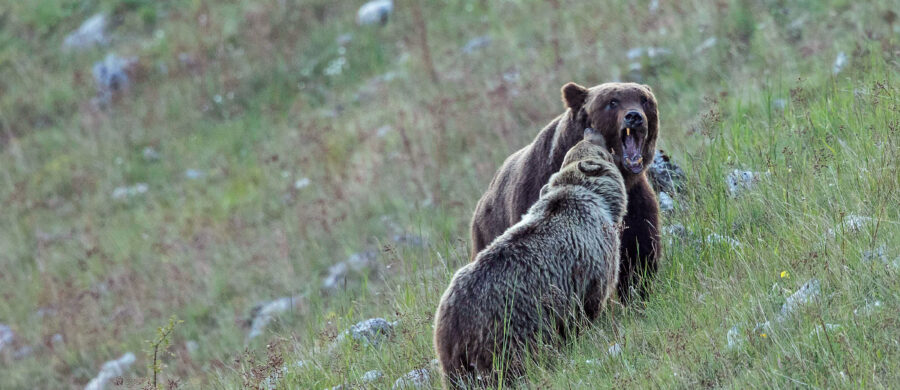
Two bears confront each other aggressively.

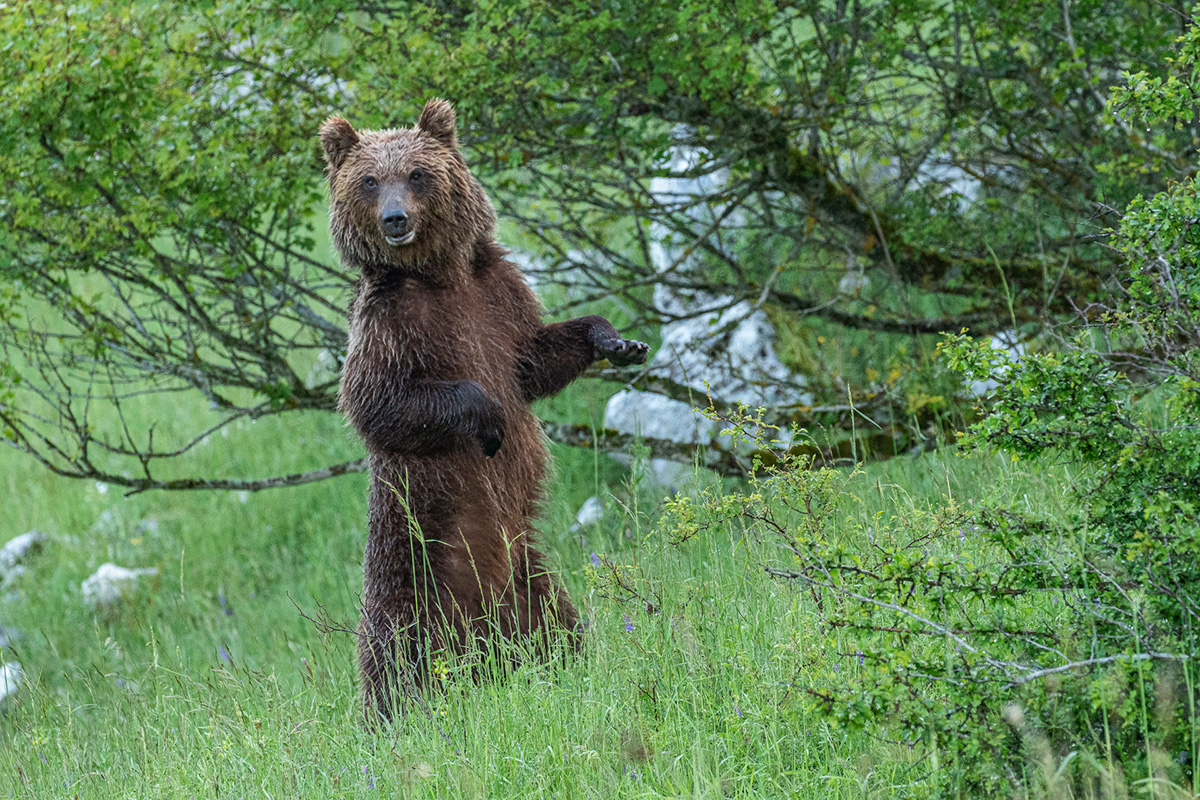
Knowing how to read the mood of a bear is also useful for humans to avoid running risks by over-interpreting a danger signal, or confusing a peaceful signal with an attack. A bear that stands up is an alert or curious bear, it is not about to attack. Bears seldom attack, they usually give warning signals, express unease and perform mock charges. The best reaction in all situations is neither to flee, hide, nor attack, but to reveal yourself peacefully and calmly walk away. For humans as for bears, the same rules apply… avoid putting the bear under pressure. Examples include disturbing an individual feeding on a carcass, approaching a female with cubs or a wounded bear, or surprising a bear at close range.

A bear goes on alert to assess whether or not there is imminent danger.

In the Park, the great tolerance always shown by people towards bears is a clear indication that the Apennine bear is neither aggressive nor particularly dangerous. Recent studies on the genomics of this subspecies confirm a meeker disposition than other populations. But it is nevertheless a large wild carnivore, so it is best to keep your distance.

A cub’s life

A cub’s life

For a bear, survival in its first year of life depends entirely on the protection and teachings of its mother.

TEMPO DI LETTURA 12 MIN

A cub lives its first moments in the hibernation den in the heart of winter between December and February.

Although the temperatures outside may be bitterly cold, as low as 20 degrees centigrade below zero, the cubs enjoy more comfortable conditions, thanks to the well-insulated cavity chosen by their mother and the warmth of her body. At birth, the cubs weigh no more than 350-500 grams, one twentieth of their mother’s weight. They come into the world blind, toothless and hairless, but within a few weeks they are covered with soft fur and can double in weight, thanks to their mother’s nutritious and particularly fat-rich milk. Numerous factors can affect the outcome of a pregnancy, including the mother’s health, disturbance of the animals in their den or the female’s genetic make-up. There is a fear that the low genetic variability of bears in the Apennines may contribute to reducing the fertility of the females, causing abortions or making the newborn cubs more fragile.

The days of observation mount up in the memory. Long hours in wait, scouring every boulder, every shrub, the edges of the forest and the ridges with meticulous persistence. The light marked the passage of time, changing the silhouettes of trees and rocks. The “ti..ti..ti” of the kestrels and the stones rolling under the deer’s hooves helped keep my attention focussed. At dawn, when the torpor of the night gave way to the first warm rays of the sun, my eyes became weak and tired. On the coldest days, the body demanded movement, but went unheeded. Week after week, my shoulders shrunk under the weight of my rucksack and, day after day, my legs grew lazy in always reaching the same destination. And then that constant dithering dance with the rain, the wind, the lightning and the fog. The waiting, the fleeing, the sheltering. Sometimes you felt so foreign, sometimes so part of it all. But then you stayed there, you came back, you waited, because the clouds disappeared, because the light entwined with the fog, because everything went quiet. Always on the lookout for that moment, that instant, that quickened pulse, those words whispered in your head. Hand on the binoculars, point of reference, eye on the scope. 19.30, female with two young. Each time, witnessing the emergence of the year’s first bear cubs is a profound emotion. In this small Apennine population, every birth brings hope for the future.

Elisabetta

A female and her young cubs emerge for the first time from the den in late May.

Fat females generally give birth earlier, produce more milk and are able to suckle for longer. Cubs born to these mothers will grow faster and weigh more at the same age, so they will be stronger than the others. On the other hand, in thin females, implantation of the foetus may not even take place. If they do give birth, these females will produce less milk and will be forced to reduce the intensity and duration of suckling for some or all of the young, to the detriment of their size. Right from birth, cubs compete with each other for the best feed. Cubs raised alone can be up to 30% heavier than those raised with siblings.

This female was first observed in summer 2018 with three cubs, one clearly much smaller than the others. The survival of the tiniest seemed at risk, but it adopted the strategy of always remaining at its mother’s side. By the following spring, although still different in size, all the cubs were still alive and together with their mother.

From the very first exploratory outings, the day of a family group of bears revolves around a few basic activities: eating, moving around, resting and, when possible, playing.

In bears, the female is the sole provider of parental care and cubs spend their first few months carefully observing the behaviour of their teacher. She teaches them what to eat and where to find it, how to choose refuge areas and dens and how to behave with other bears or other animals. For these animals, life is not just about instinct, but is based on a long, first year of instruction and learning. Between May and July, families spend long hours bending tree branches to eat the first leaves, grazing or rummaging under rocks for insects. At first, the cubs imitate their mother’s movements, but as if it were all a game. They do acrobatics on the branches and lift up stones to make them roll. But over time, they come to associate their mother’s behaviour with food and no longer miss a morsel. Females may suckle their cubs until the spring after their birth, but usually after a few months they have already started to experiment with solid food and by autumn they are fully weaned. As well as eating, young bears spend a lot of time playing with each other and when there is just one cub, it is the mother who devotes most time to this activity. Play is a training ground for life and playing is a guarantee of survival.

Two cubs begin their first explorations outside the den between play, discovery and imitation of their mother’s behaviour.

While the cubs learn through play, the females spend a whole year protecting them with determination and courage. The mother’s age and experience play a key role in the survival of the litter.

Primiparous (giving birth to cubs for the first time) or very old females may be more likely to lose sight of one of their cubs. The mother must keep an eye on her cubs at all times and, through distraction or curiosity, there is always one who lags behind, especially in large litters. In addition, the females have to face many dangers every day and overcoming these demands experience, determination, perseverance and strength. The mothers are, in fact, always very cautious when out and about with their young. If a mother moves, she constantly seeks the cubs’ attention with vocalisations and if one of them lags behind for too long, she goes back to retrieve it. Sometimes she may leave the cubs on their own to scout out another area before reuniting the family. If she feels threatened or is separated from one of her cubs, such as during an attack by another bear or a wolf, or if cornered by people or vehicles, a female bear can become extremely aggressive. In these situations, she is visibly torn between the need to find her offspring and the need to defend them. She looks for them by sniffing the ground like a bloodhound, or rearing up to sniff the air. She moves nervously in all directions, making feint attacks towards the potential danger. It is in the case of a violent confrontation with an adult male bear that a female may lose her life. In the Apennines, there have been two cases of females found dead during the breeding season, partially eaten and probably killed by another bear, their nipples still with milk residues.

I saw the first bear cub of my life on the afternoon of 31 July 2006. I watched it for almost three hours and was surprised and worried that it was alone. It was very strange. I had read that a mother never stays away from a cub for that long, especially in areas where several bears congregate, such as alpine buckthorn scrub. The week before, in that very same place, I had observed five bears at the same time. But the cub seemed calm as it wandered around the margin between the woodland and the buckthorn bushes. Every now and then, it would approach a bush, bend its branches and rummage through the leaves. It skilfully grasped a berry between its lips without tearing a single leaf. Every so often, it would go higher and a branch would give way under the weight of its body, causing it to fall to the ground in an explosion of leaves. With human apprehension, I watched the cub as night drew on, wondering what had happened to the mother. As soon as the sun went down, a motionless, statuesque, seated silhouette appeared behind him, sniffing the air in my direction. Of course the mother had been there all along, hiding in the shadows, watchful and alert.

Elisabetta

A female accompanied by two year-old cubs confronts an adult male who has come too close.

Despite their mother’s care, young bears remain the weakest link in the population until they are two years old. They may be killed by other bears, orphaned or driven away from food-rich areas.

In the Apennines, only half the cubs reach their second year of life. But even from their second summer when the youngsters are now on their own, the risks to these animals do not diminish. Established causes of mortality include disease, predation by dogs, aggression by adult males and poisoning. Bear cubs can also be orphaned for a variety of reasons, such as their mother’s death, her abandonment (for example, if she is disturbed in the den), or following traumatic natural events (for example, if the family group is attacked by a male). What are the chances of a cub surviving without its mother? Studies confirm that a cub may already be self-sufficient by about seven months old. In environments where food is easy to find, a cub of this age has as much chance of survival as one that has not been separated from its mother. Orphans may also be adopted by another family group, or join together to form “gangs”. For bears in the Apennines, 2019 was a special year, as nine litters for a total of 16 cubs were observed. But it is also the year when four orphaned cubs were found. In two cases, at least one of the cubs was reunited with the original family group or was adopted, while the other two were never seen again. In two cases, the cause of the abandonment was established: in one case, the mother was hit by a vehicle, in the other, the family was chased by a vehicle of curious onlookers.

An orphan in the Abruzzo National Park

On the night of 24 August 2019, while crossing the outskirts of Pescasseroli, the female F08, known to the Park’s technicians and researchers since 2008, was chased with her three cubs by a vehicle of curious onlookers. The next day, two of her young were seen together in the centre of the village searching for their mother, but they were separated by groups of people who followed them on foot. The female bear was later observed on several occasions, including during the day, moving around in the vicinity of Pescasseroli in search of her cubs. Unfortunately she only found one. There was no trace of the third. In this population, each individual is precious and can contribute to preservation of the species. It is therefore essential to prevent premature abandonment of cubs by their mothers for non-natural, human-associated causes. By correcting our behaviour and avoiding approaching the animals or chasing them by car, we can avoid jeopardising their tranquillity

In the Apennines, a female may very rarely spend a second summer, or even a third winter, with her cubs. In general, however, she drives them away when they are about a year and a half old.

Separation from the mother occurs between the first week of May and early June of their second year of life, peaking at the end of May, coinciding with the breeding season. In most cases the separation is triggered by the approach of a male wanting to mate. But if a mother drives the cub away, it is because she believes it is now able to fend for itself and there is enough food around for it to survive. If this is not the case, the female may keep her offspring with her for a further year. The separation is not painless for the youngsters, but it happens very quickly, within a few days. In the case of litters with two or three cubs, the siblings may, however, remain together for some time: strength in numbers. After the separation, some cubs try to rejoin their mother, sometimes throughout the entire summer. Occasionally they may be successful, but on most occasions it is the female herself who aggressively drives her young away.

For a year and a half, this cub has been living under its mother’s protective wing. Now on its own, it has to put all its mother’s teachings into practice and learn to play a strategic game in the adult world.

The need to reduce competition for food and a mate, but especially the need to avoid inbreeding, induces the young bears to move away from their place of birth. But some prefer to enjoy all the comforts of a familiar place.

Staying or leaving is a dilemma that the young males and females all face during their early years. Playing on their home pitch, in other words, remaining in a territory where they know every blade of grass, is very advantageous for a female who must stay fit and healthy in order to reproduce. Of course there is always the risk of mating with a blood relative, such as the father. But this can be avoided, as there are always many other males around and the females have learned to distinguish them. The contraindications come in the form of dominant female relatives, such as the mother, who may force younger females not to reproduce. In short, if you stay, you have to know how to wait your turn. Female bears are ultimately highly philopatric and therefore tend to occupy the same territory as their mother, forming a kind of matriarchal “society”. Staying is so tempting that, according to studies conducted in Scandinavia, young females find themselves competing with each other. Who wins? The fatter ones, while the thinner ones are forced to leave. Philopatry is, on the other hand, also a strength, as it enables a female in dispersal to originate new micro-populations by keeping her daughters close. On the other hand, evolution has programmed all young males to move away from their natal territory. The need to find new females to mate with is stronger than any homesickness.

If they do stray, female brown bears stay within a few dozen kilometres of their home territory, while males may move even hundreds of kilometres away.

Yet the choice is not always so obvious. In high density areas, regardless of their sex, bears may delay their departure, or reduce their dispersal distances. There is indeed a real risk of being attacked by other bears when crossing unknown or densely occupied territories. So the compromise is to remain subordinate in exchange for less stress. However, even dominant animals may make an exception to the rule. Helping a blood relative is, after all, a way of protecting your own genealogy. At low densities, on the other hand, a dominant has no choice but to drive away any potential competitors in reproduction. And then again, when there are only a few females available, the only possibility for a young male who wants to mate is to emigrate and this, at the end of the day, is an advantage for everyone.

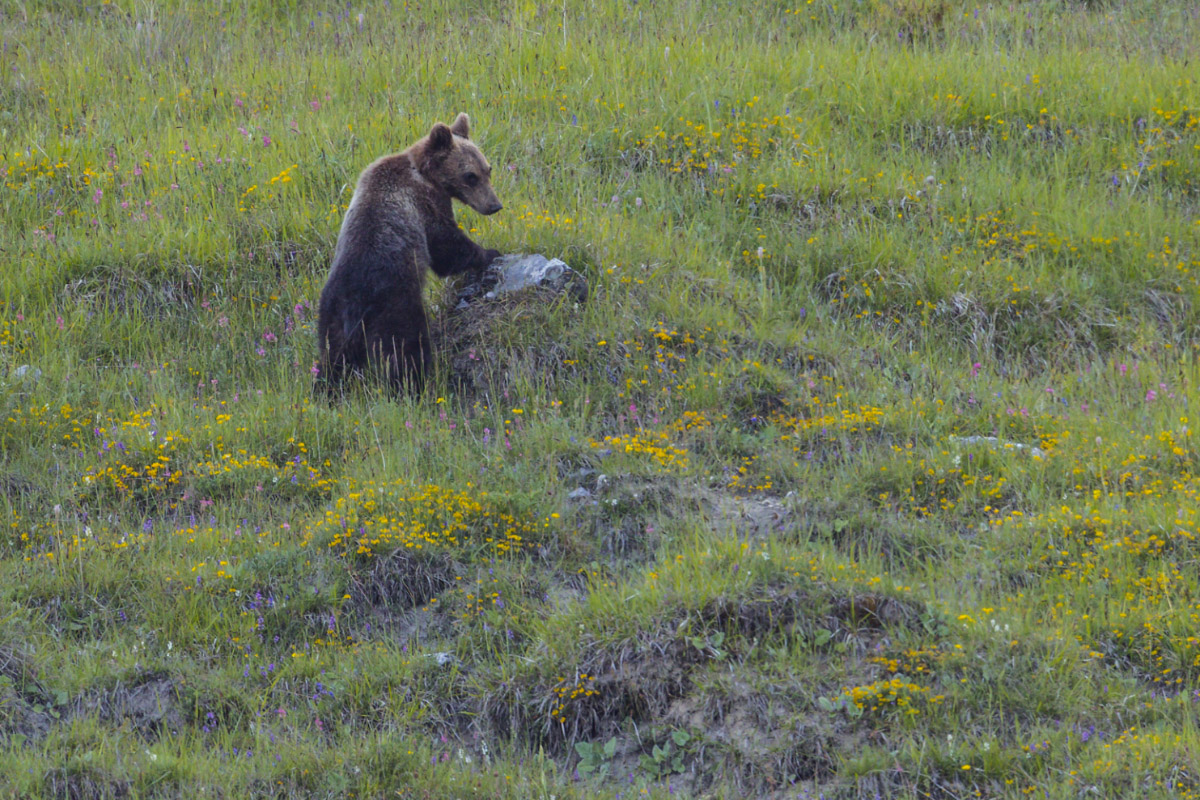
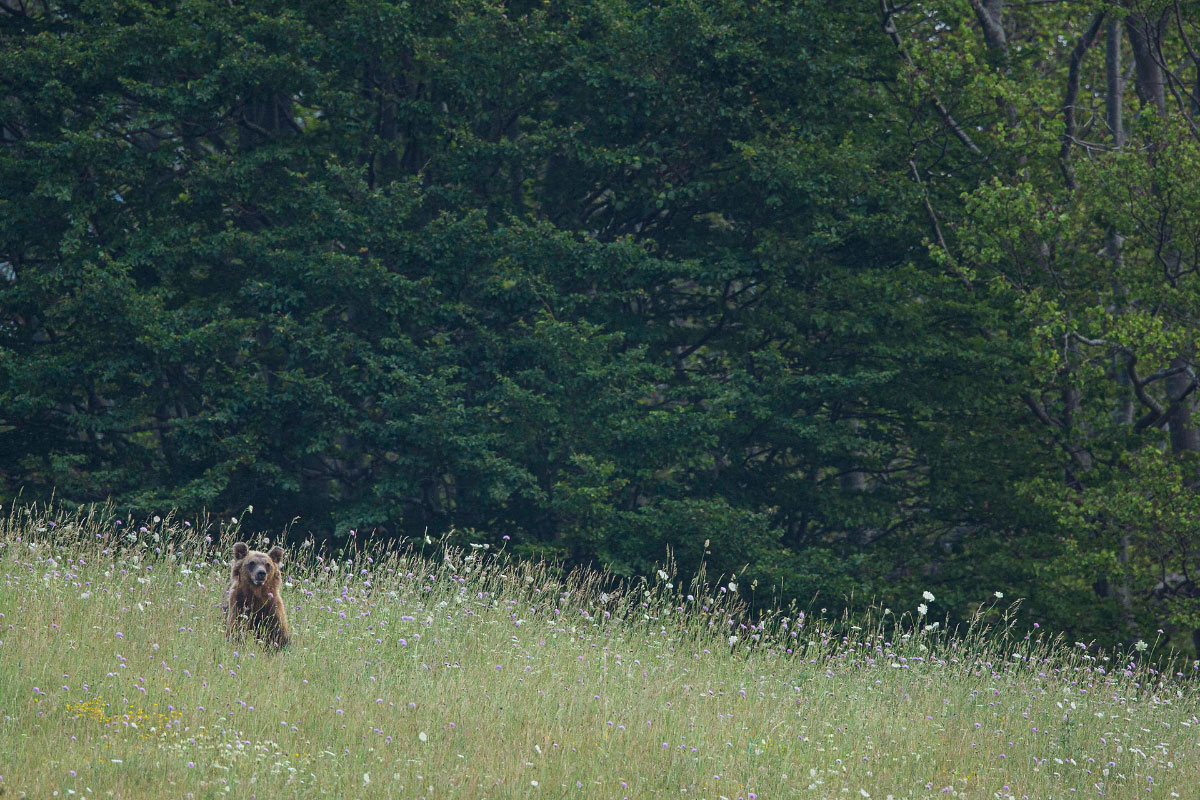
A young bear moves with caution in a clearing at the edge of the beech forest. Animals on dispersal must face uncertainties, novelties and dangers in order to find a new territory.

In the central Apennines, young males in dispersal can travel hundreds of kilometres in even a very short time. With more than 5,000 km2 of suitable territory available, the Apennines have plenty of space for these animals and also food to make them strong and fit. On the other hand, the females in these areas can be counted on the fingers of one hand and if the males want to mate, the only solution is to go back to where females are more abundant.

The bears’ natural need to roam new territories in search of females and a home multiplies the risks of some fatalities. Bears cannot find the solution, but perhaps we humans might.

Love and courtship

Love and courtship

The love life of bears has all the ingredients of a tale of knights and chivalry: passion, intrigue, violence and a happy ending

READING TIME 18 MIN

When the first leaves start to appear on the trees at the beginning of April, the bears slowly begin their annual love rituals, somewhere between a dance and a foot race.

This is just the prelude to the courtship season which continues until the end of July, with May and June as the most feverish months. The males begin re-establishing the hierarchy a few weeks earlier, competing for access to the mating areas, which are the same every year. These are areas particularly rich in food during the springtime, attracting both females without young and their suitors, thus increasing the opportunities for encounters between the two sexes. Once the breeding season is over, the bears’ interest will be focussed exclusively on food. It is very rare for bears to be observed mating during the autumn, even more so in the case of females with yearlings in tow.

On November 3, 2010, park rangers Ezechia Trella and Germano Palozzi witnessed a scene that astonished more than one expert. Still incredulous, here’s their story:

“At first light, a female with a year-old cub was feeding on grass and the acorns that had fallen to the ground in a clearing at the edge of the woods. When the two bears became alert, we realised there was a male less than 50 yards away from them. As soon as he approached, the cub fled. The mother and the male then started sniffing each other, playfully wrestling and eventually mating. After about 10 minutes of interaction, the female wandered off in the direction of her fleeing cub. Could the male have been the cub’s father? Who can say.”

3 November 2010

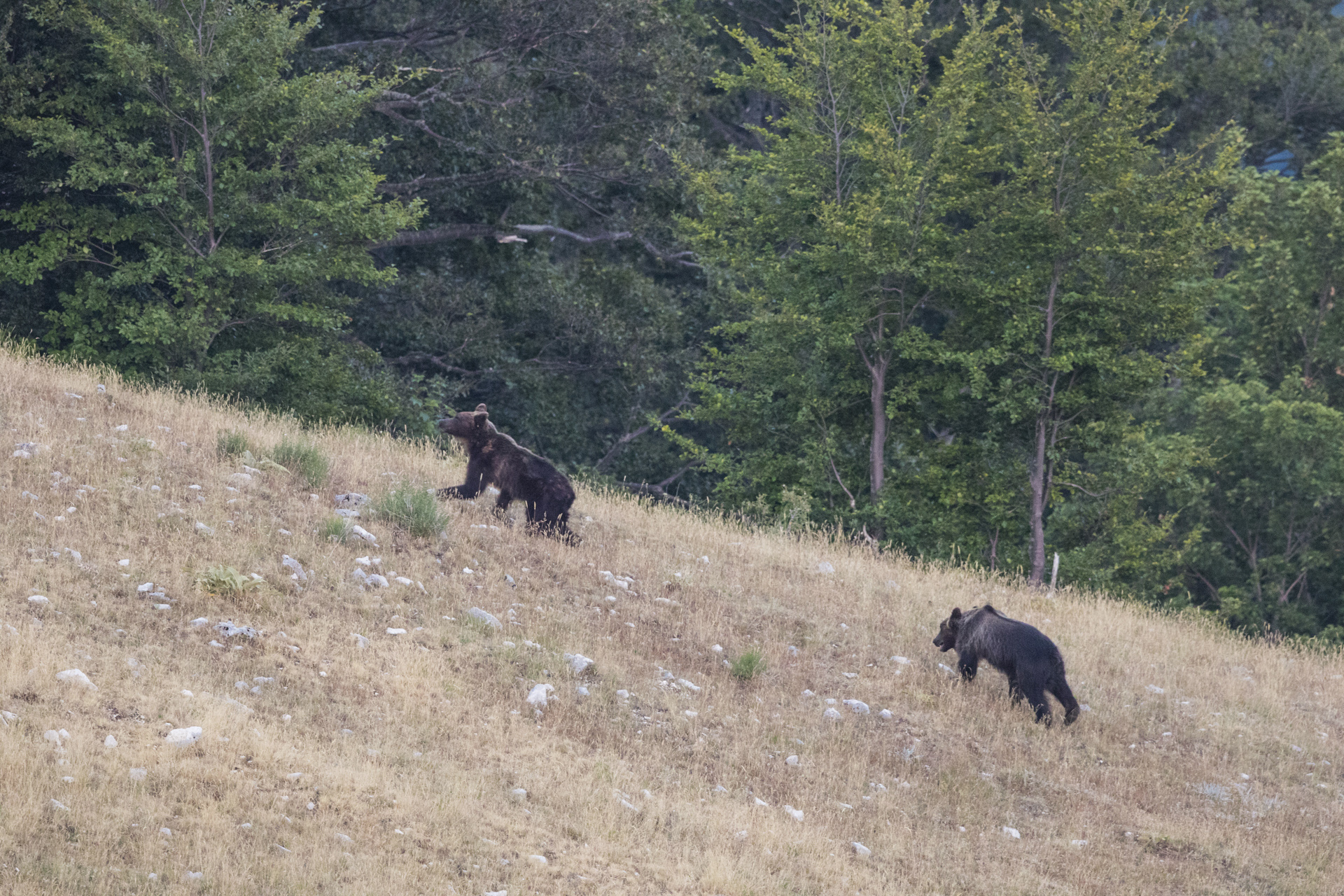
A couple of bears move into a mating arena.
These are usually particularly food-rich areas frequented by a number of bears year after year.

Bears are polygamous and promiscuous, this means a male can mate and impregnate multiple females, likewise, a female can breed with multiple males. But the strategies vary between genders.

Females are much more selective in their choice of mate, while males aim exclusively for quantity. During a single breeding season, a female may come into heat as many as two to three times. But the phase doesn’t last long. At these latitudes, the follicular activity of female bears (the phase immediately preceding oestrus) decreases drastically from the end of July onwards. As described above, it is very rare for a bear to come into heat in autumn. The surprising thing is that female bears breed “on command”. It is the tactile stimulation of the cervix by the male’s genitals that triggers the neuronal and endocrine response (and thus secretion of specific hormones) that induces ovulation. So by avoiding physical contact with the male, or by assuming a posture that prevents him from completing the sexual act, a female may choose not to be impregnated. Alternatively, a female bear may avoid males altogether, for example, while she is lactating. As we shall see later on, besides the physiologic aspects, social factors may also come into play to inhibit females from breeding. Even after mating, not all females successfully carry the pregnancy through until the following year, but this depends not only on the position of copulation, but also the female’s state of health. The males, on the other hand, enjoy more continuous sexual activity and even though their testicular function decreases after the mating season, a male bear can still impregnate a female with the accumulated sperm. This provides an opportunity for less competitive males to attempt to mate during less intense periods.

Once hibernation is over, the males’ main purpose in life is to re-establish the hierarchies and prevent any rivals from breeding by “kidnapping” as many females as possible. A male looking for a mate will criss-cross his territory far and wide, using his highly developed sense of smell.

Males and females go through a genuine ritual that can last from ten days to several weeks, during which time the couple remains together day and night. For male bears, courtship is a long and exhausting game of seduction.

While the male is with her, the female is still receptive to other males. So the male must never leave her unattended, as there may always be another suitor lurking nearby. Sometimes a number of males can be seen walking in single file behind a female, or a number of females may be followed by a single male. The male therefore literally “kidnaps” the female, sniffing her genitals to verify the presence of the pheromones which indicate she is on heat. In turn, the female constantly tests the vigour and resistance of the male. In most cases, the females lead the game. They can be very selective, not only in the choice of partner, but also in where and when they mate. During this period, the male neglects eating and loses weight to make sure he never loses sight of the female, defending her from other suitors and also defending himself, and not just from other males. An unwilling female can be very aggressive. If she doesn’t agree, she will sit up on her rump, back away from the male, emit deep, menacing growls or even attack her suitor. On the other hand, if there are no competitors in sight and the male is one of her favourites, the female submits and indulges in lengthy preliminaries before yielding completely. The female usually stands or slides under the male while he bites her hind legs or neck. If the male is slow or not interested enough, the female breaks free, emitting deep growls and baring her teeth. At this point, the male grabs her with his paws and tries to bite her. The female responds by rubbing him with her snout and biting him in turn and the two engage in a playful struggle. This behaviour usually convinces the male and is followed by copulation.

Mating can last from a few minutes to an hour, it all depends on the willingness of the female and whether or not there are other males on the scene. Long copulation increases a male’s chances of becoming a father.

The photographs illustrate two bears engrossed in the “foreplay” that will lead to the actual mating itself.

“Backlit in the late May afternoon, the silhouettes of two bears suddenly appeared distinct and bright, emerging from the shadows of the woods. A female with silvery fur was followed by a very large, dark male, almost twice her size. We couldn’t believe our luck. We were there that day more by chance than by design. We were also in an ideal position, on a rocky ridge about two hundred yards from the bears; the wind was blowing towards us, carrying our scent away. We sat still and silent, leaning our backs against a boulder. And so, for over two hours, we were the unseen participants in the intimate moments of the couple. We watched the hypnotic dance of the two animals zig-zagging after each other across the grassy slope. Slow and panting, the male always lagged behind the female. On several occasions, he tried almost shyly to approach her, but she always responded by showing her teeth. Time and again, they faced each other vehemently, biting each other on the muzzle and growling. Their cries made the hairs on the back of my neck stand up. Finally, the female stopped and let the male come alongside her. After the long wait, the two mated, sniffing each other gently nose to nose and rubbing heads with unexpected tenderness, oblivious to the two inopportune witnesses, moved by that rare and primal sight. Gratified by the unique observation, we walked away quickly and quietly, leaving the bears with their privacy and the quiet of the night.”

Bruno

The more skilled, aggressive and often larger males are usually the best match.

But what are the males’ tactics? Which of them can seduce most females? They are the bears at the peak of their fitness, usually after the first ten years of life, and those able to control their partner, preventing, or at least delaying, her mating with other males. They exercise this control by aggressively chasing away other males, or through prolonged copulations that physically prevent other males from gaining access to the female. But the competition doesn’t end with the act of copulation. When a female mates with many males, the sperm of rival bears also compete in numbers and in their ability to reach and penetrate the available eggs. If that weren’t enough, it also seems the females are able to use an amazing mechanism of control during copulation to ultimately decide who will father their young. The males fight ferociously to breed and when you look at them closely, it’s not uncommon to find wounds and scars left on their heads by the bites of rivals. The males can also impose their dominance in a more ritualised, although no less effective, manner.

“It’s the middle of May. As we reach the planned observation point, it’s hard to breath. The air is thick and hot. It’s unusual, but the seasons are unpredictable here in the Abruzzo mountains. A couple of kilometres further on, the green peaks of the high altitude meadows stand out clearly. The first flush of spring. The bark of a roe deer draws our attention to the edge of the woods below the nearest peak. After a few seconds, a bear emerges from the vegetation. About 50 metres behind him, a second bear, decidedly more imposing than the first, advances confidently. We recognise him from his markings, it’s the male M18. The young bear advances with his mouth open, his chest moving conspicuously as he pants. He stops several times, turns around, then continues moving forward, each time a little faster. M18 doesn’t miss a step behind him. The stalking continues until the young bear takes refuge on a rock suspended over the void. At this point M18 stops, then starts moving back and forth in front of the young bear like a pendulum, each time giving the impression he’s about to move away, only to retrace his steps. Still panting, the other bear, who seems from his behaviour to be a subordinate male, is now slumped on the ground. After nearly three hours of stalking and intimidation, M18 stops near a rock, stands up on his hind legs and scratches, showing off his full height. After this display of dominance, he finally walks away. When darkness falls and we stop watching, the young bear is still on the ground.”

Elisabetta

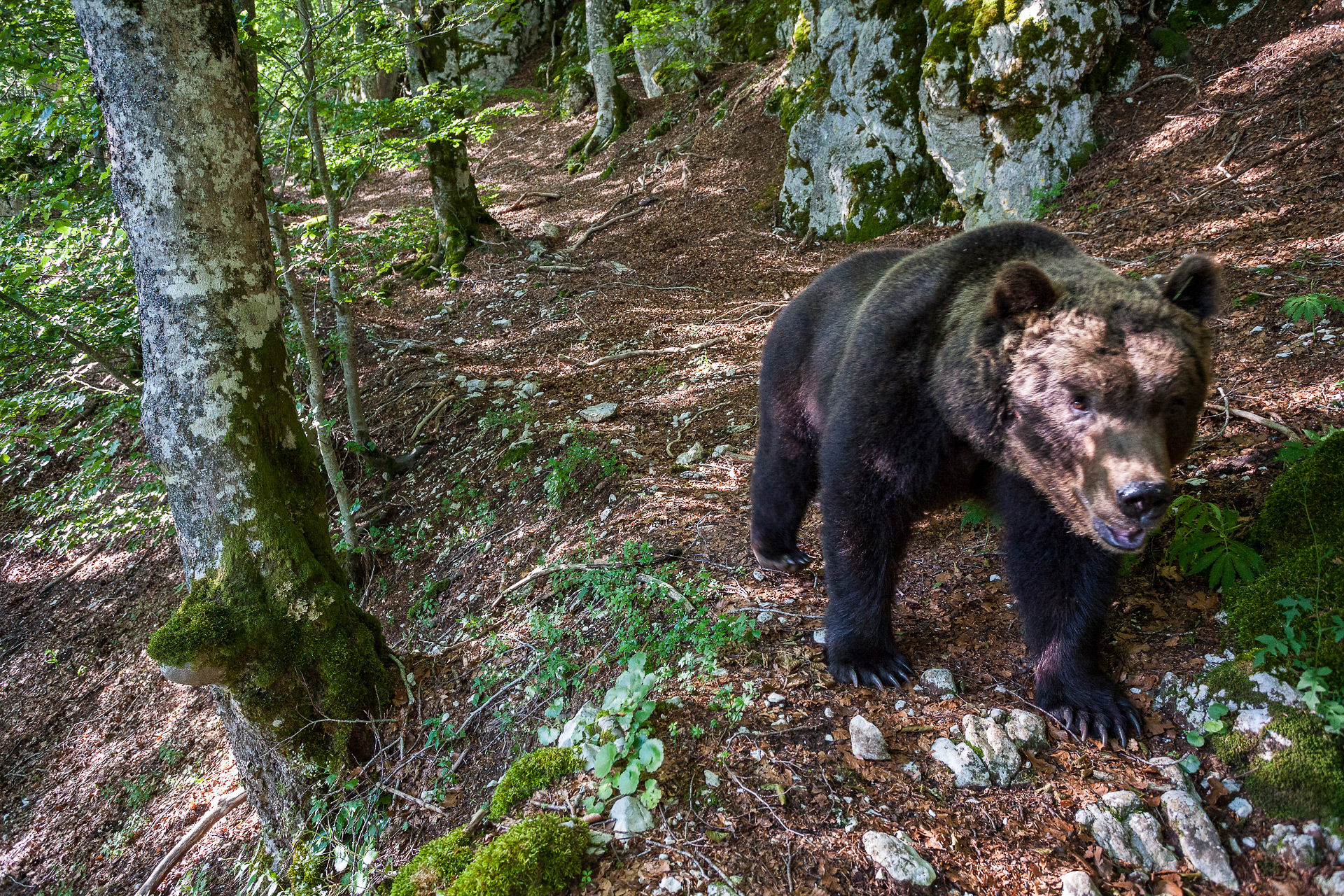
A large male bear at his reproductive peak is captured by a camera trap while crossing a beech forest, probably on the tracks of a female. On his head are the marks left by fights with other males.

If there are no obstacles, the egg is fertilised after mating and develops into a small, round mass of cells known as a blastocyst. At this point, however, normal development stops.

In bears, a phenomenon known as “embryonic diapause” occurs. This is also observed in mustelids (otters, martens, stoats, badgers, etc.), many species of seal, marsupials, mice, rats and also roe deer. After fertilisation, the blastocyst remains inactive and attached to the female’s uterus until she enters the den at the beginning of hibernation. The embryo does not continue developing until there are the best conditions for the young to survive. In the case of the bear, the best time is the period of winter torpor, safe from predators. In bears, production of the cascade of hormones that stimulate the uterine mucosa to receive the embryo is triggered by the shorter photoperiod (the number of hours of light) typical of early winter. But if the female lacks sufficient fat reserves or is not in good health, this cascade of effects is interrupted and the pregnancy is not carried to term. The fact that after fertilisation the embryo enters diapause means the female can come into heat again. A female may therefore retain a number of fertilised eggs in her uterus and, given that a female may mate with several males during the same breeding season, it is probable that a single litter may originate from more than one father. This is an effective strategy to increase the quality and variability of the offspring’s genetic heritage, but, as we’ll see later, it also helps protect the young from possible aggression by the males…

In the Apennines, females reproduce every three to four years. Shorter intervals have been observed, but only when the female has lost her cubs, or following years of abundant beech nuts.

A number of adult females in the Apennine population have never been seen to breed successfully, even after ten consecutive years of observations. Furthermore, despite the fact that the cubs leave their mother very early, in their second spring of life, and the females left on their own have been seen mating, none have ever been observed accompanied by offspring the following year. F05 was one of the first females studied by researchers. Already a mother when she was captured, over the following years she gave birth to a full eight cubs. F05 was a very protective mother and managed to raise 88% of her cubs until they were a year and a half old. If you’d like to find out more about her story, continue reading.

The female F05 has been monitored remotely for several years and her story is representative of many Apennine bears.

Females are at their reproductive peak between the ages of eight and 25 years. Their fertility then begins to decline rapidly. Bears can reproduce as early as three and a half years old, although in high-density populations, such as in the Central Apennines where at the centre of their distribution area there is a density of four bears per 100 km2, different regulatory mechanisms come into play and can delay the first birth until the female is six years old or more. For example, the presence of the mother may act as a natural contraceptive for her daughters. Mechanisms not yet fully understood seem to prevent them from breeding. Female bears are, in fact, governed by the rules of a matriarchy, as the young females are philopatric (closely bound to their place of birth) and therefore tend to establish their own territories within, or near, their mother’s. By combining genetic and remote radio monitoring techniques, researchers have shown that “neighbouring” females compete with each other to breed. The female bears lower in rank may have to wait several years after reaching adulthood before their turn to become mothers. The rule may seem harsh, but it actually serves to ensure the most efficient division of food resources among the bears, thus reducing possible stress between individuals.

No bear can take reproduction for granted. And in a small, threatened population such as that in the Apennines, every female that manages to give birth to cubs keeps hope for the future alive.

A male and a female meet

Female F05 has had many suitors during her life. The day F05 met with the male M06, also fitted with a tracking collar, was a unique opportunity for the researchers to reconstruct all the stages of their courtship.

Males and females have different strategies to maximise their reproductive success. But what is beneficial for one gender may not always be so for the other.

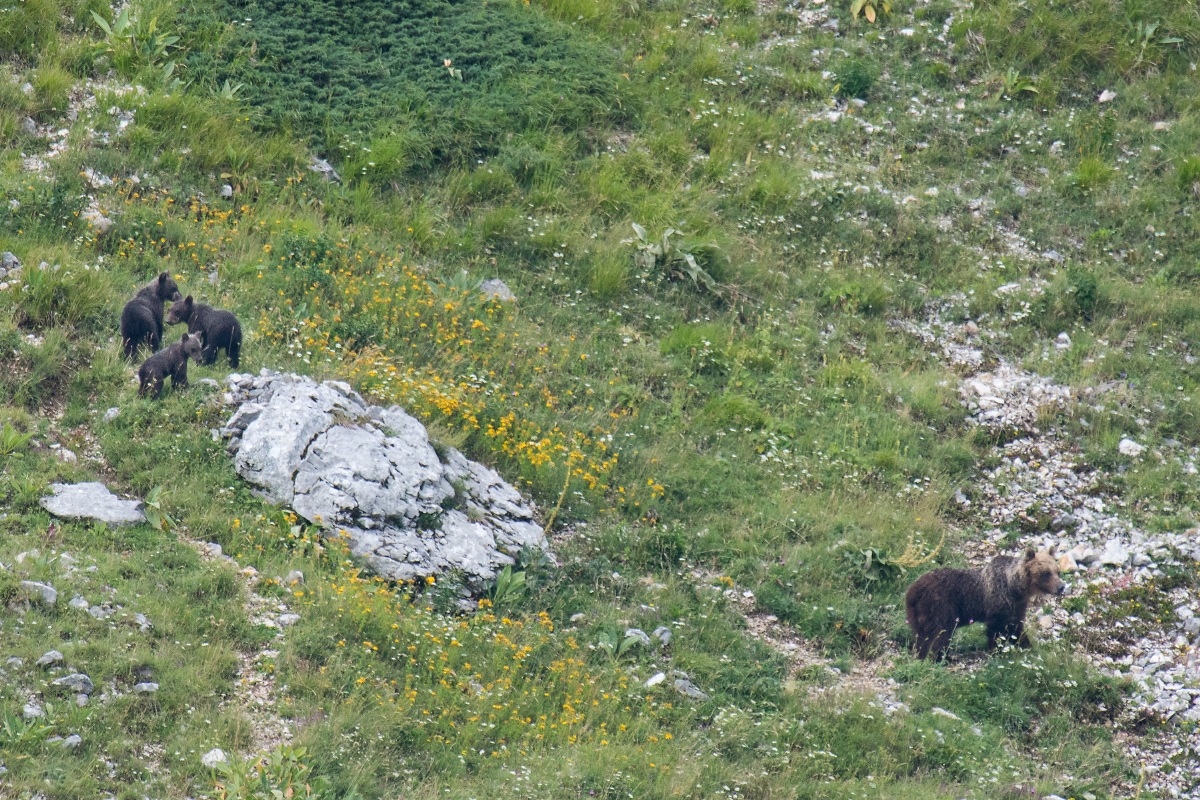
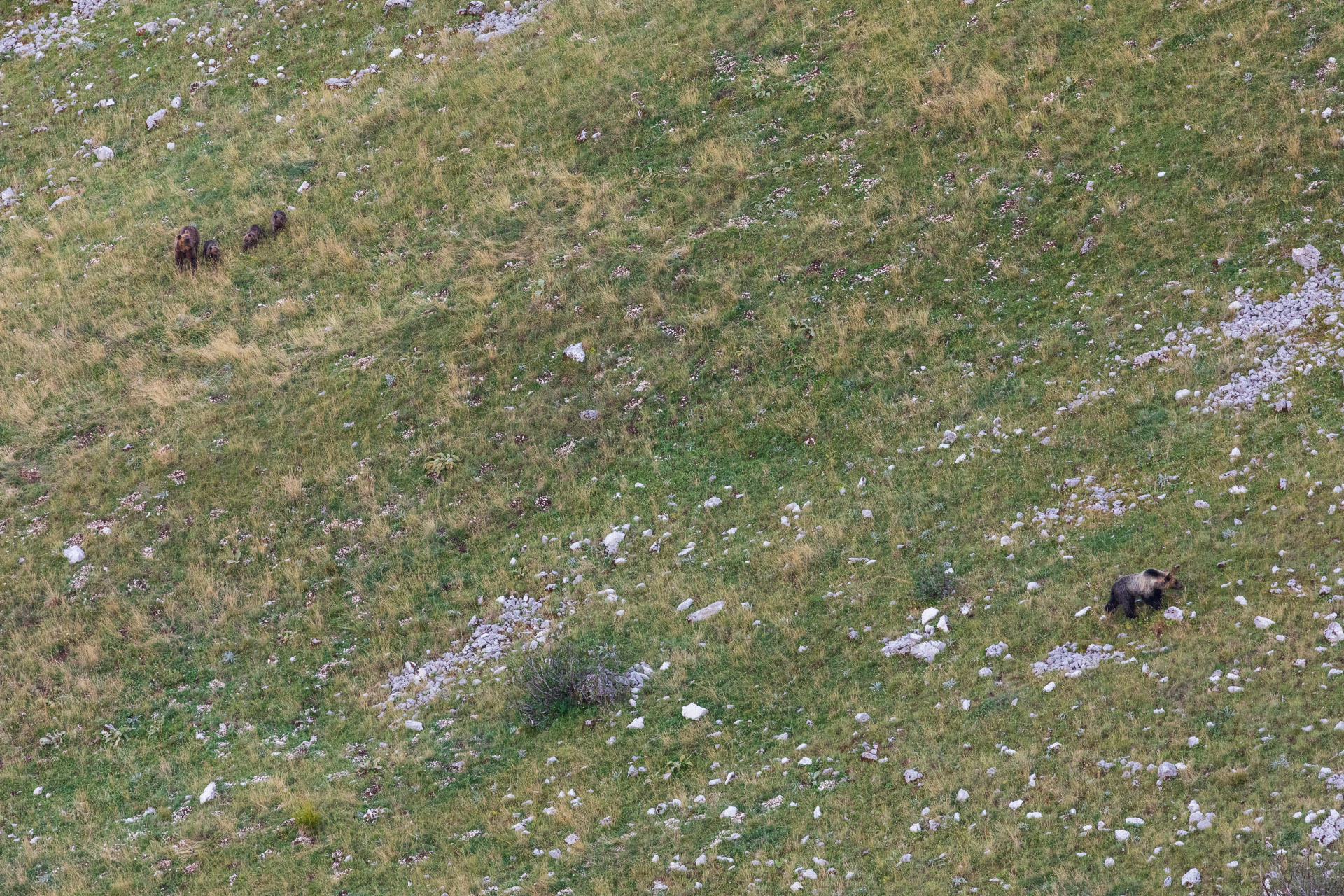
A female with her three cubs moves cautiously as she crosses a mountain slope, constantly sniffing the scent of another bear (out of frame) moving a little further up the slope.

As long as a female is accompanied by her offspring, she is not receptive. The cubs remain with their mother for two winters, then when they are about one and a half years old, in the breeding season between April and May, the mother drives them away. Such short intervals have been observed in brown bear populations in northern Europe, but rarely in North America, where the female may remain together with her cubs for as long as three and a half years. In the mountainous areas of southern Asia, poorer in food resources, the cubs may stay with their mother for as long as four and a half years. However, three or more years may be too long for a male to wait to breed again. So in order to get what they want, the males adopt a rather brusque, no-nonsense stratagem, infanticide, killing the female’s young to make her immediately receptive, sometimes even just a few days after the “crime” has been committed. Following this traumatic event, females change their behaviour. While before with their young they were sedentary and elusive, a few days after their loss, they start to move around like other females. Research in Sweden found that 90% of females involved in infanticide during the breeding season reproduced successfully the following spring. Infanticide thus seems to be an effective technique, but for it to be successful, every male must first make sure not to kill his own offspring, then manage to successfully inseminate the female. Based on genetic techniques, Swedish researchers have confirmed that the males somehow recognise the females they mated with the previous season, perhaps by smelling the female and her cubs. Then after committing infanticide, they patiently follow their “victims”, waiting for them to come into heat, thus ensuring they become fathers again.

Researcher Andreas Zedrosser, from the University of South-Eastern Norway Department of Natural Sciences and Environmental Health, talks about the results of research into the reproductive strategies of bears in Northern Europe.

The females do not, of course, passively accept their offspring being killed. Female bears are proverbially very protective and touchy. They defend their offspring at all costs and aggression by males can sometimes end in the worst of outcomes, namely the death of a mother trying to protect her cubs. In order to minimise the risk of infanticide, females therefore enact their own counter-strategy. The simplest and most effective is obviously to avoid areas frequented by males during the mating season, moving about less, or choosing “shield” areas where they are less likely to meet a male. Some studies carried out in Northern Europe report that in spring, just like prey avoiding a predator, female bears may deliberately choose sites at the edge of built-up areas, usually some one to two kilometres away, as these are rarely frequented by the males, notoriously shyer towards man. Alternatively they may choose marginal, isolated areas, even though poorer in food resources. Females may also decide to invest more in the safety of their young than in the availability of food, waiting to replenish their energy in the summer and autumn. Their other strategy is to confuse potential fathers. Based on remote monitoring and genetic data, females may choose to mate with all males in the vicinity, so each male is convinced he’s the father of the next season’s offspring. Surprisingly, despite the promiscuity, it is always the most powerful male with the best genetic make-up that guarantees transmission of his genes.

Un caso di infanticidio in Appennino

In late August 2006, researchers observed a female with two cubs searching for alpine buckthorn berries on scree high up in the mountains. In the same period, three other bears regularly frequented the same area of buckthorn scrub and one of these was undoubtedly an adult male. At sunset on 2 September that same year, the family group was observed to be still complete. But the next day, park rangers on duty saw a female with just one single cub. Another day went by and at dawn, no more bears could be seen among the buckthorn bushes, but scanning the edge of the scrub with a telescope, the rangers caught a glimpse of two small disjointed shapes in the grass. When they went to investigate, they found the lifeless bodies of the two cubs with fractured bones, surrounded by broken branches and claw marks on the trunks. Why kill cubs out of season? Some experts believe there may have been an attempt to mate, or maybe it was an investment for the following breeding season.

The hierarchies established by males during the breeding season may remain in place for several years. In 2007, the male M06 was found poisoned along with two other bears. M06 had a territory of 180 km2, including at least 5 known female bears. The fate of their cubs is unknown, but the possibility that something irreparable occurred cannot be excluded.

The death of a bear at the hand of man can trigger a chain of infanticide. If the death of a dominant male leaves a territory vacant, other males will colonise it, killing the offspring of the deceased male. A severe blow to a population so at risk.

BACK
error: Content is protected !!