

Rights and duties
Legal notes on the animal issue
In February 2022, Italy marked a historic milestone, amending the fundamental principles of its Republican Constitution for the first time since 1948 to confront an issue that concerns us all, namely the relationship between humans and animals.
Article 9 of the Constitution now recognizes the protection of the environment as one of the fundamental principles of the State. This amendment, included in the section dedicated to culture, research, and the safeguarding of the Nation’s landscape and historical-artistic heritage, introduces a new third paragraph, which states that the Republic “protects the environment, biodiversity, and ecosystems, also in the interest of future generations.”
Even though environmental protection was not explicitly mentioned, its protection had long been recognized within our constitutional system well before the 2022 reform.
Although the Constitution, which came into force on January 1, 1948, made no mention of the environment, it was precisely starting from Article 9 – the provision protecting the landscape – that scholars, legal interpreters, and judges progressively extended the object of that protection to include values closely related to nature. It is also worth recalling that the Constitutional Court recognized the importance of environmental protection by linking it to the right to health, given that the quality of the environment is clearly closely tied to the quality of life. Over time, a Ministry of the Environment was established, the first regulations on environmental damage compensation were introduced (1986), and the environment made its initial appearance in the Constitution (2001), though only to be divided among areas of exclusive State legislative competence and those shared between the State and the Regions, between protection and enhancement. Later came the “Environmental Code” (2006), and even the Penal Code was amended to include a specific section on Crimes Against the Environment (2015). Despite all these developments, the environment remained without its own distinct constitutional status.

A group of chamois, a symbol of the Apennine wilderness, saved from extinction thanks to conservation efforts by the Abruzzo, Lazio and Molise National Park.
Recognizing environmental protection as a fundamental principle signals a major turning point at a time when ecological issues are increasingly urgent. However, the amendments have sparked widespread debate.
Although the introduction of a constitutional principle on environmental protection was broadly welcomed, it also attracted significant criticism. Much of the concern focused on the future of landscape protection, which, in light of the urgent demands for the development of clean and renewable energy sources, now risks being subordinated to the imperatives of the ecological transition. According to this perspective, the ecological transition has been incorporated into the Constitution under the broader umbrella of environmental, biodiversity, and ecosystem protection – sidelining, it would seem, all the other values and concerns that fall within the broader concept of environmental protection.

A Kentish plover reminds us how animals are capable of adapting and finding ways to coexist — yet they are not able to assess the risks this coexistence may entail.
In addition to the issue of the relationship between environment and landscape, another aspect of the constitutional reform has sparked considerable debate: the inclusion of animal protection within the Constitution.
Indeed, the current third section of Article 9, immediately after establishing the principle of environmental protection – also, as noted, in the interest of future generations – assigns to State law the task of regulating “the methods and forms of animal protection.” Some commentators have even described the reform as revolutionary, noting the symbolic significance of bringing animals into the Constitution for the first time. In fact in the 1948 Constitution – and even up to its unsatisfactory constitutionalization in 2001 – the environment was not even mentioned, and the same can be said for animals, which make their first appearance in the text of our fundamental Law with the February 2022 reform. In doing so, our constitutional system has aligned itself not only with the principles derived from European Union law, which recognizes animals as sentient beings (Article 13 TFEU), but also, it may be said, with the broader trends of contemporary constitutionalism, as an increasing number of Constitutions are addressing the animal issue or at least recognizing and giving relevance to it.
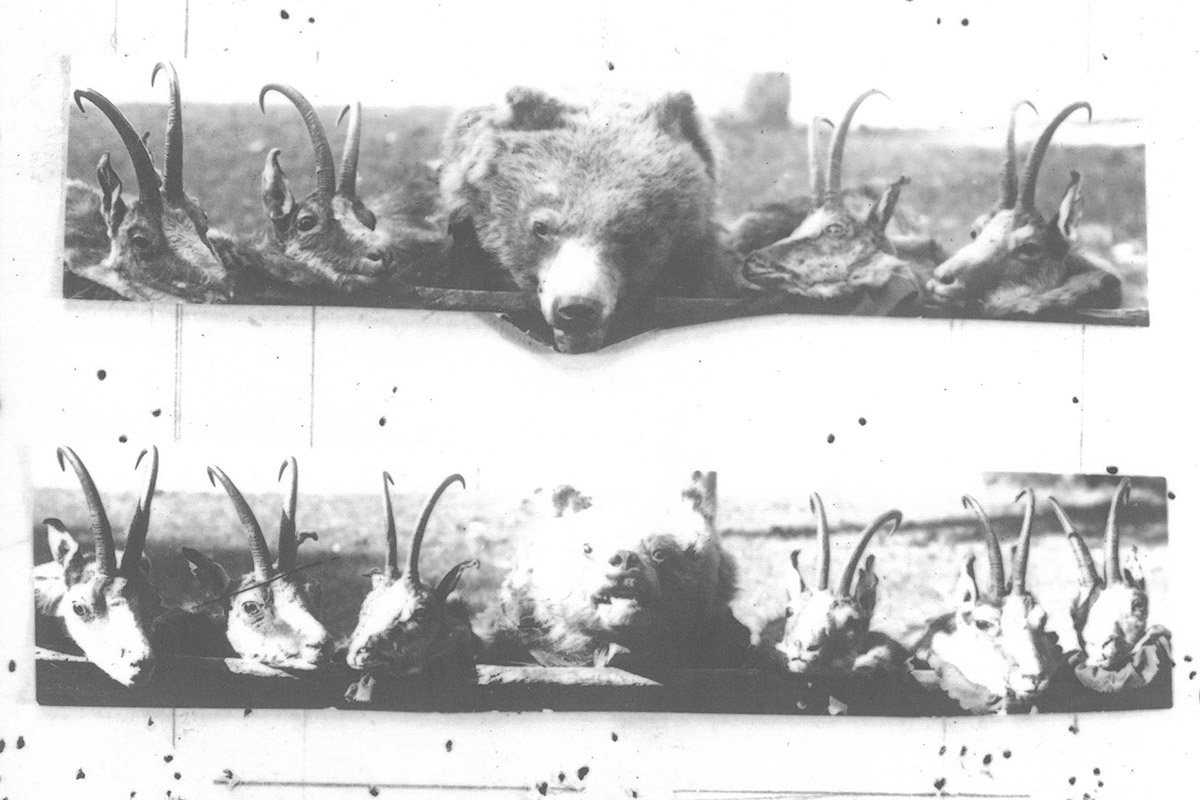
A historic image that reminds us how the path towards wildlife conservation and protection has left an indelible mark on the present and future of many species.
In this regard, some authors believe that the reform marks the final step in a legal and academic process that has gradually moved away from seeing animals as mere objects, since recognizing their protection at the constitutional level also suggests recognizing them as subjects in their own right. Others argue that the reform is more of a compromise, because although the Legislator has finally brought the issue of animals into the Constitution, they have not fully addressed it as animals were not given a real legal status. Still others point out that, by leaving the protection of animals to the discretion of the national legislator, the reform shows a clearly anthropocentric approach, as the way animals are protected ultimately depends on human decisions and interests.
TO BE OR NOT TO BE A LEGAL SUBJECT
When we talk about legal subjectivity, we mean the ability to hold legal positions, like rights, powers, duties, and obligations. These positions are called legal situations, and they can be either active (when they give someone an advantage) or passive (when they impose a constraint or obligation). Subjective right is the main active legal situation, as it grants the subject a position of advantage that is recognized as worthy of protection by the legal system – that is the body of principles and rules that govern collective life within a given society.
Recognizing animals as legal subjects would be the first step toward recognizing their rights. However, simply holding a right does not guarantee that it will be respected; it is also necessary to be able to enforce the right, in other words to assert the legal advantage it grants by using the tools provided by the legal system. For example, even if the law recognizes that an animal has the right to live according to its ethology, in reality that right may go unprotected if the animal lives in conditions that violate its nature, especially if there’s no way to bring that violation before a court.
This possibility of legal action remains precluded to animals. However, similar to how environmental protection is handled, the legal system has devised certain mechanisms, such as allowing certain environmental associations to bring lawsuits. Nonetheless, a gap in protection remains. However, the Constitution, which is the highest source of law, also includes legal duties. These are passive legal positions that can limit personal freedom by requiring certain actions or behaviors, which the law can enforce. So when it comes to mistreated animals, recognizing their right to well-being may not be enough. It may prove to be a more straightforward and, above all, more effective approach – especially after the recent constitutional reform – to establish a human duty to respect animals’ nature and protect their natural environment.
In the end, both animal and environmental issues raise similar questions for legal scholars and they challenge the deeply rooted anthropocentric foundations on which the law is built.
Another aspect that commentators have focused on is the clear distinction, also present in the text of the new third section of Article 9, between the animal question and the environmental one – a distinction that the Legislator evidently grasped and chose to highlight. Emphasizing this point, some have interpreted the constitutional provision for animal protection as anything but a compromise.
Of course, even a preliminary exploration of the human-animal relationship, and more broadly, of the human-nature relationship, would require a series of further philosophical and ethical considerations that go well beyond legal analysis which, for obvious reasons, will not be addressed here.
Nonetheless, if it is true that the human-animal relationship has a specificity that cannot be reduced to a mere subset of the broader environmental issue, it is equally true that the protection of the environment and the protection of animals share at least one common denominator: that of placing the legal system, a human construct, before the challenge of the ‘other-than-human’, and thus, ultimately, before the now widely discussed issue of coexistence with what exists outside and beyond ourselves.
What is the environment from a legal perspective? And what, within that framework, are animals? There are two main approaches that shape how environmental law is understood and developed. The first, the anthropocentric approach, which puts humans and their needs at the heart of how we approach environmental issues, and the ecocentric approach, which seeks to protect the environment for its own sake, regardless of the benefits it may provide to humans. Each of these perspectives can appear with varying intensity and in different forms.
When confronted with the questions raised by environmental and animal issues, the anthropocentric perspective – according to which only human beings can assign value and claim rights, and the legal system must merely acknowledge individual claims and ensure their expression – has long revealed its limitations.
For example, framing the environment as a human right addresses only part of the issue of defining its legal status. It does not account for those environmental components – and even fauna – that may not be immediately useful to humans and may even prove harmful or dangerous.

To coexist does not simply mean to compromise, but to truly understand what it means to inhabit a place — a place that holds different meanings for its various inhabitants, both human and non-human.
In this regard, credit must be given to the legal scholarship that has effectively highlighted the critical shortcomings such a definition would entail if accepted. Professor Fabrizio Fracchia, in particular, has employed a series of highly evocative examples to demonstrate the inadequacy of applying the category of subjective rights to the environment.
First, he emphasizes that humanity’s position in relation to nature is not that of a rights-holder, in the sense of having enforceable claims, but rather one of subjection: human beings are subject to the laws of nature and, at times, even suffer its violent effects.
However, the so-called “tsunami syndrome” isn’t the only issue the author points out. It is accompanied by what he calls the “blank page” syndrome, which highlights another issue: although environmental law is said to protect a legal position, namely, the subjective right to the environment, there is, in fact, no real trace of this protected status in positive law. And when such a right is recognized, its true object is not the environment itself, but rather the human right to health.
Should the outcome, then, be to protect the environment only to the extent that it serves human interests? Yet, it must also be said that even the most ecocentric or biocentric theories, namely those that seek to extend legal subjectivity beyond human beings, have failed to meet expectations. One can certainly speak of animal rights, and even of the rights of trees or rivers, but the truth is that rights without the ability to claim or enforce them are just empty declarations. If there is no access to justice or resources to defend rights, the mere fact that those rights exist “on paper” doesn’t help. This applies even to human rights. Without mechanisms to enforce them, declarations of rights remain mere words, and in this sense, our position is not so different from that of animals.
We can draft extensive lists of rights that, according to our culture, intelligence, and sensibilities, we believe should be granted to animals. But without more, this becomes little more than a rhetorical exercise. Animals, any animal, would still lack the one thing that truly matters when it comes to holding a right: the actual possibility of defending it and making it effective.
IL “SENTIRE” DELL’ALTRO
Article 13 of the Treaty on the Functioning of the European Union (TFEU) states that, in formulating and implementing Union policies, consideration must be given to animal welfare, recognizing animals as “sentient beings.” This marks a significant shift away from the Cartesian view, which regarded animals as machines devoid of feeling. The 2022 constitutional reform, which incorporated the principle of animal protection in the Italian Constitution, also represents a significant step forward in the process of de-reifying animals, that is, moving away from treating them as mere objects.
Along these lines, as early as 2004, the Italian Legislature introduced provisions into the Penal Code to criminalize certain acts, such as the killing (Art. 544-bis of the Italian Penal Code) or mistreatment of animals (Art. 544-ter of the Italian Penal Code). However, these provisions were grouped under the heading “Crimes against feelings for animals”, which is clearly human feeling. With law no. 82 of 2025, the Criminal Code partially moves beyond an anthropocentric perspective, referring to crimes against animals, increasing penalties, and introducing a series of aggravating circumstances. However, the killing or mistreatment of animals is punishable only when committed with cruelty or without necessity, both of which are human categories. Despite the progress made, and even in the most advanced interpretations, the prevailing perspective remains anthropocentric.
Even Article 13 TFEU, while acknowledging animals as sentient beings, also emphasizes the need to respect, for instance, the customs and traditions of the Member States. Although important strides have been taken, the path toward recognizing the legal dignity of non-human “sentience,” particularly animal sentience, is still a long one. Nonetheless, in this complex journey, the inclusion of animal protection in the Constitution may help ensure we no longer lose our way.
A more appropriate perspective, at least from a legal standpoint, is not so much whether animals should be recognized as holders of rights, but rather to acknowledge the value of their protection and welfare, and to commit accordingly.

For thousands of years, we have eradicated everything that seemed to stand in the way of our interests. Perhaps what we need now is a new perspective — less anthropocentric and more mutualistic.
Such recognition and commitment, compared to the static affirmation of a right, ultimately proves to be more honest, even if it entails obligations, limitations, and duties. After all, the notion of duty is not unfamiliar to our Constitution: Article 2 explicitly links it to the recognition and guarantee of rights, establishing a parallel between the latter – defined as inviolable – and the inescapable duties of solidarity, whether political, economic, or social, and – why not? – in light of the reform of Article 9, also environmental.

Is it really so difficult to change our habits in order to make room for others — even when they are different from us?
This approach aligns with what has been described as moderate anthropocentrism, or a duty-based anthropocentrism, namely a perspective that acknowledges the centrality of the human being – at least in the construction of the legal system – but from that centrality derives a principle of responsibility toward all that is ‘other,’ with animals and the environment foremost among them. In short, it is a matter of ‘being at the center’ – but in a way that generates more duties than rights.
The recent inclusion of animal protection in the Constitution can therefore be viewed in a different light. Indeed, setting aside all the debates and limitations, it is undeniable that by inserting a reference to the protection of animals into the constitutional text, the reform has, in a sense, introduced a supreme obligation of protection toward them. Ultimately, it has made them the object of a human duty, just as the environment is, of which they – and we – are a part.
One day, perhaps, the legal system will also recognize animals as legal subjects, moving beyond speciesism. Until then, the strongest form of protection seems to be the recognition of human duties of protection toward animals, viewed not as resources, but as fellow beings with whom we share the experience of existence on this planet.
Edited by Alice Rallo – Legal assistant – Abruzzo, Lazio and Molise National Park
¹ See also D. CERINI AND E. LAMARQUE, La tutela degli animali nel nuovo articolo 9 della Costituzione, in federalismi.it, no. 24/2023, p. 34, where the authors note that “it is highly significant… that in the text of Article 9 of the Constitution, animals are not considered merely as components” – from which it follows that there was a deliberate choice “to recognize the value of respect for and protection of animals as distinct and autonomous from other, adjacent or partially overlapping values.”
A similar view is expressed by P. VIPIANA in La protezione degli animali nel nuovo art. 9 Cost., in DPCE online, no. 2/2022, p. 1120, who highlights that “the fact that the provision on animal protection is formulated as a standalone sentence… seems to indicate that animal protection is a clearly distinct matter.” At the same time, however, Vipiana clarifies that “in reality, the two parts [of Article 9] are closely connected, and the protection of animals acquires specific meaning precisely in relation to environmental protection.”
² See V. P. VIPIANA, op. cit., p. 1112, who argues that “the reference to the protection of animal rights… proves to be improper, as animals cannot bring legal action themselves (although legal standing could potentially be granted to animal rights organizations). Therefore, it seems preferable not to speak of animals as holders of rights, but rather to focus on their protection – an approach that entails imposing duties and prohibitions on human behavior with respect to how animals are treated.”
³ See on this point A. VALASTRO, La tutela degli animali nella Costituzione italiana, in Biolaw Journal – Rivista di BioDiritto, no. 2/2022, p. 279, who states that “the Constitution, as a project for the development of human society, cannot but presuppose the proper coexistence of the human species with other species, albeit within the framework of necessary and physiological balancing…”
⁴ D. CERINI AND E. LAMARQUE, op. cit., pp. 63 ff., speak of the constitutionalization of an animalist principle, and argue that “from now on, it will be necessary to take this new principle into account in the exercise of both legislative and judicial functions.”