Rights and duties

Rights and duties

Legal notes on the animal issue

READING TIME 14 MIN

In February 2022, Italy marked a historic milestone, amending the fundamental principles of its Republican Constitution for the first time since 1948 to confront an issue that concerns us all, namely the relationship between humans and animals.

Article 9 of the Constitution now recognizes the protection of the environment as one of the fundamental principles of the State. This amendment, included in the section dedicated to culture, research, and the safeguarding of the Nation’s landscape and historical-artistic heritage, introduces a new third paragraph, which states that the Republic “protects the environment, biodiversity, and ecosystems, also in the interest of future generations.”

Even though environmental protection was not explicitly mentioned, its protection had long been recognized within our constitutional system well before the 2022 reform.

Although the Constitution, which came into force on January 1, 1948, made no mention of the environment, it was precisely starting from Article 9 – the provision protecting the landscape – that scholars, legal interpreters, and judges progressively extended the object of that protection to include values closely related to nature. It is also worth recalling that the Constitutional Court recognized the importance of environmental protection by linking it to the right to health, given that the quality of the environment is clearly closely tied to the quality of life. Over time, a Ministry of the Environment was established, the first regulations on environmental damage compensation were introduced (1986), and the environment made its initial appearance in the Constitution (2001), though only to be divided among areas of exclusive State legislative competence and those shared between the State and the Regions, between protection and enhancement. Later came the “Environmental Code” (2006), and even the Penal Code was amended to include a specific section on Crimes Against the Environment (2015). Despite all these developments, the environment remained without its own distinct constitutional status.

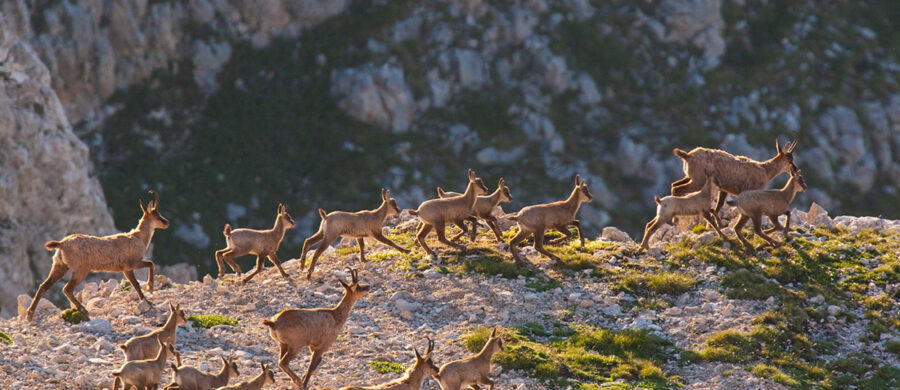
A group of chamois, a symbol of the Apennine wilderness, saved from extinction thanks to conservation efforts by the Abruzzo, Lazio and Molise National Park.

Recognizing environmental protection as a fundamental principle signals a major turning point at a time when ecological issues are increasingly urgent. However, the amendments have sparked widespread debate.

Although the introduction of a constitutional principle on environmental protection was broadly welcomed, it also attracted significant criticism. Much of the concern focused on the future of landscape protection, which, in light of the urgent demands for the development of clean and renewable energy sources, now risks being subordinated to the imperatives of the ecological transition. According to this perspective, the ecological transition has been incorporated into the Constitution under the broader umbrella of environmental, biodiversity, and ecosystem protection – sidelining, it would seem, all the other values and concerns that fall within the broader concept of environmental protection.

A Kentish plover reminds us how animals are capable of adapting and finding ways to coexist — yet they are not able to assess the risks this coexistence may entail.

In addition to the issue of the relationship between environment and landscape, another aspect of the constitutional reform has sparked considerable debate: the inclusion of animal protection within the Constitution.

Indeed, the current third section of Article 9, immediately after establishing the principle of environmental protection – also, as noted, in the interest of future generations – assigns to State law the task of regulating “the methods and forms of animal protection.” Some commentators have even described the reform as revolutionary, noting the symbolic significance of bringing animals into the Constitution for the first time. In fact in the 1948 Constitution – and even up to its unsatisfactory constitutionalization in 2001 – the environment was not even mentioned, and the same can be said for animals, which make their first appearance in the text of our fundamental Law with the February 2022 reform. In doing so, our constitutional system has aligned itself not only with the principles derived from European Union law, which recognizes animals as sentient beings (Article 13 TFEU), but also, it may be said, with the broader trends of contemporary constitutionalism, as an increasing number of Constitutions are addressing the animal issue or at least recognizing and giving relevance to it.
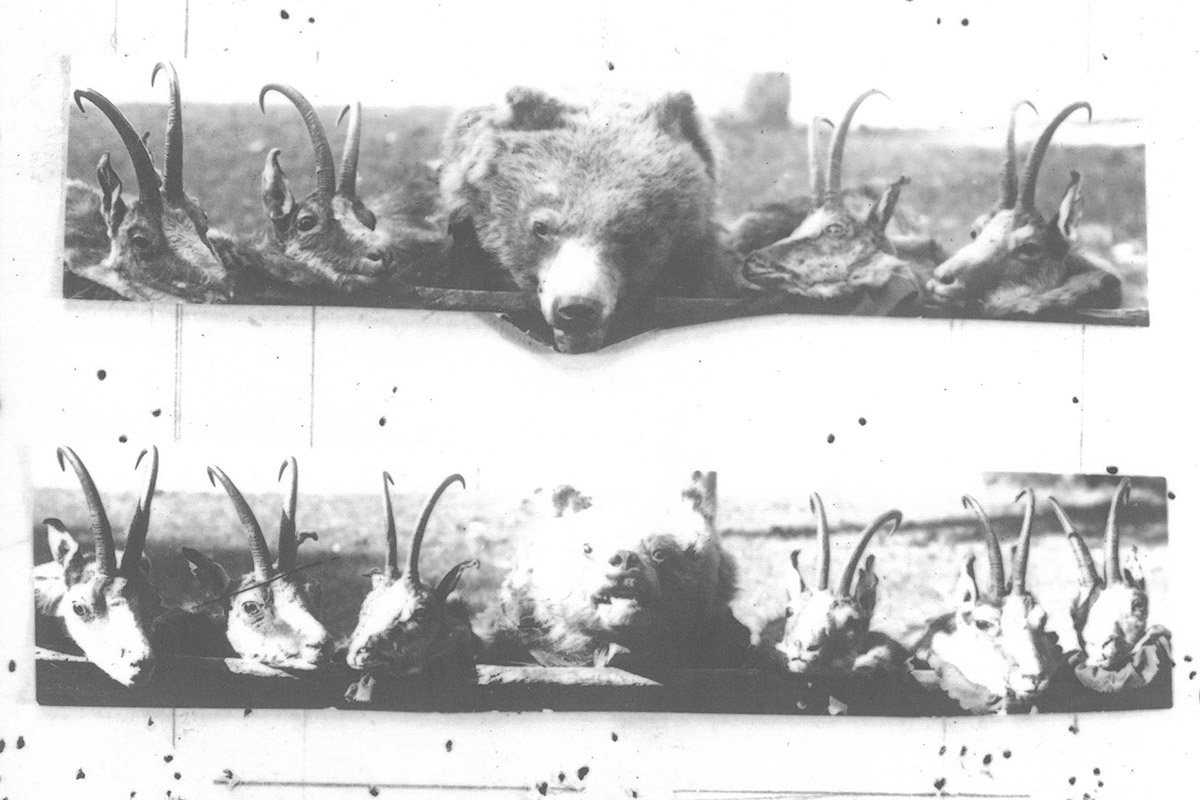
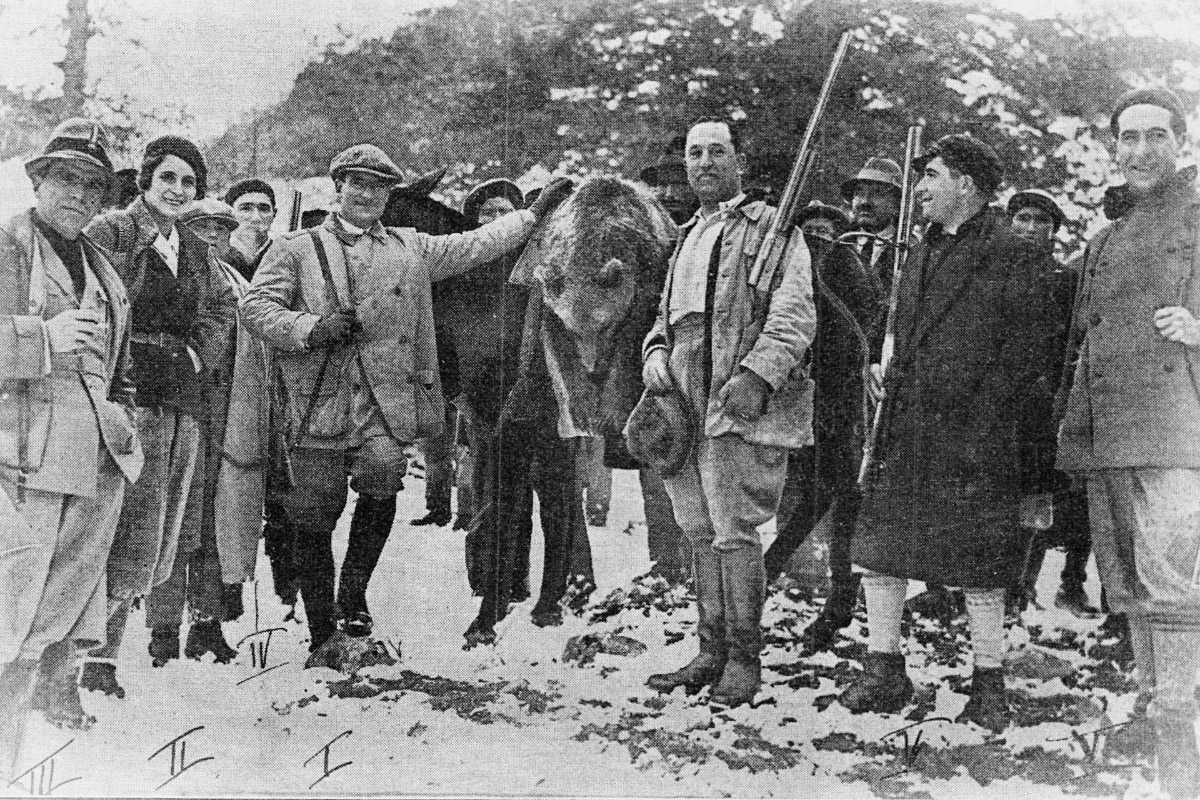
A historic image that reminds us how the path towards wildlife conservation and protection has left an indelible mark on the present and future of many species.

In this regard, some authors believe that the reform marks the final step in a legal and academic process that has gradually moved away from seeing animals as mere objects, since recognizing their protection at the constitutional level also suggests recognizing them as subjects in their own right. Others argue that the reform is more of a compromise, because although the Legislator has finally brought the issue of animals into the Constitution, they have not fully addressed it as animals were not given a real legal status. Still others point out that, by leaving the protection of animals to the discretion of the national legislator, the reform shows a clearly anthropocentric approach, as the way animals are protected ultimately depends on human decisions and interests.

TO BE OR NOT TO BE A LEGAL SUBJECT

When we talk about legal subjectivity, we mean the ability to hold legal positions, like rights, powers, duties, and obligations. These positions are called legal situations, and they can be either active (when they give someone an advantage) or passive (when they impose a constraint or obligation). Subjective right is the main active legal situation, as it grants the subject a position of advantage that is recognized as worthy of protection by the legal system – that is the body of principles and rules that govern collective life within a given society.

Recognizing animals as legal subjects would be the first step toward recognizing their rights. However, simply holding a right does not guarantee that it will be respected; it is also necessary to be able to enforce the right, in other words to assert the legal advantage it grants by using the tools provided by the legal system. For example, even if the law recognizes that an animal has the right to live according to its ethology, in reality that right may go unprotected if the animal lives in conditions that violate its nature, especially if there’s no way to bring that violation before a court.

This possibility of legal action remains precluded to animals. However, similar to how environmental protection is handled, the legal system has devised certain mechanisms, such as allowing certain environmental associations to bring lawsuits. Nonetheless, a gap in protection remains. However, the Constitution, which is the highest source of law, also includes legal duties. These are passive legal positions that can limit personal freedom by requiring certain actions or behaviors, which the law can enforce. So when it comes to mistreated animals, recognizing their right to well-being may not be enough. It may prove to be a more straightforward and, above all, more effective approach – especially after the recent constitutional reform – to establish a human duty to respect animals’ nature and protect their natural environment.

In the end, both animal and environmental issues raise similar questions for legal scholars and they challenge the deeply rooted anthropocentric foundations on which the law is built.

Another aspect that commentators have focused on is the clear distinction, also present in the text of the new third section of Article 9, between the animal question and the environmental one – a distinction that the Legislator evidently grasped and chose to highlight. Emphasizing this point, some have interpreted the constitutional provision for animal protection as anything but a compromise.

Of course, even a preliminary exploration of the human-animal relationship, and more broadly, of the human-nature relationship, would require a series of further philosophical and ethical considerations that go well beyond legal analysis which, for obvious reasons, will not be addressed here.

Nonetheless, if it is true that the human-animal relationship has a specificity that cannot be reduced to a mere subset of the broader environmental issue, it is equally true that the protection of the environment and the protection of animals share at least one common denominator: that of placing the legal system, a human construct, before the challenge of the ‘other-than-human’, and thus, ultimately, before the now widely discussed issue of coexistence with what exists outside and beyond ourselves.

What is the environment from a legal perspective? And what, within that framework, are animals? There are two main approaches that shape how environmental law is understood and developed. The first, the anthropocentric approach, which puts humans and their needs at the heart of how we approach environmental issues, and the ecocentric approach, which seeks to protect the environment for its own sake, regardless of the benefits it may provide to humans. Each of these perspectives can appear with varying intensity and in different forms.

When confronted with the questions raised by environmental and animal issues, the anthropocentric perspective – according to which only human beings can assign value and claim rights, and the legal system must merely acknowledge individual claims and ensure their expression – has long revealed its limitations.

For example, framing the environment as a human right addresses only part of the issue of defining its legal status. It does not account for those environmental components – and even fauna – that may not be immediately useful to humans and may even prove harmful or dangerous.

To coexist does not simply mean to compromise, but to truly understand what it means to inhabit a place — a place that holds different meanings for its various inhabitants, both human and non-human.

In this regard, credit must be given to the legal scholarship that has effectively highlighted the critical shortcomings such a definition would entail if accepted. Professor Fabrizio Fracchia, in particular, has employed a series of highly evocative examples to demonstrate the inadequacy of applying the category of subjective rights to the environment.

First, he emphasizes that humanity’s position in relation to nature is not that of a rights-holder, in the sense of having enforceable claims, but rather one of subjection: human beings are subject to the laws of nature and, at times, even suffer its violent effects.

However, the so-called “tsunami syndrome” isn’t the only issue the author points out. It is accompanied by what he calls the “blank page” syndrome, which highlights another issue: although environmental law is said to protect a legal position, namely, the subjective right to the environment, there is, in fact, no real trace of this protected status in positive law. And when such a right is recognized, its true object is not the environment itself, but rather the human right to health.

Should the outcome, then, be to protect the environment only to the extent that it serves human interests? Yet, it must also be said that even the most ecocentric or biocentric theories, namely those that seek to extend legal subjectivity beyond human beings, have failed to meet expectations. One can certainly speak of animal rights, and even of the rights of trees or rivers, but the truth is that rights without the ability to claim or enforce them are just empty declarations. If there is no access to justice or resources to defend rights, the mere fact that those rights exist “on paper” doesn’t help. This applies even to human rights. Without mechanisms to enforce them, declarations of rights remain mere words, and in this sense, our position is not so different from that of animals.

We can draft extensive lists of rights that, according to our culture, intelligence, and sensibilities, we believe should be granted to animals. But without more, this becomes little more than a rhetorical exercise. Animals, any animal, would still lack the one thing that truly matters when it comes to holding a right: the actual possibility of defending it and making it effective.

IL “SENTIRE” DELL’ALTRO

Article 13 of the Treaty on the Functioning of the European Union (TFEU) states that, in formulating and implementing Union policies, consideration must be given to animal welfare, recognizing animals as “sentient beings.” This marks a significant shift away from the Cartesian view, which regarded animals as machines devoid of feeling. The 2022 constitutional reform, which incorporated the principle of animal protection in the Italian Constitution, also represents a significant step forward in the process of de-reifying animals, that is, moving away from treating them as mere objects.

Along these lines, as early as 2004, the Italian Legislature introduced provisions into the Penal Code to criminalize certain acts, such as the killing (Art. 544-bis of the Italian Penal Code) or mistreatment of animals (Art. 544-ter of the Italian Penal Code). However, these provisions were grouped under the heading “Crimes against feelings for animals”, which is clearly human feeling. With law no. 82 of 2025, the Criminal Code partially moves beyond an anthropocentric perspective, referring to crimes against animals, increasing penalties, and introducing a series of aggravating circumstances. However, the killing or mistreatment of animals is punishable only when committed with cruelty or without necessity, both of which are human categories. Despite the progress made, and even in the most advanced interpretations, the prevailing perspective remains anthropocentric.

Even Article 13 TFEU, while acknowledging animals as sentient beings, also emphasizes the need to respect, for instance, the customs and traditions of the Member States. Although important strides have been taken, the path toward recognizing the legal dignity of non-human “sentience,” particularly animal sentience, is still a long one. Nonetheless, in this complex journey, the inclusion of animal protection in the Constitution may help ensure we no longer lose our way.

A more appropriate perspective, at least from a legal standpoint, is not so much whether animals should be recognized as holders of rights, but rather to acknowledge the value of their protection and welfare, and to commit accordingly.

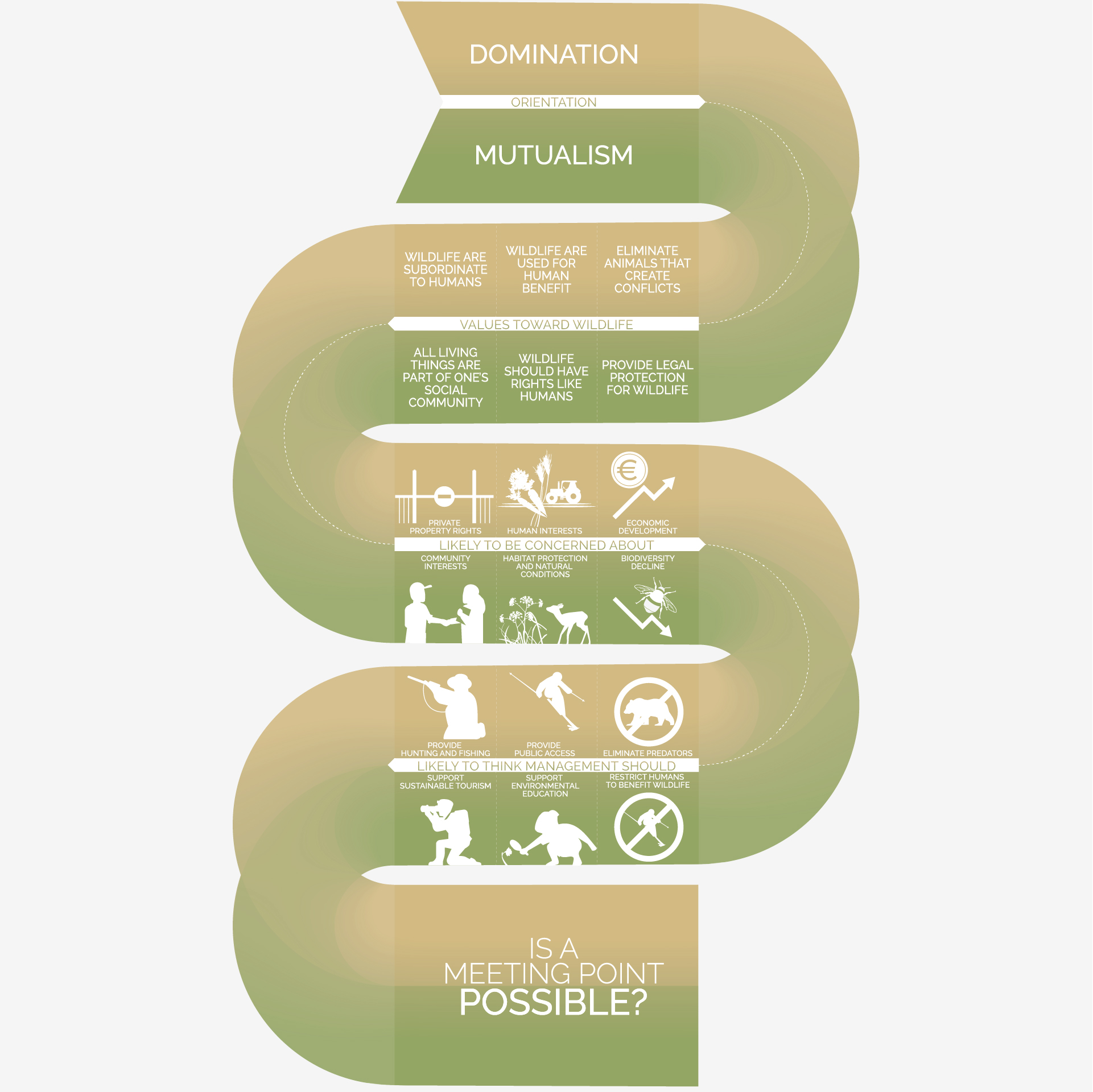
For thousands of years, we have eradicated everything that seemed to stand in the way of our interests. Perhaps what we need now is a new perspective — less anthropocentric and more mutualistic.

Such recognition and commitment, compared to the static affirmation of a right, ultimately proves to be more honest, even if it entails obligations, limitations, and duties. After all, the notion of duty is not unfamiliar to our Constitution: Article 2 explicitly links it to the recognition and guarantee of rights, establishing a parallel between the latter – defined as inviolable – and the inescapable duties of solidarity, whether political, economic, or social, and – why not? – in light of the reform of Article 9, also environmental.

Is it really so difficult to change our habits in order to make room for others — even when they are different from us?

This approach aligns with what has been described as moderate anthropocentrism, or a duty-based anthropocentrism, namely a perspective that acknowledges the centrality of the human being – at least in the construction of the legal system – but from that centrality derives a principle of responsibility toward all that is ‘other,’ with animals and the environment foremost among them. In short, it is a matter of ‘being at the center’ – but in a way that generates more duties than rights.

The recent inclusion of animal protection in the Constitution can therefore be viewed in a different light. Indeed, setting aside all the debates and limitations, it is undeniable that by inserting a reference to the protection of animals into the constitutional text, the reform has, in a sense, introduced a supreme obligation of protection toward them. Ultimately, it has made them the object of a human duty, just as the environment is, of which they – and we – are a part.

One day, perhaps, the legal system will also recognize animals as legal subjects, moving beyond speciesism. Until then, the strongest form of protection seems to be the recognition of human duties of protection toward animals, viewed not as resources, but as fellow beings with whom we share the experience of existence on this planet.

Edited by  Alice Rallo – Legal assistant – Abruzzo, Lazio and Molise National Park

¹ See also D. CERINI AND E. LAMARQUE, La tutela degli animali nel nuovo articolo 9 della Costituzione, in federalismi.it, no. 24/2023, p. 34, where the authors note that “it is highly significant… that in the text of Article 9 of the Constitution, animals are not considered merely as components” – from which it follows that there was a deliberate choice “to recognize the value of respect for and protection of animals as distinct and autonomous from other, adjacent or partially overlapping values.”
A similar view is expressed by P. VIPIANA in La protezione degli animali nel nuovo art. 9 Cost., in DPCE online, no. 2/2022, p. 1120, who highlights that “the fact that the provision on animal protection is formulated as a standalone sentence… seems to indicate that animal protection is a clearly distinct matter.” At the same time, however, Vipiana clarifies that “in reality, the two parts [of Article 9] are closely connected, and the protection of animals acquires specific meaning precisely in relation to environmental protection.”

² See V. P. VIPIANA, op. cit., p. 1112, who argues that “the reference to the protection of animal rights… proves to be improper, as animals cannot bring legal action themselves (although legal standing could potentially be granted to animal rights organizations). Therefore, it seems preferable not to speak of animals as holders of rights, but rather to focus on their protection – an approach that entails imposing duties and prohibitions on human behavior with respect to how animals are treated.”

³ See on this point A. VALASTRO, La tutela degli animali nella Costituzione italiana, in Biolaw Journal – Rivista di BioDiritto, no. 2/2022, p. 279, who states that “the Constitution, as a project for the development of human society, cannot but presuppose the proper coexistence of the human species with other species, albeit within the framework of necessary and physiological balancing…”

⁴ D. CERINI AND E. LAMARQUE, op. cit., pp. 63 ff., speak of the constitutionalization of an animalist principle, and argue that “from now on, it will be necessary to take this new principle into account in the exercise of both legislative and judicial functions.”


There where the wild things are

There where the wild things are

The thin line between human and nonhuman animals

READING TIME 14 MIN

Where do “wild things” begin or end? Unlike the imaginary island in Maurice Sendak’s famous children’s book, there is no universal answer. It is a changing concept, influenced by culture, upbringing, environment, what we watch on our screens and our own experience.

For some experts, this is something of a paradox, given that we ourselves are natural beings, in other words, we have co-evolved with all other natural creatures and forces for millions of years and share the same biological functions with the former. But the question is far from trivial, because it is precisely where humans and wild animals overlap that conflicts can occur. The human-fauna interface is seldom static and the greater the risk of encounter or the contact surface, the greater the likelihood of interactions occurring and becoming problematic. The global change taking place on Earth, now in the Anthropocene era, is influenced by many factors able to induce ecosystem alterations at general level, such as climate change, and at local level, with the spread of built-up areas at the expense of natural habitats, or, vice versa, the expansion of wildlife into urban areas. These aspects may also influence each other to an extent that cannot always be foreseen. There are, unfortunately, no quick and decisive solutions and a failure to take the socio-political and biological complexity behind these phenomena into account can only exacerbate tempers, polarise positions and make conflicts irresolvable.

Today, more and more people are afraid of nature, a phenomenon known as biophobia, perhaps one of the biggest obstacles to conservation policies for the animal species considered “most dangerous”.

Is it natural to be afraid of animals like bears and wolves? From an evolutionary point of view, fear kept our human and non-human ancestors alive for millions of years. In nature, a certain degree of fear is innate and almost always highly adaptive, as it helps to identify potential risks and deal with them strategically. A threat, or exposure to a frightening stimulus, is invariably followed by a complex of well-choreographed neurochemical responses, prompting animals to stay, flee or change their way of life. Just think for a moment of any event that has frightened you during your life… a quickening of the heartbeat and a rush, as they say, of adrenalin. So being afraid is not always a bad thing. Fear is also common to both humans and wild animals, but in humans it is much more complex. Human beings have, in fact, a natural tendency to respond instinctively, emotionally and affectively when faced with a risk, as well as to foresee and imagine the consequences of a situation or event. Whether we like it or not, we are imaginative beings and, in evolutionary terms, this makes us unique and sometimes fragile.

An empty subway platform in Rome. One of the many places from which we have completely removed any natural component.

All these factors can turn our fears into real phobias, helped by the sensationalism and “exaggerated” narratives offered by the media. Not only that, but we ever more live in an era characterised by what is known as “environmental amnesia” (in other words, a disconnection from nature) caused by our “urban” way of life, and this increasingly makes nature something unfamiliar and different. But breaking the fundamental link between us and all living systems could have disastrous consequences for the well-being of the planet. Biophobia can, in fact, contribute to reducing people’s willingness to coexist with the most dangerous species such as bears and wolves and to fear any kind of experience in nature. And this also has consequences for human health. Many studies have show that spending time in nature, or relating to the natural world in other ways, triggers neuroendocrine responses that make us feel good. On the contrary, especially in young people, alienation from the natural world contributes to the onset of diseases and developmental and behavioural deficits.

Human beings have a natural tendency to focus more on negative information and this magnifies the extent of the risk in their minds.

How do we assess a risk? Experts have shown that human beings have a tendency to be excessively afraid of some things or not afraid enough of others, in other words, to perceive some risks as bigger or smaller, regardless of the scientific evidence. Why? Let’s talk about emotions again. Our perceptions of anything are always subjective and in an evaluation process, the emotional component is always the protagonist, sometimes overturning any reasoning. Experts, however, also say that the absence of emotions (if that were possible) is equally harmful, because it can lead us to make choices that are not instinctive and not always “intelligent”. It’s all about balance. Then there is the fact that, in order to obtain information, you need to enter a jungle of partly contradictory and often polarised social media data. Experts such as David Ropeik, Harvard University professor and author of several books on risk, have identified a number of elements that can add irrationality to our decisions. Let’s take a look at some of them. The less familiar an event, the more it is subject to myths and legends and the more frightening it is. The more an event makes us feel physically vulnerable, the more we fear it. The worse the consequences of a risk in terms of suffering, the more it terrifies us. For example, we are more afraid of events that can kill “suddenly” (such as a terrorist attack) than those that cause the same number of deaths chronically, such as illness or car accidents.

Headlines on the front page in the aftermath of the terrorist attack on 11 September 2001, one of the news items that most shocked the contemporary collective imagination and greatly influenced political and individual choices in the years to follow.

Regardless of the facts, any risk seems greater when we think it might affect us directly, so it doesn’t matter if it affects one person in a million, that person is us. So it’s clear that an incident such as a bear attack can open a real Pandora’s box of emotions and fear, because it fits perfectly into our natural mental short circuits. And in an instant we become the protagonist of Grizzly Man or The Revenant. Furthermore, human beings naturally fall victim to what are called “media bubbles”, in other words, they have a tendency to only seek out or listen to information that reinforces what they or their group believe. So, what do the experts conclude? It is irrational to urge people to take a rational attitude towards a risk, because it assumes that everyone is capable of understanding numbers and always making the most scientific decisions. On the other hand, it is equally irrational to treat or consider those who find it hard to understand risk figures as ignorant. They are just people. So it is always a matter of stepping not only into other people’s shoes, but in practice into our own.

Knowing how to live and knowing the risks is not a catastrophe, but a way of taking them in small doses and making them part of our daily lives.

Does this mean that science and the public can’t dialogue? Both languages are necessary. But it is crucial to understand that narrowing the perception gap between our fears and the facts is not an easy matter, neither for those whose job it is to inform, nor for those who should listen. It means thinking more carefully and rationally and this contrasts with the emotional and instinctive parts that are naturally more powerful. But if both sides are able to understand the mental shortcuts humans adopt to make decisions about anything, it is possible to consider the facts more clearly and thus give our rational side a little more say in the choices we make. All this could make us feel healthier and safer. When faced with a risk, it is not enough for me to feel objectively “safe” or to know what to do, I also need a certain emotional support.

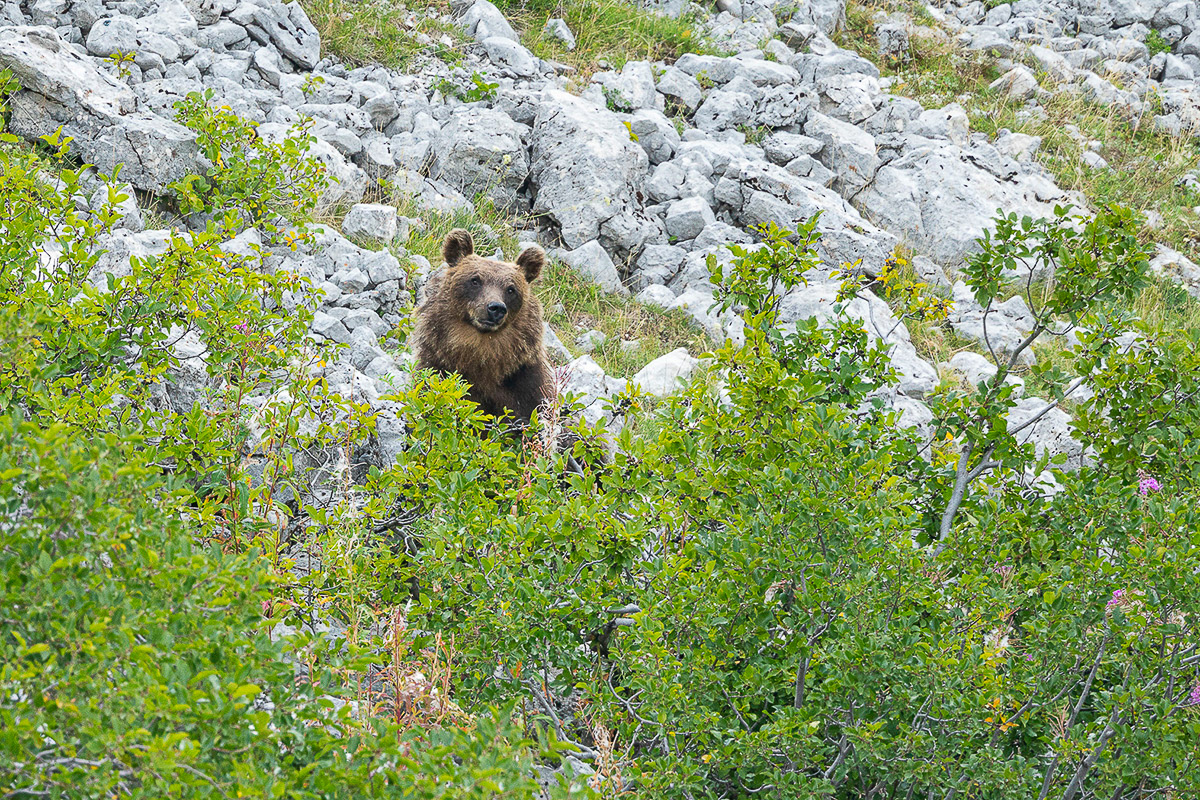
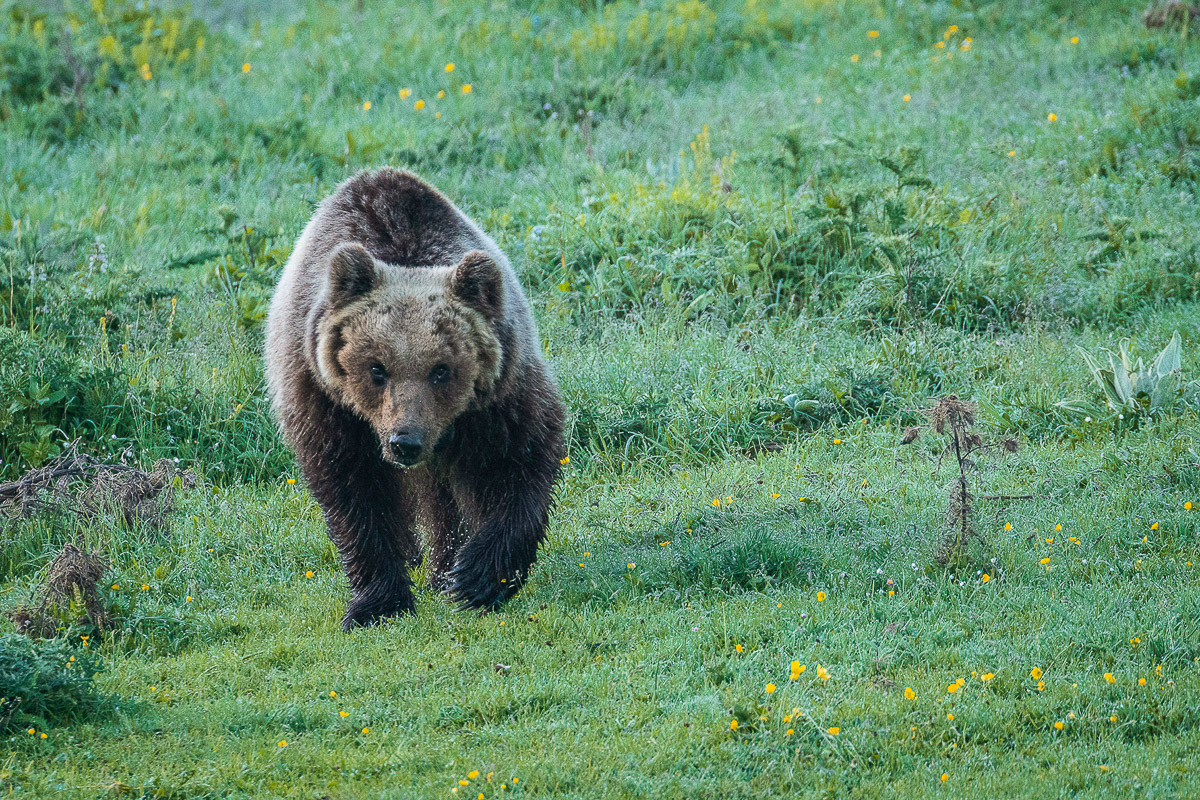
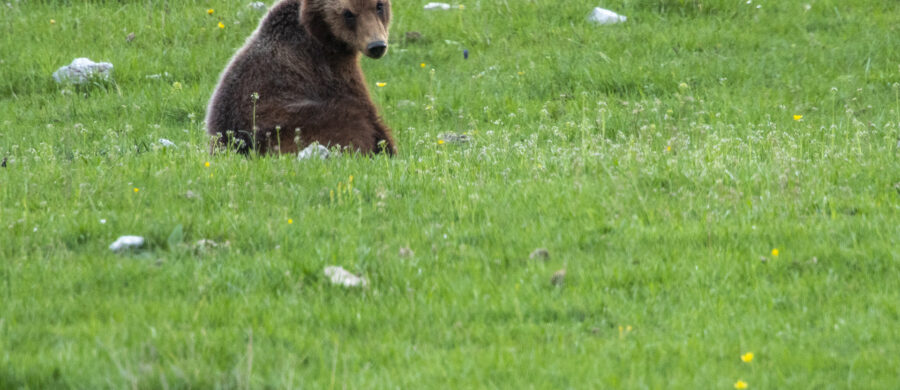
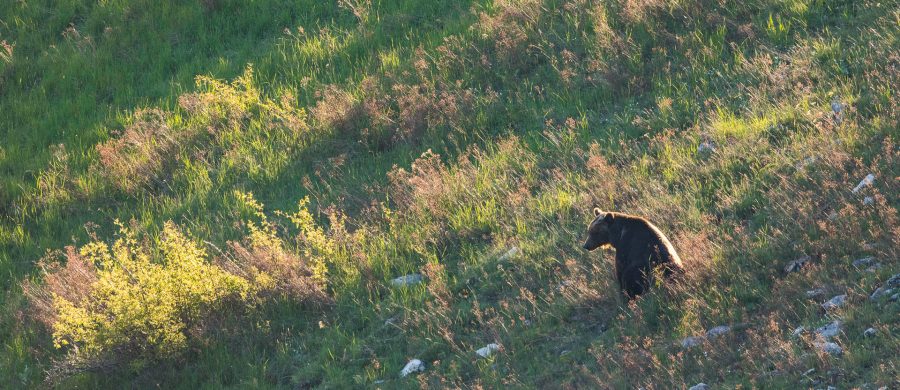
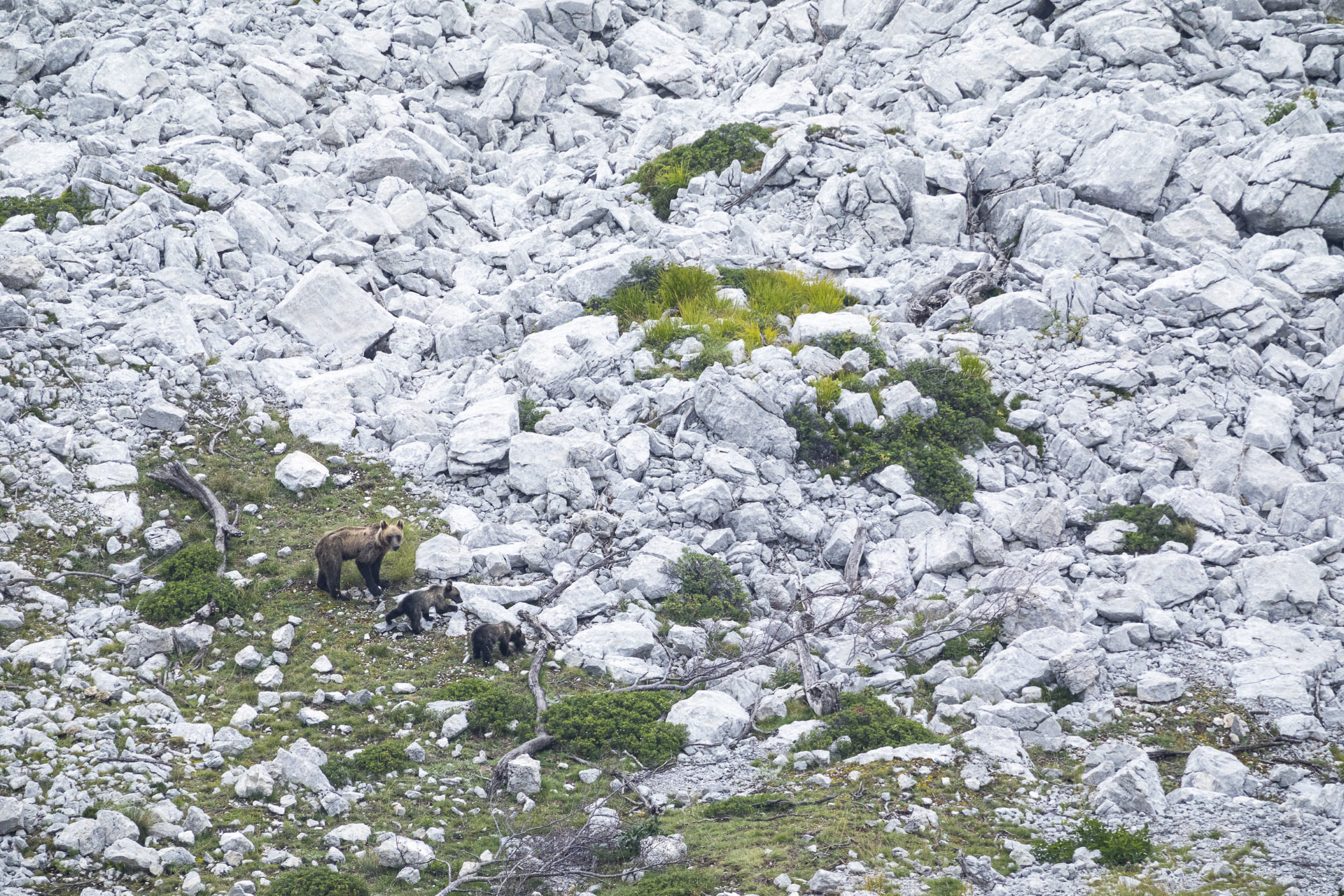
At dusk, a large male bear emerges stealthily from the centuries-old forest. An example of the typical environment and habits of this rare and elusive animal.

If you know bears, you avoid them, just as bears try to avoid humans. Avoiding risks is the first strategy for aware living in nature.

According to experts, there are a few basic things we can ask ourselves to help us make a more informed judgement on whether something bad is likely to happen to us. First of all, in practical terms, for something to be a risk, not only must the event be dangerous, we must also actually be exposed to it. If I’m in a forest in an area where there are bears, there is an objective risk, as it is a place where bears live freely and the bear can be a dangerous animal. But even if something is dangerous, there are other things you need to know: how dangerous is it? For whom is it dangerous? At what level? In what way? How dangerous is the exposure? For what period of time? At what age? How could I be exposed? If I have all these answers, can the risk of something bad happening to me be reduced? In other words, can I take control of my situation? Let’s try to assess the risk of being attacked by a bear. The premise is that basically bears also fear or avoid humans. Various studies using tracking collars show that, in the Apennines as in the rest of Europe or North America, these animals prefer to live in areas as far away as possible from large human settlements and they prefer taking refuge in less accessible areas during the day, especially in areas frequented by people. Bears avoid humans by leading a more nocturnal life and when a close encounter with a human occurs, in almost all cases, they flee the encounter area and remain hidden for days. In Scandinavia in the early 2000s, researchers began an experimental study to prove with objective data in hand that brown bears prefer to avoid direct confrontation with humans. When we say “sacrifice yourself for science” to improve coexistence, it’s not always just a catchphrase! Researchers, PhD and undergraduate students and volunteers approached thirty bears equipped with GPS tracking collars to distances of as little as 50 metres to assess their reaction to the presence of people, collecting 169 close encounters. The bears were visible in only 15% of the cases and showed no aggressive behaviour, while in 80% of the cases the bears moved away even before being sighted. The study shows that Scandinavian bears are not normally aggressive during encounters with humans.

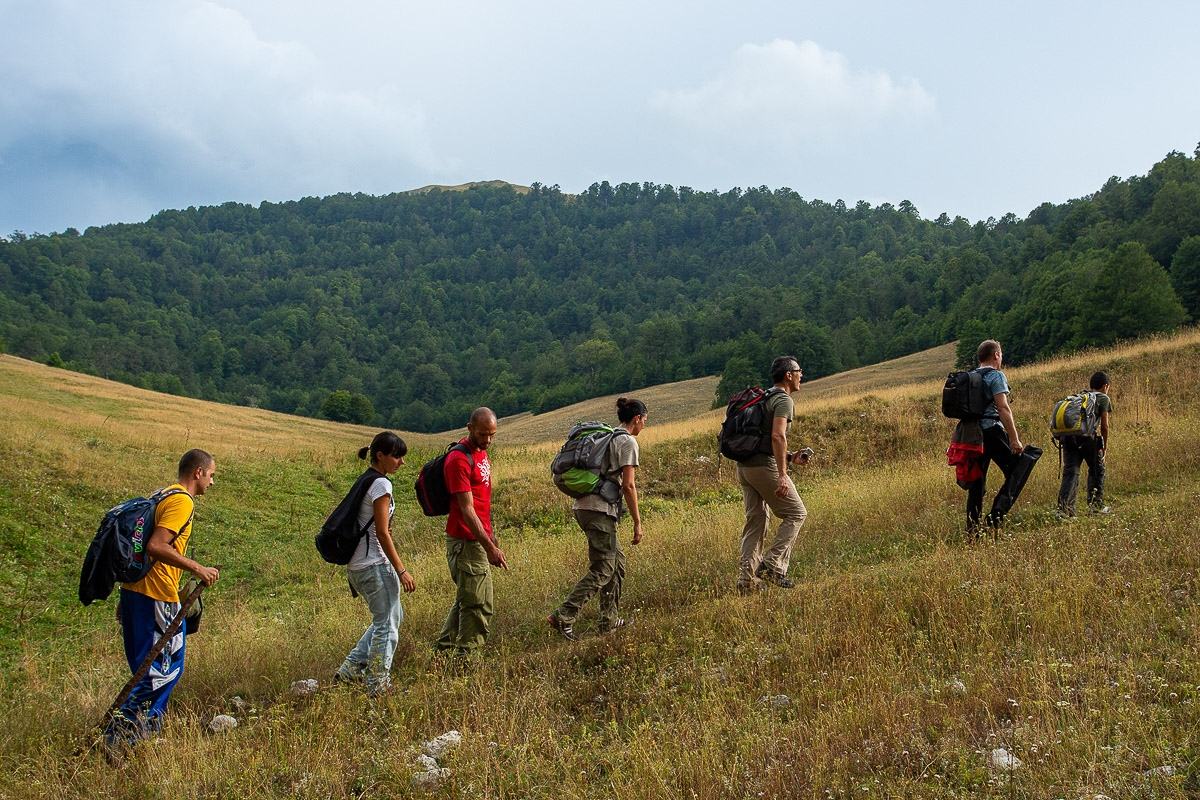
When I reached the ridge after a 600 metre ascent, my only thought was to sit down and catch my breath. A slow but steady wind cooled my face. Sitting down, I began to swing my body left and right to study where I was, when a few metres away, something more than a shadow among the leaves followed my movements. Time to focus: a bear with a collar was sitting watching me. My first thought, always the silliest: “It’s the bear I caught a few weeks ago, will he take revenge?” Basically, I immediately cast myself as one of the characters in the film “The Killer Whale”. Second thought with a long breath: “Calm down, distract him, don’t scare him, speak with a friendly tone and above all don’t run away”. And that’s what I did. I don’t remember the exact words, but I said something and slowly threw one or two pebbles, I think. And it worked, the bear stood on a rock to observe me better, while I made myself smaller and smaller, then with the utmost calm and above all indifference, he left. It felt as though I were no more relevant than that pebble I had thrown. Fear, fascination, emotion. I only remember that over a period of what seemed like hours, I retreated out of sight and walked away quickly, very quickly.

Elisabetta

The figures for cases of brown bear attacks are perhaps encouraging, we are talking of about 10 attacks per year across Europe and on average no more than one event per year resulting in the death of the person involved. So, yes, it is a dangerous event, but a rare one. In almost all cases, these were bears that felt threatened by people. So unlike other animals such as felines, the brown bear does not see humans as prey and attacks mainly if it feels it must defend itself. There are, in fact, situations that can put people at greater risk. Almost all the incidents occurred in the case of encounters with females accompanied by cubs and with a strong protective sense towards them; unexpected close encounters with a bear; in the presence of dogs off the lead (which chased the bears and then returned, or were defended by their owner); or bears attracted and conditioned by human food and thus more easily approached and less shy. There are also situations that must absolutely be avoided, such as approaching a female with cubs or a feeding bear (especially if it’s a carcass), or disturbing an individual in a den or approaching a wounded animal. What does all this mean? Shouldn’t I go to the mountains anymore? Not at all, that would be like deciding not to cross a road ever again because there is a risk of being run over. The above information suggests a number of behaviours you can adopt to avoid a close encounter. If you then find yourself face to face with an animal, it is essential to behave in such a way that the bear does not feel threatened, in other words, don’t provoke or frighten it, send it calming signals, if possible distract it and above all leave it an escape route. Attacks are very rare and improbable events, so defence or possible aggressive behaviour on the part of humans is to be avoided. Fighting is always just a last resort.

The first rule, avoid surprising a bear at close range

1) Be vigilant (for example, don’t walk with headphones on);
2) Stay on established trails and avoid leaving the path;
3) Walk in groups if possible;
3) Announce yourself as you walk along the trail (in other words, don’t walk silently);
4) If you have no visibility on a section of trail and you are cycling or running, slow down and preferably walk that section;
5) If you have a dog and can’t leave it at home, always keep it on a leash.

If you meet a bear that sees you from a distance

1) Remain calm and assess the situation;
2) If you are not alone, stay in the group;
3) Back away slowly, speak in a low voice and do not look at the bear: a direct gaze is perceived as a threat;
3) Do not run, a bear is faster than you and you may tempt it to chase you;
4) Do not approach or chase the bear;
5) If your vehicle is nearby, get in as quickly as possible;
6) If there are cubs in the area, move away from them;
7) Do what you can to leave the bear an escape route.

If you encounter a bear that approaches or chases you

1) Stay still and calm;
2) Identify yourself and send reassuring signals (for example, speak in a calm voice and gesture softly);
3) Avert your gaze: a direct gaze is perceived as a threat;
4) If your backpack was on the ground, slowly put it on your shoulders;
5) Distract the bear in another direction by slowly throwing small objects (such as pebbles) if you have them to hand;
6) If it stops, move away slowly.

If a bear attacks

Playing dead can be an option: drop to the ground face down, interlace your fingers behind your neck and spread your legs to make it harder for the bear to turn you over. Remember that reacting may increase the intensity of the attack.

What if I am in a built-up area? The same rules apply, as well as alerting the relevant public safety authorities. What about the Marsican bear? No attacks or injuries have been documented with certainty in the Apennines. Experts also confirm that it is genetically less aggressive as a consequence of its evolutionary history. But even this has consequences, especially on people’s behaviour. In the Apennines, and particularly in areas such as the PNALM, one of the most critical issues today is extreme biophilia and confidence in bears, in other words, people tend to chase and encircle these animals in built-up areas, sometimes just to take a photo or even a selfie, perhaps at a distance of a few metres, confident they are dealing with a “good” bear. The researchers and technical team at the PNALM alone could tell of dozens and dozens of close-range encounters that ended with the bear moving away spontaneously and many cases where it escaped immediately. But there is an “urban” tourism aimed at searching for wild animals, including red deer, among inhabited streets. On a number of occasions, incorrect behaviour has been observed, such as leaving food for the animals to attract them and see them again.

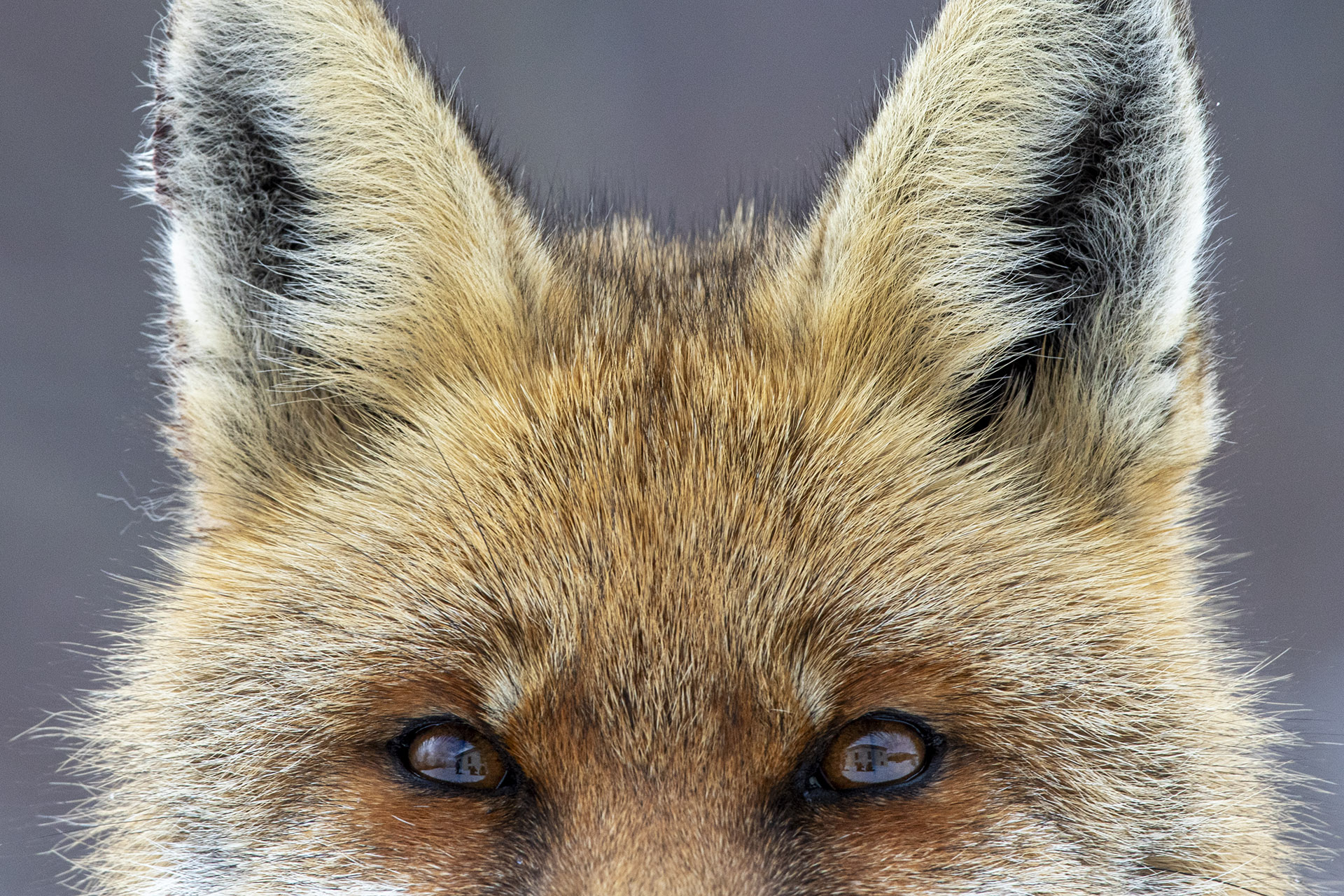
Close-up portrait of a confident fox, in search of food. The presence of animals in peri-urban areas in the Apennines can be a strong attraction for enthusiasts, the curious and photographers

It should be remembered that losing a natural mistrust of wild animals such as bears and others is just as irrational as having too much: another consequence of an “environmental amnesia” that can lead to the opposite extreme, namely considering any animal as tameable. Wild animals are genetically adapted to have high reactive aggression, they may behave “well”, but they are unpredictable. A wild animal might become “tame”, for example in captivity, but it will never be able to fully understand our language, something dogs can do, but as the result of an artificial selection process by man that began over 10,000 years ago. An example is worth a thousand words. Raymond Coppinger was a research biologist who dedicated a lifetime to studying the behaviour of dogs and other animals. He is not an unfamiliar presence in Abruzzo, because it was here that he came to study the sheep dogs guarding the flocks. In 2000, his friend Erich Klinghammer, director of the Indiana Wolf Park, invited him to enter the enclosure of some wolves that had been living in captivity since they were ten days old and had grown up without parents, without seeing the outside world and in contact with humans. They were used to being on a leash and were very tame. When asked by Raymond how to behave, his friend told him to treat them like dogs. Never was a suggestion more wrong. When Coppinger gave one of the females an affectionate tap on the side, Cassi, the female wolf’s name, bared her teeth and attacked him, while the other wolves prepared to do the same. Fortunately, Coppinger was able to save himself. Who among us does not give dogs affectionate pats? The thought of treating a tame wolf like a dog never crossed his mind again. However docile, a wolf will never let itself be tamed. And the same obviously applies to a bear. What are the conclusions? With a few precautions, you needn’t be afraid of being attacked by a bear in the Apennines, but don’t challenge their excessive tolerance and docility. The preservation of this animal depends on it.

We need more accurate, balanced and solution-focused narratives in which people can also engage, perhaps by changing the paradigms.

Although attacks on humans are rare, they often provoke lethal reactions towards the animals considered responsible for the attack, leading to a decrease in public tolerance towards these species and negative repercussions in terms of conservation. In the event of an incident, both humans and large carnivores lose, that’s why reducing these cases remains a priority in order to improve coexistence and ensure public safety and the conservation of large carnivore populations in the long term. But in the case of species such as bears, even if they are protected, it is not easy to establish or re-establish the legitimacy of actions to conserve them. As stated in the guidelines of the International Union for Conservation of Nature (IUCN), we are speaking of entrenched or identity conflicts, where the animals are seen as a threat to one’s own identity. In this scenario there is little room for dialogue and collaboration. Exaggerated attitudes, hostility, scepticism and sarcasm prevail among the parties.

The removal of animals, in other words, putting them in captivity or even killing them, is seen as the management solution to many problems, especially by the general public. But is this really the case? It may be a solution in the case of an isolated individual who manifests, for example, chronic aggressive behaviour towards humans, even if unprovoked. But if we are talking about bears that attack to defend themselves because they see us as a danger, can we really think of solving the issue by killing off every animal that acts on instinct as part of its natural repertoire? When an animal is removed, a vacancy will be left for another animal. But perhaps, in this case, it is not the bear, but rather the context. Experts also confirm that this practice may carry more risks than benefits. It can alter the structure and social balance in an animal population and instability can increase conflicts with humans, as well as harm the population itself.

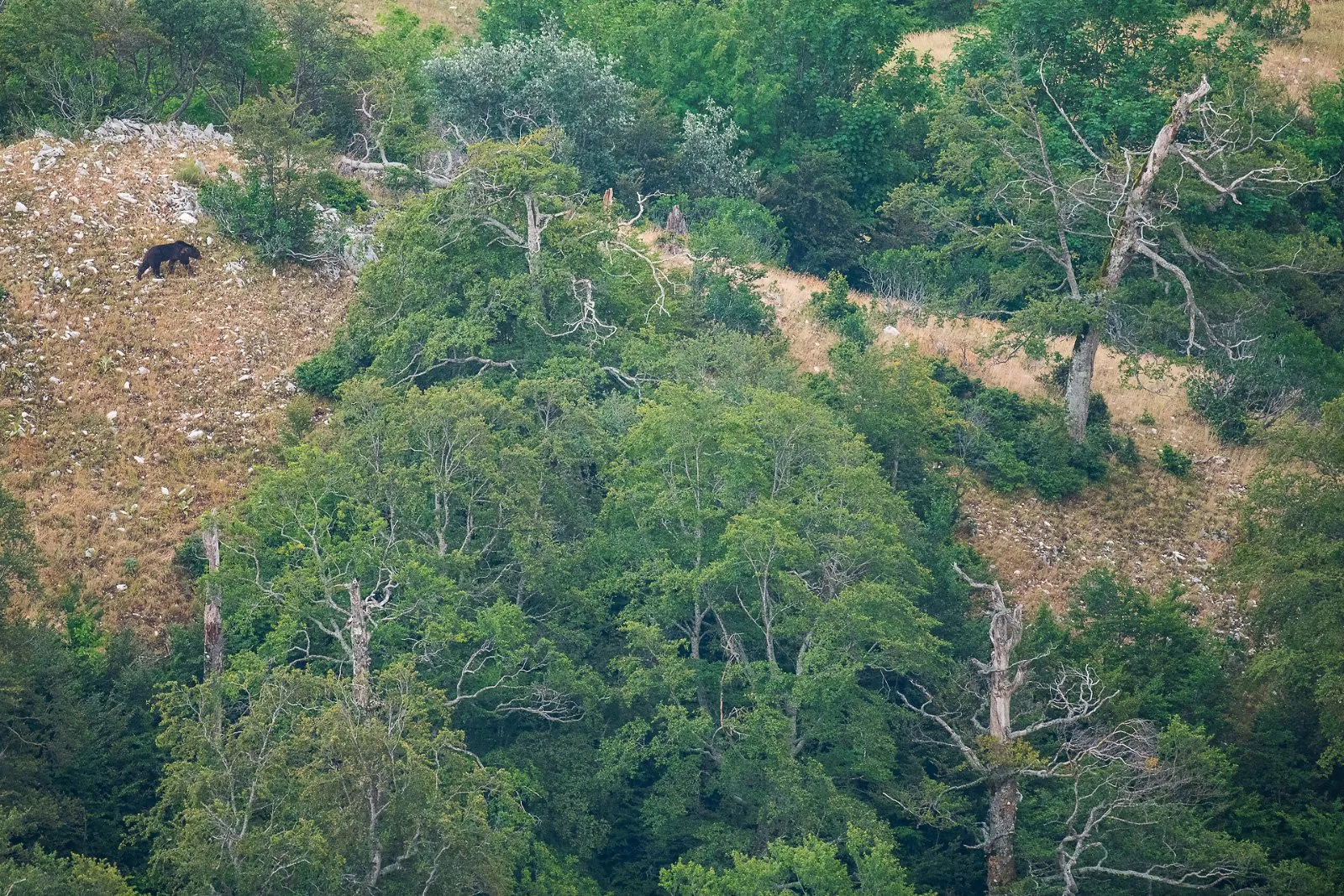
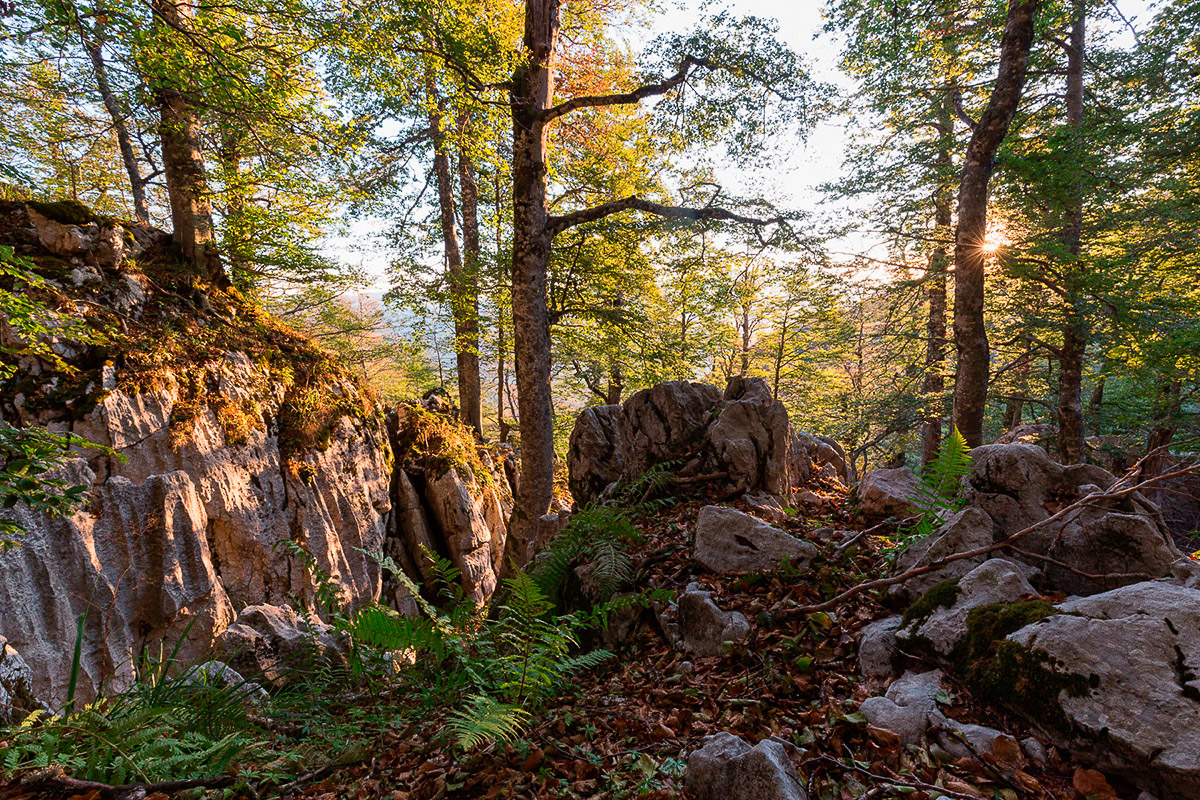
A corner of the Apennine beech forest, one of the most natural areas still surviving in our country.

Suppose we remove an adult male bear. If this individual is dominant, his place will be taken by another male bear who will first kill all cubs that are not his. In the case of wolves, destructuring the pack can lead to greater damage to economic activities. If we step outside the biological sphere, once this process starts, what limits do we set ourselves? It should also be considered that removing a species means creating a chain of side effects that can harm the environment and us too. Removing the wolf from a territory means allowing the indiscriminate growth of, for example, red deer, with a risk of increased damage to agricultural activities and biodiversity in general. So isn’t a non-lethal and preventive approach better?

In order to find solutions to conflicts, we must accept that risks cannot be eliminated, but only reduced and tolerated.

As stated in the IUCN guidelines, the coexistence of humans and wildlife can only be achieved through appropriate and informed collaboration between the various actors to identify a mutually acceptable strategy based on four fundamental principles:

– do no harm,
– understand the problems and the context,
– work together by integrating scientific, social and political aspects
– enable pathways that are sustainable for people and fauna.

For all this, we perhaps need a paradigm shift, or rather a new vision, and to ask ourselves a question: what if the entirely legitimate difficulties encountered were made even more insuperable by an overly anthropocentric and dominant view of nature? Is it possible to see large carnivores not as difficult or even fearsome bloodthirsty creatures, but as beings trying to survive like us in the same shared environment? Is it possible to move closer to a more mutualistic view of our relationship with nature? A vision, after all, not so new, as it belongs to many other cultures in our world.

Conflicts produce change. When properly addressed, conflicts between humans and wildlife force us to examine the underlying tensions and inequalities and work together to improve the well-being, development and conservation of nature.

The bear’s voices

The bear’s voices

Footprint of a territory

READING TIME 11 MIN

Bear Gully, Bear Knoll, Bear Pass, Bear Gap, Bear Spring, Bear Bluff, Bear Valley…

To find the traces of the men who gave these names to so many corners of the Apennines, you need to lose yourself in the distant past. Place names are the imprint an area leaves in the souls of the people living there. And the imprint left by the bear on this land is vivid and deep.

The bear enshrines everything we have inherited from the past.

With these simple words, one small town sums up thousands of years of coexistence between humans and bears in their common home. Human populations that over time have found a balance with a nature with which they have been, and still are, often in conflict, but with which they have also established a relationship of profound knowledge and tolerance and thus of mutual practices. The Apennines are a harsh, wild land, where man has tried to make his way with great hardship, often putting his own needs above those of the wildlife. But through his work, he has also shaped it, enriching it with grasslands and orchards, where many animals have found food and space. Here, bears, wolves and chamois have saved themselves from the extinction they faced on most of the European continent. The principles that have guided nature conservation in Italy were born here. In the course of time, what was once a local heritage of knowledge has gradually crossed its borders. Bears, ordinary people, the Park Authority and experts have opened up to the world and the world has been able to observe and learn about this reality. So the voices of those men who gave names to the mountains in that remote past survive not just as an echo, but as a message that still resonates today. In other ways and forms than in the past, the coexistence continues.

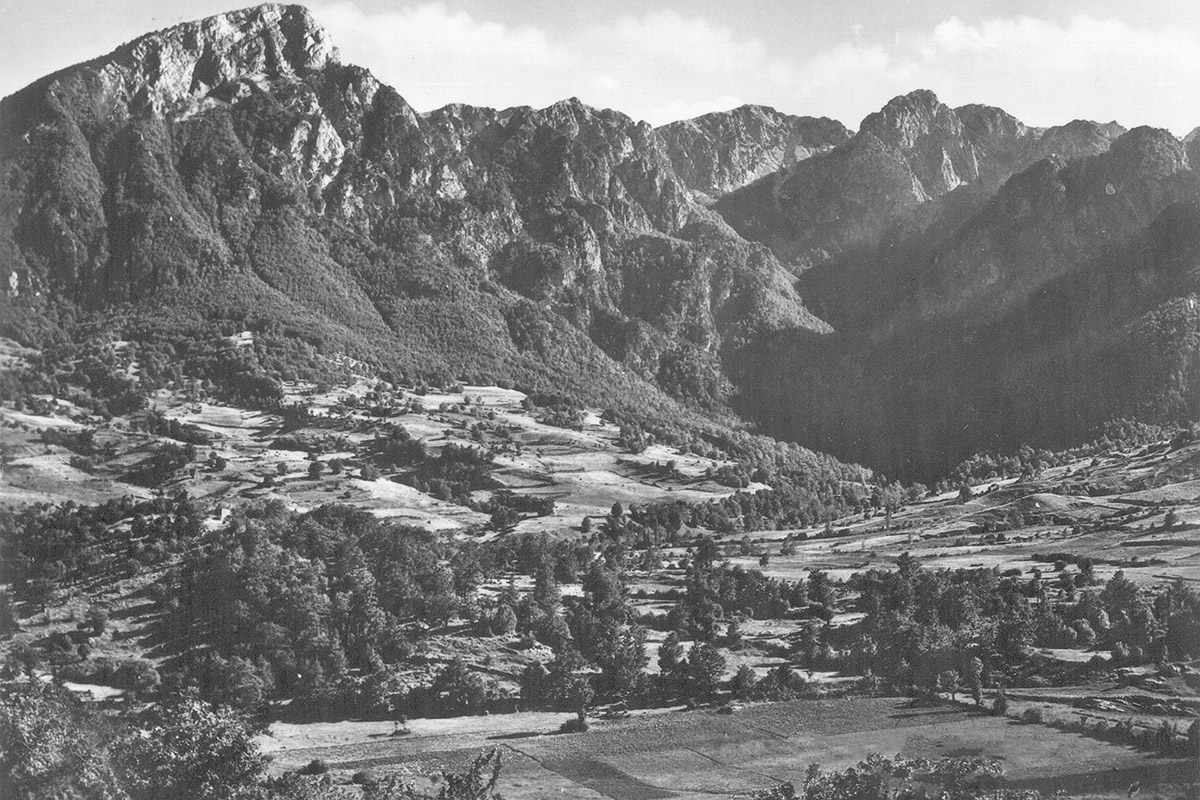
A historic image of the Monti della Camosciara, the heart of the Abruzzo, Lazio and Molise National Park since its foundation.

Then as now, people live with bears. They cohabit the same territory. They relate to bears on a daily basis, for work, for passion or even just by chance. Those who live in this land are able to observe nature without filters and without the mediation of others. But this opportunity is not just a privilege. It also involves challenges. Coming across deer in front of your school, or wolves and bears in the streets of your village, living in such close contact, can be extraordinary in many ways, but it also opens up a universe of difficulties, a complex sphere of perceptions and values to be managed. The Apennines offer past and present examples of natural coexistence with large carnivores that should be preserved, shared and understood. It is above all those who live in this land whose task it is to tell this unique story and not lose the way. Only by their example will other people truly understand what coexistence is all about.

There are numerous protagonists in the Apennines and each was and is a bearer of different perceptions, values and experiences. These are some of their voices.

To tell the story of these protagonists, we need to start with those who have always shared everything with the bear… farmers. Outside its winter den, a bear stretches and points its nose to the sky, searching the air for the scent of the first green grass sprouting on the low pastures still mottled with snow. The sheep on the threshold of the barn does the same. And so does the farmer at his window, looking out over the fields where he’ll soon be back at work. The universe of bear and man are ready to converge again like every spring. Over the next six months, men and bears will observe each other, study each other and devise new and more ingenious ways to trick each other, just as they’ve done for millennia, evolving together in a perpetual motion of antagonism, but also of perfect knowledge.

From the beginning, farmers and bears have always shared the pastures, they have always shared the woods, they have always shared everything.

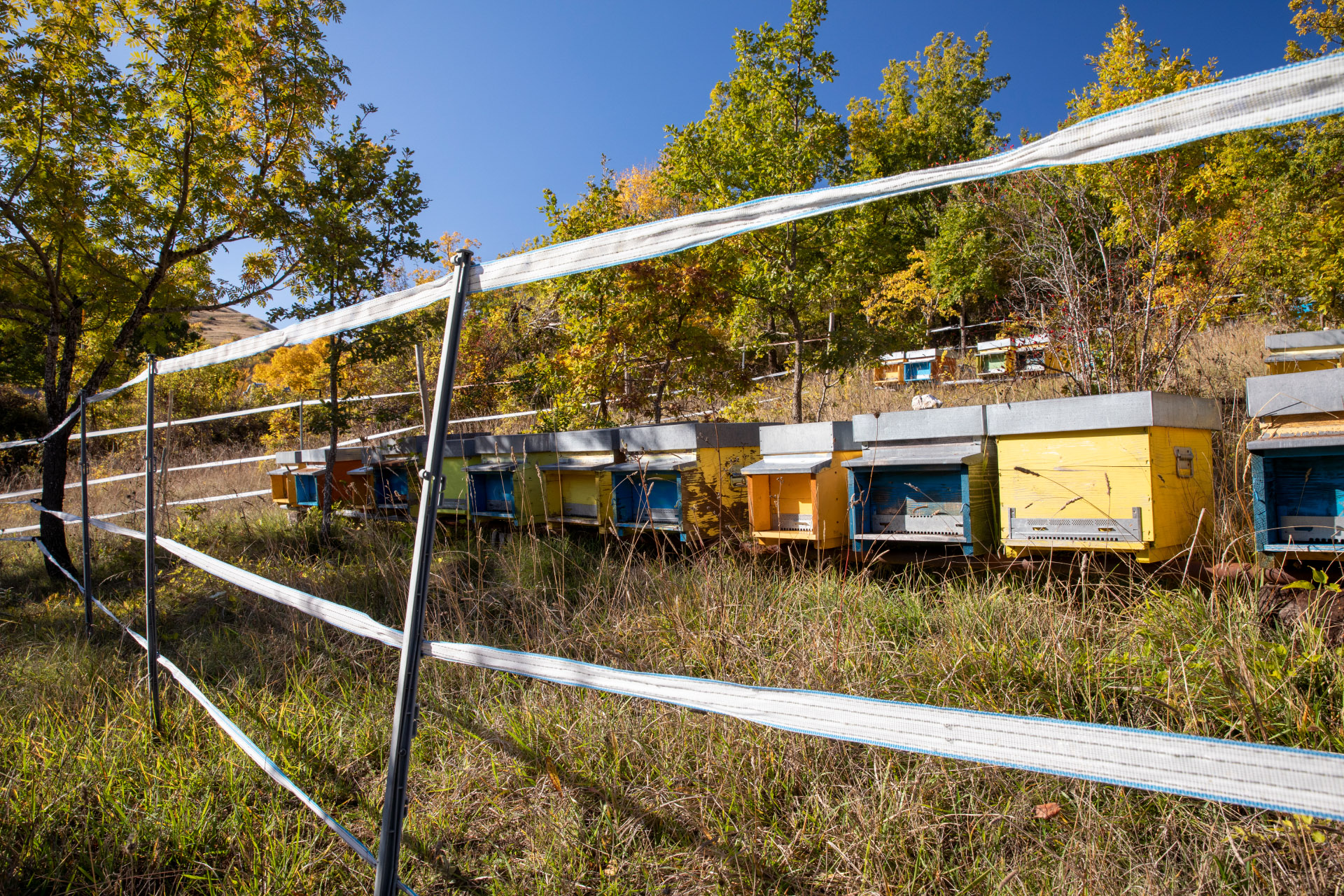
This is how one farmer describes the double thread binding together bears and those working in the mountains. But what exactly does it mean to share everything? It is not just a matter of sharing the space of a forest, a pasture, or an orchard, but rather of having in common the rules, difficulties and rhythms that underpin their mutual existence. A good year for fruit, or for the pastures, is savoured just as much by humans as by bears: it means having more resources to live on, to raise their offspring. If the bear is the symbol of the Apennine wilderness, then “the sheep and the apple” are its counterpart. Farmers have helped create and maintain the landscape that characterises this part of the world and sustains its high biodiversity, including bears. For its part, the bear is the living testimony to a still intact and functioning ecosystem. Within the Abruzzo National Park and its buffer zone today, there are 944 arable farmers and 1682 livestock farmers who have interacted with the Park Authority for having suffered damage from wildlife, but also for having prevented it with electric fences, protective structures, shelters and guard dogs. So it seems that the story of these protagonists-antagonists has not yet ended with the extinction of one or the other, as has happened in so many other places in the world. It is ongoing and deserves to be told.

The mountains of the Apennine bear have always been home to humans, too. With good practices and empathy, farming and livestock activities can coexist with nature conservation.

Retracing the history of the Park rangers also means retracing a long chapter of Italian history. To begin this tale, we need to go back a century and take a look at some of the most important events that have changed Italy as much as they have changed the Park and the job of park ranger. When the Park was created in 1923, the first president, Erminio Sipari, envisaged building a corps of 200 rangers, the number he considered necessary for complete surveillance of the area. His ambitions had to contend with a lack of funds and at first only 14 rangers took up duty. In 1933, when the fascist regime abolished all forms of autonomy, the Independent Abruzzo National Park Authority was abolished and the supervisory body came under the control of what was then known as the Milizia Forestale. It was not until 1951, after a bitter battle, that it was reconstituted and could once again effectively control the territory. The new rangers hired in 1954 perfectly embodied the spirit of the times. In addition to having lived through both fascism and war, they also straddled two worlds. One, in decline, was represented by the traditional mountain economy, harsh and poor. The other, about to emerge, was that of the economic boom. The first of these two worlds saw subsistence farming, transhumance to Puglia, lack of education and poverty, with emigration as the only form of emancipation. Many rangers had experienced very hard work and living conditions in their youth. For them, becoming a park ranger was also a matter of social redemption.

In the mid-1990s, park rangers struck a significant blow against poaching—one of the key moments in the ongoing fight to protect wildlife.

From the 1960s, like the whole of Italy, the Park went through a phase of great progress. It was modernised, expanded its competencies and intensified scientific research collaborations. The park rangers began to experience at first hand what would become one of the cardinal principles of good protected area management: the presence of trained personnel and collaboration between surveillance and research. At the end of the day, although without scientific training, park rangers are a researcher’s most valuable asset: they are excellent walkers and custodians of the memories of those who have gone before them, in whose steps they have trod, until they know the mountains perfectly and are able to discover shelters, dens, nests and the habitual paths of the animals.

These were also the years of the tourist boom. And it was precisely the park rangers that also represented the first contact between the urban and natural worlds. Today’s rangers perform their duties in a much more complex world. As a result, the surveillance corps has evolved into a multifaceted structure, better able to cope with modern complexities, consisting of 35 rangers organised into departments spread throughout the area, a coordinating office; a supervisor; five area heads and one liaison officer responsible for relations with the Scientific Service. The romantic figure of the park ranger has of necessity had to somewhat give way to the perhaps less poetic but today indispensable figure of a park ranger more highly trained in regulations, laws and science. But despite the changes, the rangers continue to be witnesses, guardians and interpreters of a history spanning more than a hundred years, during which a black and white world has gradually been enriched with colours and shades. A world that is certainly more difficult to interpret, but full of challenges on the path of nature protection.

Witnesses and guardians of the Abruzzo, Lazio and Molise National Park share their story—a tale of life, land, and legacy

All of us were immersed in this cultural breeze that was pervading the country, with the Abruzzo National Park as the icebreaker. I mean, we were the cultural reference point for half of Europe in those years…

There is nothing like metaphors to reduce something complex to its essence. Biologist and wildlife expert Giorgio Boscagli used these particularly effective words to describe the research and conservation work that took place in the 1980s in the Apennines’ first protected area. An icebreaker ship. On closer inspection, this high-flown metaphor indeed effectively describes what research represented for the Park (and the Park for research) well before the 1980s. Scientific research as we understand it today did not exist a century ago when the Abruzzo Park was established. However, as early as the embryonic stages of the Park’s creation, its first president already placed great emphasis on research, appealing to the most distinguished scientists of the time to support him in his difficult undertaking. In his famous report, he hoped for something that sounds obvious to us today, but which was not at all so at the time… to turn the protected area into a scientific laboratory, a study centre for the entire southern Apennines. And that is not all. It is precisely among the allies chosen by the first president that what became the cornerstone of environmental research and management, the ecosystemic approach, germinated.

But while many people were keen to protect the characteristic species of Marsican wildlife (…), no one had ever had the vision of a harmonious set of provisions that in one blow would save the plants and wildlife, natural beauty and monuments and landscape of that still almost virgin corner of the world.

This complete vision was first held by Prof. Pirotta, Director of the Royal University of Rome Botanical Institute. The partnership between the protected area and research has never been broken since. It has instead been enriched as knowledge has evolved. In 1972, the Centro Studi Ecologici Appenninici (Centre for Apennine Ecological Studies) was founded, the famous “icebreaker ship” and today the Scientific Service. A laboratory with a 360-degree view of environmental issues. In the 1960s, the era when research in the field of wildlife was mostly limited to insects and birds was definitively left behind. Sipari himself, but above all the management team who followed in his wake, already strongly encouraged the study of large wildlife in general and bears in particular. A focus that would later explode in the 1970s. The “Lupo Italia” (1974), “Camoscio Italia” (1978) and “Gruppo Orso Italia” (1983) working groups were created in the Study Centre. Reference points for experts and managers from all over Europe. The road of knowledge about bears has been long and fertile. It began with the research carried out by the Park’s very first Scientific Commission, made up of illustrious zoologists such as Ghigi and Altobello (1923), and culminating with the advanced research carried out by Rome’s La Sapienza University in the early 2000s, giving us a complete picture of the ecology of this species. Research on bears, as on all large carnivores, is today almost entirely focused on experimenting with good practices to be exported elsewhere in the conservation world. Technicians and academics face one of today’s greatest challenges: the coexistence of humans and animals. Their difficult task is to learn the animals’ language and, just like interpreters, decipher their needs and mediate between them and the needs of human society.

In the Abruzzo, Lazio and Molise National Park, conservation has always gone hand in hand with education and outreach.

The DNA of the science of Conservation Biology includes not only an understanding of how ecosystems work, or knowledge about the ecology of animal and plant species, not only strategies to combat pollution or habitat degradation… it also, and perhaps above all, includes an understanding of the human being as an instrument of change. And the human being is none other than each one of us. In this sense, Conservation Biology is a “cultural science”, because it focuses on man and his relations with the environment, and it is no coincidence that it took its first steps in Italy in the portentous environmentalist movements of the 1970s and 1980s. Not only were the central Apennines not immune to this wave, they played a leading role. In the Apennines, fierce battles were waged against building speculation which would have changed the wild face of these mountains. Together, protected area managers, scientists, technicians, journalists and, above all, civil society, mobilised with determination.

This is what passionate environmentalist Antonio Cederna wrote in 1992 after a 20-year battle:

In one of its most uncontaminated areas, amidst beech trees and clearings, the realm of the Marsican bear, some thirty unauthorised villas have been crushed by bulldozers. The rare spectacle in the locality known as Cicerana, at 1,500 metres above sea level, was witnessed live by hundreds of people: naturalists from all over Italy, schoolchildren, citizens and municipal administrators, while a band of the Alpini mountain infantry played the Italian national anthem. It was a celebration of the people, a demonstration that everyone had realised that what had once passed off as tourist development was nothing more than wild speculation.

The environmentalist world is certainly more fragmented now than then, but the legacy of that revolutionary phase is very strong. The idea that, in order to achieve effective environmental protection, it is necessary to inform, educate and above all invite civil society to participate, has become deeply rooted. On one hand, this achievement has been integrated into modern protected area management policies, on the other, it has led to the spontaneous emergence of many associations independently committed to the defence of Nature. The central Apennines have once again been the “icebreaker ship”. The Abruzzo Park Museum was the first in an Italian protected area. Italy’s first visitor centres also originated here. Hundreds of “volunteers for nature” have passed through here over the years, taking home extraordinary experiences and new awareness, thanks to experimentation with environmental interpretation programmes aimed at stimulating direct contact with nature, enhancing all aspects from the scientific to the sensory and aesthetic. For more than 30 years, the Park has had a communication office and an education and didactic service that invest resources and energy in fostering the development of participatory processes involving a range of stakeholders.

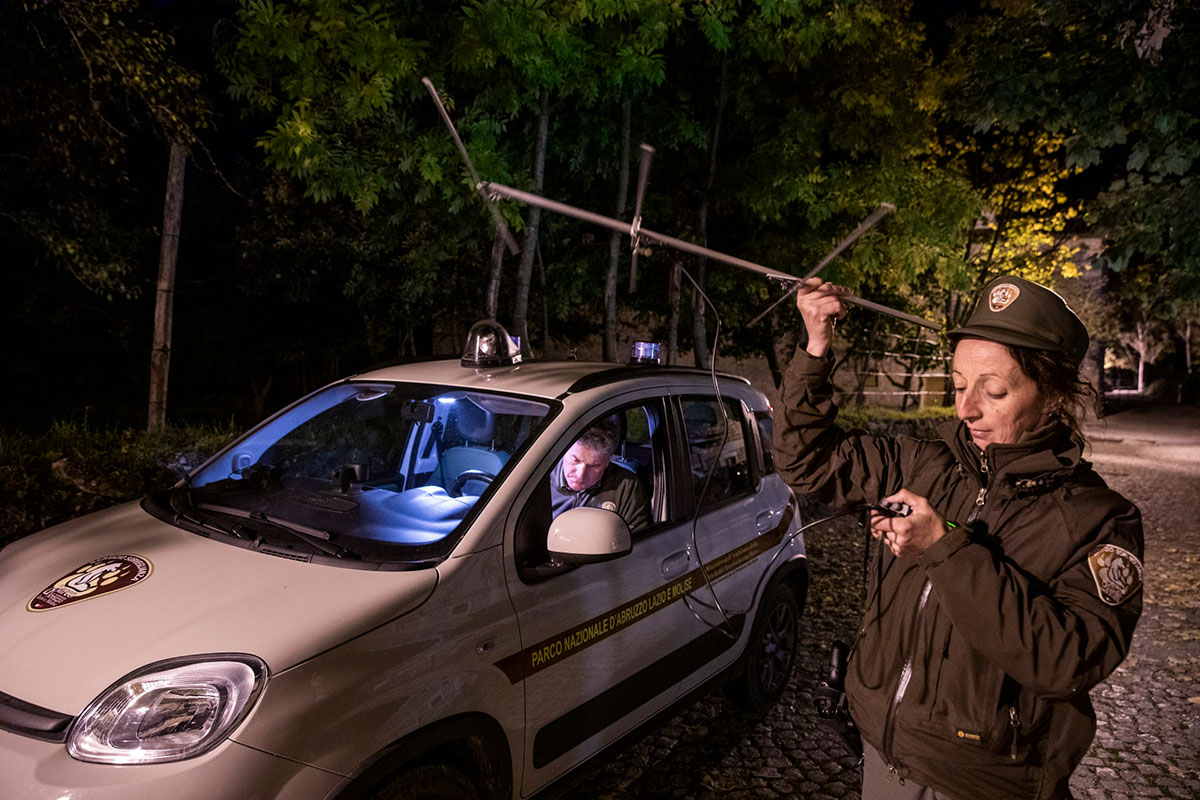
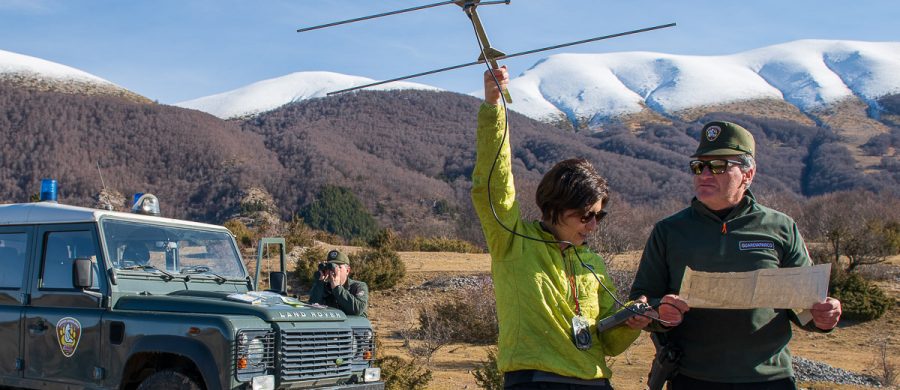
Park rangers, researchers, biologists, and technicians at work monitoring the presence of the bear in the Apennines.

Even more exciting are the associations that have sprung up spontaneously among society at large. Some of them have chosen the Marsican brown bear as their banner. Alliances of those fighting to conserve this species, emblem of an intact and wild nature, yet so threatened by extinction. Often engaged in concrete actions, they believe deeply in activism and work for collective awareness. In synergy with the institutions, Rewilding Apennines, Salviamo l’Orso and other small and large realities are building new models of coexistence, in which local communities become active participants.

Models that aspire to introduce a new paradigm, in which protection of bears is not reduced to a series of regulations imposed “from above”, but instead arises from a sense of responsibility and willingness to work together for common goals, emphasising the benefits of living with bears. Following the North American example of “bear smart communities”, the central Apennines therefore continue to play a leading role in initiatives completely innovative in Europe. So the ferment in this area is still very much alive. We hope that the new chapter being written in the central Apennines will once again make Nature Conservation History.

Group photo from the first Bear-Smart Communities Festival, held in 2025 in Vastogirardi (IS).

The bestiary of human culture is rich in species. All cultures have elected their own “king”. Just like the lion, the bear is unrivalled in the position it occupies in human imagination, tradition, culture and art history both today and in the past. Although the nature of the rituals, myths and representations differs greatly from people to people, there is one aspect that seems to recur in all times and cultures: identification of the bear with the human being. Coexistence is therefore not only a way of life, but for mankind, it is above all a source of inspiration and aspiration. It is a recognition of the interdependence between us and all other living beings. It is a collective responsibility towards ourselves, others and nature.

Coexistence means putting our skills at the disposal of the community to achieve a balance between the needs of all. A precarious balance, always evolving, always requiring change. The path has been mapped out.. that of awareness, adaptability and unity.

Why conserve bears

Why conserve bears

A challenge involving everyone

READING TIME 15 MIN

Directly or indirectly, man has caused bears to disappear throughout a large part of the Apennines.

Since the last century, bears have survived in a single, isolated population of a few dozen individuals confined to an area of less than 2000 km2. To avoid extinction, they need to increase in numbers and expand throughout the Apennines so they can better cope with climate and environmental changes and the genetic risks inherent in their limited numbers. How could bears increase? The likelihood of new bears migrating from other populations is almost non-existent, so bears in the Apennines can rely on nothing but their own reproductive capacity to survive… and this can barely counter current levels of mortality. But research confirms that any negative trend can be reversed by reducing mortality. One question, however, springs to mind: are bears really able to move about and survive in the rest of the Apennines?

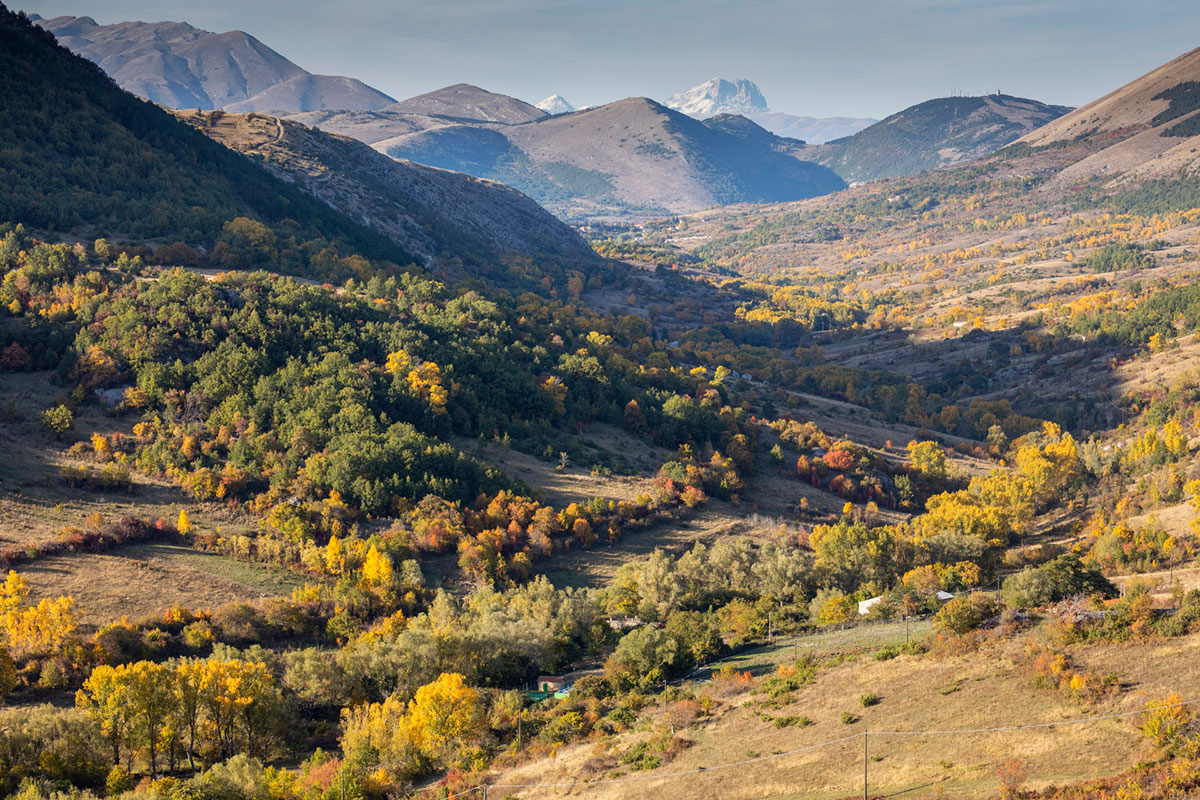
The availability of suitable space is not a limiting factor in the Apennines and reports of bears have confirmed this in recent years.

In the central Apennines, a bear could move about in an area of more than 26,000 km2 from the Apennine ridge in the Umbria and Marche regions to the Matese massif on the border between Molise and Campania. But just like people, bears have their preferences and based on thousands of bear presence points collected between the years 2004 and 2014, providing an insight into their tastes, together with the latest statistical modelling techniques, only 20% of this area actually has suitable environmental characteristics to permanently accommodate bears, a total of 5,244 km2. In terms of size and environmental quality, this area is, however, sufficient to support a viable bear population (in other words a reproductively independent population sufficiently free from the risk of inbreeding depression in the short to medium term) of at least 200 bears.

Paolo Ciucci tells us pros and cons for the future of the bears in the Apennines.

Although there is still room for bears in the Apennines, some areas are too fragmented for females.

The Abruzzo, Lazio and Molise National Park, the areas between the Simbruini and Ernici mountains, between the Duchessa and Sirente-Velino massifs and between the Sagittario gorge and Majella National Park, as far as the Gran Sasso and Reatino area, all represent genuine safe havens for bears, with a suitable configuration and size to accommodate females with cubs. They are the future epicentres from which new micro-populations could derive. Covering a non-continuous area of 3,190 km2, they could accommodate up to 70 females, more than half between the PNALM and the Ernici and Simbruini massifs. On the other hand, the Matese massif, north-western Majella, Sibillini mountains and (again in Umbria) large areas to the north west of the Nera valley (about 39% of the suitable areas) are too fragmented to allow permanent recolonisation by bears, reducing the potential for population expansion and growth.

Bears have a high risk of encountering a fatality wherever they go, regardless of suitability and level of protection.

For a bear, moving around in the Apennines is not without risk. More than 25% (6,481 km2) of the territory includes low-lying areas with sparse forest vegetation and road crossings, where bears have a high probability of being hit by vehicles, deliberately or accidentally shot and killed or poisoned. Some of these areas fall within food-rich zones, a real attraction for bears, but at the cost of their lives. In the PNALM and Sirente and Ernici mountains, more than half the territory is considered a risk for bear mortality, while in the Cicolano/Reatino area, this amounts to more than 70%. Despite the fact that most of the suitable areas (including the safe havens) are covered by some form of protection as they are located in protected areas or within the Natura 2000 network, bears still die there as well. Other areas are currently without any form of protection, including the Sabini and Reatini massifs, Cicolano area and Carseolani mountains. With such a high and widespread risk of mortality at the hand of man, it is clear that any conservation effort risks being thwarted.

An example of male dispersal, the map below shows the generalised, exploratory movements of three bears. In total, each bears travelled more than 200 km far from PNALM — a movement typical of young male grizzlies looking for mates, food sources, and areas to possibly establish residency.

The very limited expansion of the population’s distribution area observed in recent decades may be due to the bears’ difficulty in getting out.

Bears find it very difficult to leave the area where they are present stably (PNALM and neighbouring areas) towards the west (Ernici and Simbruini), south (Matese) and east (southern Majella). There are only a few safe corridors, in other words, areas where bears can live and reproduce during their slow expansion: just one in the Roveto valley in a north-west direction connecting the PNALM with the eastern edge of the Simbruini mountains, and a series of fragmented corridors connecting the north-eastern slopes of the PNALM with the Majella on one side (passing through the Mount Genzana Reserve) and with the Velino-Sirente massif on the other. Even when suitable, a number of the corridors contain numerous ecological traps, with the risk of thwarting the effective dispersal of young bears from the source population in the PNALM.

An example of the area used by bear F21 in 2019. The female is a “border” bear who spends most of her time either side of Highway 17, a road where a mother and her orphaned cub were run over and killed in the same year. In previous years, other bears were hit by vehicles, some survived.

The conditions are right for the bear to grow in numbers and expand, but not without a renewed effort to protect it.

How can we encourage the expansion of bears? By intensifying conservation efforts both inside and outside protected areas and giving priority to connecting areas and areas able to guarantee the stable presence of females. By planning measures to restore environmental suitability (forest management and silvicultural measures); measures to prevent, mitigate and control the risk of mortality (control of offences; improvement of road permeability; information campaigns); measures to regulate human activities (access and construction of infrastructure); and measures to prevent and reduce social and economic conflicts (prevention measures and awareness campaigns). Last but not least, preparation of the social and cultural context in potential bear expansion areas throughout the Apennines is critical, given that the human populations residing in expansion areas and peripheral parts of the range may not share the attitudes, behaviours and tolerance typical of populations that have always lived in contact with bears.

The bear is a point of contact between many different categories of stakeholder. Creating consensus over bears and change requires coordination and participation.

The conflicts behind bear conservation are multifaceted and involve historical, political, scientific, economic, cognitive, social and ethical aspects. This hyper-complexity is made even more evident by the urgent need to protect bears with a perhaps uncertain future. While on the one hand, bear conservation is jeopardised by the public’s attitude and resulting conflicts, on the other, politicians and administrators fail to manage this complexity efficiently. Part of these difficulties can be traced back to excessive bureaucracy, political and inter-jurisdictional fragmentation resulting in extremely slow administrative and decision-making processes, absent or ineffective implementation of management plans or existing legislation and reduced public involvement and commitment. In addition to direct impacts on human well-being or economic activities, many of the conflicts with bears can, in fact, be seen in the context of the symbolism associated with their presence (mistrust of institutions, need for political legitimacy, etc.). On the other hand, it is precisely from an understanding of this complexity that an opportunity can arise for the public in particular to play a leading and controlling role in the political and institutional processes associated with conservation of this animal. The bear belongs to everyone, it does not belong to any one body or institution, it sits at the same table as we do, and this table extends way beyond the walls of our own home.

Paolo Ciucci tells us about the role that an informed public can play in supporting the future of the bears and why it is important to protect these animals.

What is the PATOM?

An Action Plan for Protection of the Marsican Bear (PATOM: Piano d’Azione per la Tutela dell’Orso Marsicano) was drawn up in 2011 to protect bears in the Apennines. Its scope is to analyse the conservation status of the Marsican bear and identify the improvement measures to be implemented. Since 2016, to ensure implementation of the protection measures set out in the PATOM, the Ministry of Ecological Transition (formerly the Ministry of the Environment), Abruzzo, Lazio and Molise regional authorities, Abruzzo, Lazio and Molise National Park, Majella National Park and Carabinieri Forestali have stipulated and signed a series of multi-year agreements.

For further information, you can see the agreements, the reports and minutes on https://www.minambiente.it/pagina/piano-dazione-la-tutela-dellorso-marsicano-patom; in addition, you can consult the page dedicated to PATOM on http://www.parcoabruzzo.it/pagina.php?id=461 and the administrative acts of the Regions. More information available on https://www.salviamolorso.it/per-un-nuovo-patom/

A community is built through dialogue. A new shared culture of communication can benefit both humans and bears in the long term.

Management decisions for the future of bears must, of course, be based on sound evidence, as the world of science teaches us. However the dangers bears face are so complex and unpredictable, they also require a high level of precaution, acting before it is too late, making choices that will in any case have a positive impact for bears (and perhaps require more sacrifices on our part). Because we are talking about an animal that could be at risk of extinction. But to allow everyone to make informed choices, we need to reformulate a “new culture of communication” involving universities and management and conservation bodies, with the aim of building trust and participation, by sharing the results of scientific research and management choices outside the academic world or institutional round tables. The opportunity to disseminate environmental (scientific and/or management and conservation) information to the general public is currently largely in the hands of the media and the growing number of social networks, with little control over information content. Ecological research and environmental issues are under-represented in the media. When they are present, they concentrate overwhelmingly on aspects that generate controversy and sensationalism and are therefore closer to the audience and human interests. It is only through direct involvement and the right information that people will feel motivated to change their behaviour.

Investing excessive emotion or keeping a distance both prevent you from making meaningful and aware choices.The future of bears depends on how we decide to live with them.

David Mattson tells us there is room for bears and humans to coexist and that it somehow depends on both.

Is it possible to think of a deeper, more intimate, and at the same time more rational vision of why bears should be protected? We can learn this from bears themselves. Studying this animal’s ecology shows us how all living things are interconnected. What happens to the bear, happens to us and what is good for the bear, is good for us. From this awareness can stem appreciation and respect for conservation of this animal and also for our management choices. First and foremost, we perhaps need to start from the idea that a model involving total separation between humans and animals is not feasible, especially in the context of Italy, where population density is high even within natural areas. Man does not set himself limits and boundaries (we have built towns and cities in the most productive valleys, brushing the animals aside), so how can we expect this of animals. A model of full coexistence is perhaps just as utopian, as it would not simply be about sharing the same space. It would rather be based on the concept of a relationship, in other words, stemming from the awareness that all living beings depend on each other. They are united by relationships and complement each other. An ideal vision, but perhaps extreme, even for the animals themselves. The secret of conservation probably lies somewhere in between. The solution perhaps lies in coexistence, in other words, sharing the same space, but without interfering with, or disturbing, each other. Giving each other room. In achieving this, it is certainly not the animals who can choose (they can only adapt). It is rather down to us to give them the just amount of space. But coexistence must not only be based on tolerance. Above all, it means recognising that, come what may, humans and animals are part of the same ecosystem and that these relationships really do exist. It is from this recognition that respect is born. In this context, finding solutions or mitigating conflicts is simply one aspect of living together. But a culture of coexistence is born and grows from teamwork, in other words, from the fusion of the actions of individuals and thus from a feeling of community. As an anonymous person said: “Always be kind. Every person you meet is fighting a battle you know nothing about – a thought that needs to be applied to bears as well as humans.”
Bear conservation requires humility and a willingness to answer a few simple questions: what are we willing to give up to live with bears? Is it so impossible to adapt and change, to modify your life to accommodate the other?

Bears and roads

Bears and roads

Is the bear crossing the road or the road crossing the bear’s land, a matter of perspective

READING TIME11 MIN

The shape of dead animals along a road is a common sight in almost every country in the world. Animals move about in search of food, water and mates and if roads cut through their territory, they have no choice but to cross them.

People on the other hand also use roads for their needs. If the paths of bears and humans cross unexpectedly, both are at risk. Every year around the world, millions of wild animals are killed by vehicles, tens of thousands of people are injured, hundreds are killed and the economic damage can run into many billions. In every Italian province, it is estimated that more than 15,000 animals are hit by vehicles every year. The phenomenon is increasing and should not be underestimated, because accidents can significantly reduce the survival of some animal species, as well as restricting their movements. Animals such as bears that move over vast areas and do not reproduce every year can be dramatically affected by the presence of roads, especially when their numbers are limited, as in the Apennines. Accidents increase with the speed of vehicles, volume of traffic, density and number of road lanes and presence or absence of possible obstacles or barriers trapping animals in a particular section (such as walls, fences and tunnels). The more the road network penetrates into critical areas or animal movement corridors, the greater the risks, especially if the animals approach it to find food (grass, fruit trees, the carcasses of run-over animals, rubbish, etc.).

Bears and humans are both attracted to the same valleys, because they are more productive in terms of food and ideal for moving quickly from one area to another.

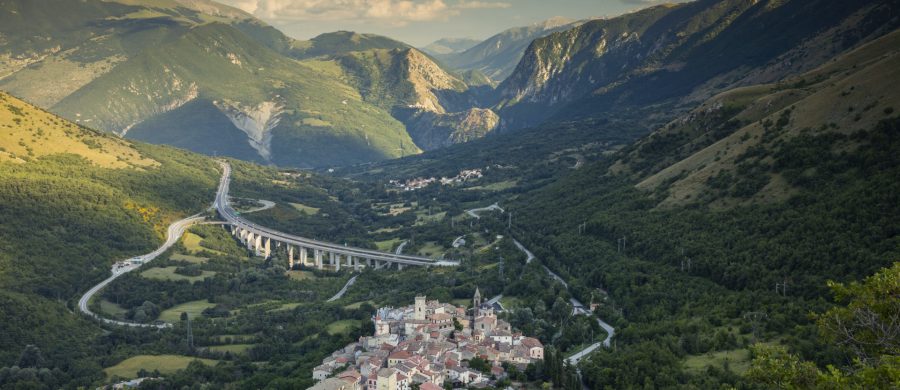
A history of repulsion and attraction links bears to roads around the world and the Apennines are no exception.

The more bears frequent roads or live near them, the greater the risk they will not survive for long, either because they are hit by vehicles or because they are killed accidentally or intentionally. A study conducted in the Apennines shows that almost half the present or future territory of bears contains risk factors for the bears’ life, including roads. Why do bears not avoid these areas? Because, as researchers have discovered, most of these areas are genuine ecological traps, in other words, bears are attracted to them because they find plenty of food… sometimes at the cost of their lives. According to studies conducted in North America, bear densities and survival decrease by up to four times in areas with high road densities (greater than 0.6 km/km2), leading some bear populations to decline in numbers. According to these studies, for a female to have a good chance of survival and breeding, she needs a territory where at least half the area is safe and without roads. Road density can exceed these values in the Apennines, especially outside protected areas. On the other hand, even in parks such as the PNALM, some females occupy areas considered to be totally at risk.

If they can, bears in the Apennines avoid densely populated areas with tarmac roads and if they have to cross a road, they do so at night when there is little traffic. In summer, in particular, they try to avoid them altogether. During this season, some of the main roads through protected areas can, in fact, be used by almost 14,000 vehicles in a single week, with almost half the drivers not respecting the permitted speed limits. Although the chances are lower at night, in June 2010, poor visibility and excessive speed led to a female being run over and killed, orphaning her two yearling cubs. These figures are also reflected in other bear populations. In North America, bears are less likely to frequent areas with roads travelled by more than 20 vehicles per day. They also completely avoid those travelled by more than 100 vehicles. Vehicle traffic would also seem to play a greater role than road density. Equally strong as the aversion is the reaction if traffic conditions change. Researchers using camera traps have shown that within a few days after a popular road in Banff National Park was closed, the number of bears frequenting the road doubled.

In the picture, the female bear which died along the road SS 652 in Molise lays on a surgical table in the Zooprophylactic Institute in Molise before its necropsy.

Some roads can therefore represent genuine barriers and jeopardise the expansion of bears. By studying the movements of 38 GPS-collared grizzly bears in British Columbia, researchers have shown that Highway 3 (3.700 vehicles/day) through the Rocky Mountains was blocking the passage of half the bears, preventing them from finding new territories and mates. According to a study conducted in the Apennines, there are very few areas that could function as corridors between the PNALM and the rest of the Apennines, due to the presence in the remaining areas of infrastructure that could put the bears at risk. In 2019, 2 bears were run over on Highway 17 in Abruzzo and Highway 652 in Molise, including one with a yearling cub in an area outside the Park.

But the story between the bears and roads is not over yet. Along the roadside, bears can find shrubs, brambles, fruit trees, herbaceous plants and anthills, sometimes even rubbish dumps. In national parks, some bears have become accustomed to frequenting these areas where people can observe them from a distance of a few dozen metres or less. This phenomenon has gone hand in hand with traffic congestion caused by the numerous vehicles and people stopping to photograph the bears. Widespread in North America and also in Europe, these situations are also a cause for concern in the Apennines, as they increase the risk of road accidents involving vehicles and bears and between vehicles. Another side effect is the excessive habituation to humans. This could lead to loss of mistrust and an increased likelihood that the bears will frequent roads and villages, with the risk of food conditioning and possible negative interactions between them and humans.

At the edge of the roads, bears can find fruit and insects, but also organic waste dumps, sometimes left with the intention to attract wild animals, such as foxes for example.

Fences, overpasses, subways, speed limits and signs have proved to be extremely effective in reducing accidents and the benefits outweigh the costs over time.

Several strategies can help bears cross roads safely. Who is responsible for road safety? Responsibilities bounce between the Italian Autonomous Roads Corporation (ANAS), traffic police and local bodies competent for administration and wildlife management (municipalities, provincial and regional authorities and park management bodies) and road design, maintenance and safety. Strategies can range from environmental improvements to increase visibility and reduce the attractiveness of certain sections of road (for example, removing food sources); systems to alert drivers or animals (road signs, optical reflectors, sound and light systems etc.); construction of barriers allowing transit (in other words, a system of fences, overpasses and subways that teach animals where to cross); and closure or regulation of road traffic. Fences, crossing points and overpasses can halve accidents, or even reduce them by as much as 95 per cent, according to research carried out in Sweden and North America. Research carried out on the Trans-Canada Highway, where an accident was estimated to occur every 4-8 hours with economic damage of up to €30,000 per animal hit, showed that 15 years after the construction of barriers and overpasses, more than 20,000 animals had learned to use the overpasses, saving more than $85,000 per year. However, responsibility also lies with individual road users, respecting limits, more aware driving and avoiding bad practices that could put people and animals at risk.

As part of the Life Crossing project, prevention systems (AVC PS) have been installed in various protected areas in the Apennines, which act simultaneously toward both wildlife and drivers. A set of passive infrared (PIR) sensors and/or a thermic camera registers the presence of an approaching animal and triggers an alert signal for drivers to slow down to a reasonable speed. A radar doppler sensor measures whether the car actually slows down. If it does, the system stops to act. Otherwise, the radar sends a signal back to the control unit. This activates an acoustic scaring device, which shall drive the animal to escape.

BEARS AND ROADS

People and bears use roads for their own needs. However, If the paths of bears and humans cross unexpectedly, both are at risk.There is no definitive solution, but it is always possible to mitigate and prevent risky situations.

Vehicles share their world with people and animals, so completely eliminating all risks to animals and people would be difficult, but it is possible to predict and mitigate dangerous sections of road and to contribute to preventing risky situations every day with our behaviour.

Bears avoid humans when they can

Bears avoid humans when they can

Living in areas that have been changed by human beings means having to weigh up the pros and cons

READING TIME 11 MIN

Humans have significantly altered the lives of many animals in just a few hundred years, a very short length of time from an evolutionary point of view.

The results of many studies agree that animals perceive a human presence as a disturbance, or rather a potential danger. What is their immediate reaction? For example, they may react by manifesting alertness and fear: heart rate and breathing increase (due to the release of hormones such as adrenaline and cortisol), muscles become more toned and contract ready to snap into action, pupils dilate to increase the ability to observe. What might they do? They might flee and avoid the disturbed areas for hours, days or even weeks. Although potentially adaptive, these alterations may actually affect the animals’ ability to feed, breed and care for their offspring, for example, forcing them to concentrate in preferred areas. That’s not all. If the stress induced becomes chronic, it could promote the onset of diseases (reduced immune defences, weakened physical condition, depression and lower reproductive capacity).

The more individuals are affected, the greater the impact on the whole population to which they belong. And since all animals live within communities, the knock-on effects will also cascade down. Although the reactions of animals are very similar, whether we are talking about infrastructure (such as a village) or hikers, not all disturbances are the same. The more frequent, unpredictable and rapid the disturbance, even more so if it occurs in areas critical for the animals (refuge, feeding, or offspring care areas), the greater the potential impact on their health and survival. A person walking along a path will certainly have less impact than a squad of hunters on a beat or a group of fifty walkers, but a group of people off the path near a den could have a comparable if not greater impact on, for example, a bear.

A startled bear rises up on its hind legs to assess with its senses the source of a noise.

Female F05, also known as Marina, is a very shy female. Her territory is located in a decidedly secluded mountainous area in the north of the Park. It was 6.30 in the morning on 4 September and I was observing, as I have been every summer for over ten years. Covered from head to toe and hidden by a rock, I could hardly contain my joy. Marina had a cub with her, a female, although we only found this out later, thanks to genetics. The female had been eating quietly from the first light of dawn on a bramble bush about 800 metres below me. Despite all the attention, I remember that day I hadn’t studied the wind well in relation to my position. All it took was a turn of the wind, a hair that lifted almost imperceptibly on my forehead and the family disappeared at such a speed that I wondered if they had ever been there, leaving behind a sense of guilt and frustration.

Elisabetta

Animals can get used to a disturbance, providing it is predictable and they have no negative experiences. Habituation is in itself nothing more than a reflection of the intelligence and adaptability of many animals, including bears, qualities that help them access all kinds of food, even in environments highly modified by humans. However, habituated animals reduce their flight distance, become less reactive and are easily approached, making them more liable to poaching. They cross populated areas more frequently, with a higher risk of being run over, and may become involved in unpleasant episodes of human-bear interaction (attacks and injuries). Furthermore, the lack of reactivity (for example, flight) does not necessarily mean the animal is calm. Such behaviour could, in fact, still be associated with a state of stress and tension. How many people seem serene and calm, but in reality, on closer inspection, they are biting their fingernails or tapping their toes, revealing a state of nervousness. This can also be the case with animals. Research in North America and Northern Europe has shown that bears in populated areas are more stressed (elevated heart rate or high levels of stress hormones) than bears in remote areas, despite their apparent calmness as they move among the houses. Research in North America and Northern Europe has shown that bears in populated areas are more stressed (elevated heart rate or high levels of stress hormones) than bears in remote areas, despite their apparent calmness. Everything can have a cost for a wild animal and choices motivated by food are not always the best.

Watching bears, as with all species of Apennine fauna, is an instructive and exciting activity, but it is essential to observe the regulations of the protected areas and, above all, the safety and well-being of the animals.

Bears easily find ways to live in areas altered by people’s presence, but they are not good at weighing up the pros and cons.

Bears do everything they can to avoid humans. In the Apennines and in Europe in general, bears avoid densely populated areas and have predominantly crepuscular and nocturnal habits. But what happens if people venture among bears? Some studies offer interesting insights.

On the Scandinavian peninsula, female bears double their weight from spring to when they enter the den, feeding mainly on berries. In order to feed properly (it takes time to fatten up on such small fruits!), bears search for the most berry-laden bushes even during the day. Every hour is indispensable. However, these areas are frequented by tourists, berry pickers and hunters. When surprised, especially by people off the path, bears react by refusing to feed during daylight hours, even for several days.

In some areas of North America, there are certain moths that accumulate during the day in great numbers on open, hard-to-reach rock walls. Bears can eat up to 40,000 moths a day in the summer season (about 20,000 calories), but they can only do so during daylight hours, the same hours used by climbers for recreational purposes. In their presence, bears exhibit stress reactions, continually interrupt their meals and consume up to 12 kcal/minute. Several studies also document the greater impact of forestry, mining or recreational activities in bear hibernation areas, even leading to abandonment and death of the cubs.

Many hunting practices, such as the hunts themselves or dog training, take place in areas and periods that are critical for bears. Wild boar hunting, for example, usually involves numerous dogs and people for 2 or 3 days a week from October to January. The disturbance is not, therefore, limited to the moment the shots are fired, but is also associated with increased activity in the whole area concerned (presence of vehicles, chases, barking dogs, transport of the dead animals etc.). What are the risks for bears? Certainly there is a possibility they will be mistakenly hit instead of a wild boar, a critical issue documented throughout Europe. But that is not the only problem. Especially fearless bears can learn to associate the possibility of finding a carcass or an injured animal during and after a hunt and take risks, creating even greater risks and opportunities for conflict. As confirmed by a study conducted in Sweden, bears can also associate this activity with a disturbance, giving up feeding and taking refuge, especially in the early hours of the morning and with effects that may last for several days. Reducing the time window in which they feed during a season when bears have to fatten up to spend several months fasting can compromise their health and, in females, their ability to reproduce.

Forest exploitation, sports and recreational activities, hunting, collecting mushrooms, truffles and other forest products are important activities for those who live in and frequent the Apennine mountains, but they also represent situations of possible interference with the life of bears and other species. Common sense and respect are the basic ingredients for a harmonious coexistence.

In environments with an ever greater human pressure, bears need time windows to carry out their activities in peace.

Research carried out in various study contexts now offers a great opportunity for management bodies to determine how and when to intervene and for everyone to understand what lies behind the restrictive regulations applied mainly within protected areas. Regulation of access to certain areas and seasonal closure of certain paths are examples of the measures imposed to guarantee bears time and privacy.

In recent years, tourism aimed at photographing or observing bears has increased dramatically (in Europe as elsewhere in the world). Faced with this new pressure, bears have little margin to adapt if they are not helped by more conscious behaviour on the part of people. In protected areas, the challenge is particularly high, because some bears become more and more accustomed to people and thus easy to spot – a real magnet for enthusiasts. Observing a bear up close is a unique experience and can benefit the image and conservation of these animals. However, the problem is that people also become accustomed to bears, underestimating and not fully understanding the risk of non-neutral and unpredictable behaviour, getting closer and closer or giving them food, to the detriment of their own safety and that of the bears. A bear attack on a person could dramatically reduce the degree to which these animals are accepted, as well as support for their protection and conservation. Institutions, authorities and the general public should therefore work together to achieve a new level of nature management, based on respect and distance.

A series of images recorded by a camera trap aimed at a ‘special’ tree in the ALMNP shows how bears and other wildlife frequent the same areas used by people, but at different times to avoid unpleasant encounters.

Bears attack infrequently and only under certain conditions, but with the right information and behaviour, together with a dash of genetics, the risk could be negligible.

But are bears dangerous? In most situations, bears avoid encounters and disappear if they can. This is demonstrated by several studies in Sweden, where individual bears or family groups equipped with satellite radio collars were intentionally approached by people on foot on hundreds of occasions. The things we do for research! So, on 80-95% of these occasions, the bears moved away and were visible on only very few occasions. The attack statistics play in our favour. In Europe as a whole, brown bear attacks do not exceed an average of ten cases per year. In most cases, they involve females with cubs, as a result of their apprehensive nature while defending their young and “special” situations: bears caught at close range and at night, bears in dens or defending a carcass, bears injured or conditioned by “human-derived” food and bears chased by dogs off the leash.

What news do we have about Marsican bears? In the Apennines, there has never been a documented case of attack or injury to people. Genetics tell us that the bears are by nature less aggressive. According to some researchers, bears living at high densities, as can be the case in the PNALM, are more likely to be tolerant not only with others of their own species, but also with other animals, including humans. Bears are, however, still wild animals and endowed with extraordinary strength and powerful claws. That is why it is essential to follow a few useful rules in case of an encounter. Do not approach the bear, do not shout, move away calmly and always leave an escape route between yourself and the animal. It is also advisable to avoid situations where you might surprise a bear, ideally staying on a path (better still, if marked and authorised) and discreetly making your arrival known (noise should be avoided in any case).

The question everyone wants answered is how close can you get to a bear without eliciting a reaction. A million-dollar question. The distance at which an animal reacts depends on many factors: age, sex, individual history, temperament and context. Some studies suggest that bears can sense the presence of humans even more than a kilometre away, especially if the bears are active and alert. Other research claims that bears used to people can be approached as close as a few dozen metres. However, most researchers suggest keeping at least 100 to 200 metres away, to avoid any risky situation.

It was a mid-July morning in 2008. I was wearing my field-worn jeans and a check shirt. A backpack strapped on my shoulders and antenna and radio in my hand. I was on a bear control round. The radio signal was weak and bouncing all over the valley. Better to climb to the top to understand the direction of the signal. When I reached the ridge after a 600 metre ascent, my only thought was to sit down and catch my breath. My vision was blurred, partly from the heat and tiredness, partly because I was looking into the light. A slow but steady wind cooled my face. Sitting down and moving my body to the left and right, I began to study the place. A few metres away from me among the leaves, something more than shade was doing the same thing. Time to focus clearly: a sitting bear was watching me. It was the male M10, known among us colleagues as Ciccio, captured a few days ago. The green collar was clearly visible. First thought with my heart racing: what is the percentage risk of attack? Second thought, breathing fast: if he attacks, it would be a disaster, everyone would start being afraid of bears. Third thought with a dry throat, heck, I’m wearing the same trousers as when he was captured… will he take revenge? Fourth thought with a long breath: calm down, distract him, don’t scare him, speak with a friendly tone and above all don’t run away. And that’s what I did. I don’t remember the exact words, but I said something and slowly threw one or two pebbles, I think. And it worked, the bear stood on a stone to observe me better – I made myself smaller and smaller – and then he left. Fear, fascination, emotion. I only remember that over a period of what seemed like hours, I retreated out of sight and walked away quickly, very quickly.

Elisabetta

PEOPLE AND BEARS: SLIDE A BIT

Bears can live in areas that have been changed by human beings, but they are not good to weigh up the pros and cons. People have a low perception of the disturbance they cause. Yet, with small, conscious gestures, it is possible to contribute more to nature conservation than any Institutions or Administrations, whether outside or inside a Protected Area.

Many studies show that people have a low perception of the disturbance they cause and find it difficult to give up their habits. Regulations or sanctions may help, but respect for animals should be a voluntary choice of responsibility that should not require regulations.

A bear-friendly community, a love-hate relationship

A bear-friendly community,
a love-hate relationship

Things to look out for when choosing a good restaurant

READING TIME 11 MIN

At dusk between August and September, bears may appear in the lanes of some Apennine villages in search of ripe apples, pears and plums.

The same thing happens in other places on the Planet, where brown and black bears live near populated areas. In the Park, the first case dates back to 1994. In the last 25 years, 8 bears have shown this behaviour, 7 females and 2 males, all aged between 2 and 5 years at their first appearance in a village or town. The phenomenon does not affect the whole population and varies greatly from year to year. Where and how does this behaviour originate? There are many and often overlapping reasons.

It is not uncommon for a Marsican bear to pass through a built-up area. Villages in the Apennines are surrounded by the mountains and forests where bears live, but also by the crops and orchards (some abandoned) the animals find attractive. In most cases, the bear simply crosses the village as it moves from one part of its territory to another, mostly using the peripheral parts of the populated areas and usually at night to avoid encountering anyone. At the end of the summer, bears commonly frequent the valley floors, full of orchards, brambles producing large quantities of blackberries and cornel, hawthorn and rose bushes, all producing berries the bears love to eat.

A typical landscape mosaic in the Apennines, characterised by cultivated fields, meadows, woods and shrublands, where, depending on the season, different wildlife species can feed on grass, insects, cultivated or wild fruits.

The first thing we learned from bears is their diversity and individuality. For example, the female F05 has always frequented a much smaller area than the other bears and to all intents and purposes has taken refuge in the most remote parts of the Park. She has reproduced twice, so apparently has everything she needs to survive. She has never approached a built-up area. The territory of the female FP01, on the other hand, is twice the size and by dint of passing through towns and villages, she has got into the habit of eating a few hens. She has also reproduced. The female F08, on the other hand, also several times a mother, has lived along the Sangro valley and although she has passed through populated areas several times, she has never lingered long in the village streets. Bears adapt to the territory they find and are able to exploit all the advantages it offers.

Elisabetta

According to some studies, females with yearling cubs and juveniles frequent areas near villages to take refuge from aggressive adult males. This phenomenon occurs especially if the density of bears is high, as in the case of the Marsican brown bear. Bears are also easily conditioned by food (they are hungry by nature) and villages offer high-energy food sources (such as animal feed, beehives, poultry, livestock, vegetable gardens, etc.). In particular, unlike wild species, domestic apple and pear trees bear fruit almost every year and being the opportunists they are, bears know this and may be attracted to them.

Until May 2007, the fact that bears could be so conditioned by food was something I had only read about. I had learned from a study that bears used to receiving food from humans in the wild were able to learn the times when the food would arrive and be there ready and waiting. We had got into the habit of leaving 2 or 3 apples in front of the camera traps to convince the bear to stop and get better shots so we could recognise the earmarks of known bears. I generally checked the traps every seven days and more or less always at the same time. One morning on the seventh day, I remember walking away from the camera trap and returning to it after less than five minutes because I had forgotten my backpack. A young bear had just finished eating all the apples. We were both very surprised. And we’re only talking about three apples.

Elisabetta

In 2020, the bear female F17, known as Amarena, became famous for having given birth to four cubs and having roamed the surroundings of the village of Villalago for several weeks, attracting many onlookers. Here the bear and its cubs are feasting on a cherry tree.

Given this scenario, if some bears are rewarded repeatedly when they pass through villages, they will learn how easy it is to access these resources (easily accessible and unprotected orchards and poultry houses) and will want to return again and again to obtain them when and however they want. If conditioning is also associated with a loss of mistrust of humans, some bears may start to frequent villages during daylight hours as well, despite the presence of people. If the bear is a female with young, it is likely the cubs will also learn this behaviour over time. This is how conflicts can arise.

When bears and humans get too close, we enter “thorny” territory for both the bears and the people.

A confident and conditioned bear can become involved in repeated and potentially “unpleasant” incidents with humans. For a bear, moving about in a built-up area is not the same as walking in a forest or mountain, in other words, a natural environment. The very structure of many Apennine villages with their narrow lanes can result in unexpected close encounters between people and bears, cornering the bear with no way out. Although habituated bears may be less likely to react aggressively during encounters with people as they are less fearful, it is much more likely they will be approached at risky distances. People may also engage in inappropriate and careless behaviour, either associated with fear, flight or aggressive reactions, or with excessive confidence, chasing or cornering the animals to photograph them or luring them with food, with the risk of being perceived as a threat by the bears and/or conditioning and habituating the bear even further.

On a social level, the presence of bears in built-up areas and the contexts described above are perceived by some sectors of the public as a loss of quality of life, not only in economic terms, but also in terms of security and tranquillity. Emotions such as fear and anxiety may produce contrasting effects, but they contribute to lowering the tolerance and acceptance of bears, making them unpopular. Aggression by a bear due to careless behaviour would negatively influence public opinion and such attitudes may result in general resistance to programmes to recover and conserve this species. This phenomenon can be dramatically exacerbated outside protected areas and especially in recent areas of expansion where people have not been used to living with bears for centuries.

A bear in search of fruit crosses a village in the ALMNP during the night. (© Marco Colombo – www.calosoma.it)

It was 21.30 on 20 August 2016. I was driving up the road to my home in one of the villages in the Park. Here I was confronted with a scene that was really absurd. Two people were taking a selfie under a lamppost. A few metres away from them a cornered bear was standing upright on a low wall. That was the object of the selfie. These are the situations that should be avoided at all costs. Years of conservation and peaceful coexistence could get burnt up for a few likes on social media

Elisabetta

Habituated and conditioned bears can be approached and easily fall victim to poaching and road accidents. A study of black bears in Durango, Mexico, has shown that appearances are often deceptive when it comes to bears. Female bears feeding near a town produced larger litters than their wilder counterparts, leading to the general opinion that the population was increasing in numbers. However, bears were also being run over more frequently in populated areas. By comparing the number of births and deaths, the researchers found that the population was actually decreasing. Not only that, but the conflicts generated by the bears’ presence forced the management bodies to remove many bears from the wild. If we underestimate the risks of having a bear in the village, we may be faced with the “obligatory” choice of having to “remove” the bear for management purposes (in other words, placing it in captivity), something that has already happened in the Apennines in the past: a dramatic loss, if it is a female.

Living together implies the need to change our behaviour and adapt to others, and here we are talking not only about correcting the behaviour of bears, but also (and especially) about human behaviour.

Many of these situations could be prevented or controlled. How? As long as a bear receives a reward (food) within a town or village, it will continue to frequent it. To discourage such behaviour, all sources of food within built-up areas must be removed or made inaccessible. This is not easy, considering we are sometimes dealing with dozens and dozens of individual isolated trees. The adoption of preventive measures (for example, making orchards bear-proof) requires a significant investment of human and financial resources, especially involving local populations, but it is the only solution to significantly reduce occurrence of the phenomenon. Possible measures include the protection of food sources by bear-proof bins, electric fences and prefabricated bear-proof poultry houses; structural adaptation of poultry houses and fruit-picking campaigns (just before the fruit ripens) in unprotected orchards in populated areas. In parallel with preventive action, silvicultural and forest management measures are also promoted, with the aim of preserving the natural food, which in the Park has so far allowed bears to successfully reproduce every year and which keeps most bears in the wild state.

Some ‘ladies’ from Opi, a small town in Abruzzo, work together for the removal of fruit from trees in the village to prevent bears from being attracted. Once collected, the fruits are shared with the neighbors and used to make jams and pies.

It is, however, sometimes necessary for experienced authorised personnel to react to bears by making a noise and causing them pain by using non-lethal rubber bullets. Such measures are sometimes needed to keep bears away from towns and villages and thus avoid potentially critical and dangerous situations for bears and public safety. Such actions should also aim at “re-educating” the animal, making it associate populated areas and the presence of people with unpleasant situations (negative conditioning). Many studies, however, confirm that if bears are strongly motivated, they may “decide” that visiting inhabited areas and the associated deterrence is less risky than confronting dominant individuals or losing “easy” food. Intervening on the bears therefore has little effect unless we first address people’s behaviour.

During their activities to monitor the presence of bears in urban centres, ALMNP rangers use telemetry to monitor the movements of a collared animal.

Bears are hungry, not famished, so you can play in advance.

The phenomenon of bears in villages varies greatly over the years, depending on age, temperament and the availability of food in the wild. In years where there is an abundance of high-calorie nuts (acorns and beechnuts), the frequency of damage and presence of bears in populated areas generally decreases, but it may increase in subsequent years (the more they eat, the fatter they get and the greater their need to eat). Many villages manage this natural phenomenon through awareness-raising prevention campaigns. So if it is so difficult to make food sources inaccessible within populated areas and bears are so dependent on food, why not put additional food in the wild so that bears stay away from the villages? In some international contexts, both in Europe and North America, supplementary feeding (for example, feeding sites stocked with carcasses, nuts, etc.) is used as a management strategy to keep bears away from population centres and reduce damage and conflicts with human activities. Several authors agree that this practice can be effective in years when natural food is particularly scarce. But bears are never really famished in the wild (there are always alternatives) and once this practice is employed, there is no turning back. It becomes addictive, increases conflict and alters the way of life (some no longer hibernate). This practice also intensifies the risk of disease transmission from other bears and other species by concentrating more animals in the same area, increases infanticide by adult males against females with cubs and triggers competition or aggression by dominant bears.

L’ORSO IN PAESE:
UNA STORIA DI SAPORI E DISSAPORI

Attraversare un centro abitato, per spostarsi da una parte all’altra del suo territorio, non è così raro per un orso in Appennino. Tuttavia se, in questo frangente, un animale viene “premiato” con del cibo, esso vorrà tornarci. Se il condizionamento alimentare è associato ad una perdita di diffidenza nei confronti dell’uomo, ecco che alcuni orsi possono diventare dei vicini “ingombranti”. Modificando alcune abitudini e comportamenti è possibile garantire una vita tranquilla a noi e agli orsi e creare una comunità

It would probably be impossible to pick all the fruit in the villages and keep the bears away from the populated areas completely. Coexistence is not just about eliminating damage, it has to do with our ability to be tolerant and respectful, adapt to new situations and change our behaviour and attitudes.

Emergencies and opportunities

Emergencies and opportunities

A question of political commitment, information and greater civic engagement.

READING TIME 11 MIN

Successful bear conservation is the sum of a complexity of factors ranging from biology to politics and from the environment to the cultural and social spheres.

A good recipe for minimising the risks faced by bears in the Apennines should include a number of indispensable ingredients: correct information, greater environmental awareness and acceptance, greater civic commitment and incisiveness on the part of politicians. This awareness can give rise to new opportunities to address and solve problems. But what do studies identify as the main potential risk factors for bears and what tools are available to address them?

Road accidents, poison, firearms and snares cause a great many deaths and call for collective responsibility

Bears die in the Apennines. At least 60 bears were killed between 1923 when the Park was established and 1970. Since the 1970s, nothing seems to have changed and an average of three bears are found dead every year. Adults and juveniles, males and females… the total amounts to at least 124 bears in the last 50 years. Between 1980 and 1985 in particular, the numbers were staggering, with peaks of between 27 and 32 dead bears in less than five years. Nonetheless, jumping ahead 40 years, 6 animals died in 2018 alone. How do the bears die? Bears die of natural causes, in other words, killed by other bears or from disease. But since the 1970s, at least 40 bears have fallen victim to poaching (snared or poisoned) or have been shot (accidentally and/or intentionally during hunts).

A massacre that went unnoticed

At 9.00 on the morning of 30 September 2007, the rhythm of the signal from the collar worn by the male known as M06 changed. Researchers know that this happens when the animal has been immobile for at least 6 hours. The bear is either dead or has lost its collar. A few hours later, Park and university staff discovered the bear’s inert and undamaged body, dashing any hope that the bear might still be alive. Over the next four days of on-site investigation, the scenario became increasingly dramatic. The search revealed the carcasses of two other bears (an adult female and a two-year-old juvenile), five wolves and at least eighteen wild boars. At the same time, Park and National Forest Service rangers identified at least eleven carcasses of goats, sheep and cows scattered across the area. The autopsy and toxicological analyses performed on a goat, the bears and the contents of an abandoned bottle left no room for doubt… the animals had been poisoned with a pesticide that at high concentrations can kill a living being in a matter of hours. All this happened a few kilometres from Pescasseroli, the heart of the Park. Who was responsible? Investigations have never provided any clue as to the possible perpetrator. What was the public’s response? A local demonstration, but nothing at national level.

In addition, 28 other bears were run over by trains or cars, drowned in water cisterns, injured by domestic dogs or victim to diseases associated with the widespread presence of unvaccinated domestic animals (clostridial disease and tuberculosis). As far as we know, humans are directly or indirectly responsible for more than 80% of the deaths documented to date. The deaths of many bears could, however, be prevented with targeted land management policies, information campaigns and increased civic engagement.

Bears lost in troubled waters

On 15 November 2018, Park staff, assisted by Carabinieri Forestali rangers, recovered 3 bears in a water collection cistern on the edge of the Park’s buffer zone. The female about 10 years of age and two yearling cubs, a male and a female, had presumably drowned when they fell into the cistern and were unable to climb out. Two other bears had already died in that same cistern in 2010, but since then there had been no follow-up to the measures taken at the time to make it safe for both humans and animals. The alarm about the risk of the eater cistern was raised by an NGO and a hiker, but only after 8 years. This all happened in an area outside the Park, crossed by everyone, but in reality by no one. The situation had been plain for all to see, but had slipped out of sight, lost among the bureaucratic delays of the public administrations, lack of institutional coordination and extreme administrative fragmentation of the territory, not to mention the lack of interest from many citizens.

Apples, pears, sheep, chickens and bees attract bears and although the economic damage can be mitigated, they can cause conflict.

Bears’ adaptability and intelligence in light of necessity means they quickly learn to exploit new food resources, especially when it comes to high-calorie man-made foods. In the PNALM, bear damage to livestock, crops and beehives has been documented since the late 1960s. For example, from 2005 to 2015, an average of 190 claims per year were made for damage to livestock within the boundaries of the buffer zone, involving goats, cows and horses, farmyard animals and beehives, together with about 50 claims per year for damage to crops, mainly fruit trees, equivalent to compensation amounting to about €76,000. Most events occur in summer and autumn and the most affected categories are usually sheep and calves, although in terms of costs, hives alone account for 20% of the compensation. On average, only 6% of livestock farms and 20% of beekeepers in the area suffer damage each year (a total of between 6 and 49 per year). Of these, around 4 suffer chronic damage and alone account for 24% of the compensation paid.

Electric fence installation can benefit owners of small businesses, such as apiaries, and thereby promote human-bear coexistence.

Tools exist to mitigate this damage. Several studies and the direct experience of many farmers confirm that although adoption of protective measures (electric fences, bear-proof poultry houses, guard dogs and surveillance by shepherds) requires an investment of energy and money, it does help keep losses within the limits of business risk. However, without control, maintenance and the adoption of good practices (such as the removal of food attractants or housing animals indoors during the night), the effectiveness of these systems is reduced to a minimum. On the other hand, regional authorities, protected areas and a number of non-governmental associations now offer not only programmes of reimbursement and/or economic compensation, but also other forms of economic incentives for prevention measures. In recent years, however, the recurring presence of bears conditioned by food (chickens, rabbits and unprotected fruit trees) in populated areas is generating many social and management controversies. While tools exist to mitigate economic damage, conflict mitigation requires close cooperation, trust and mutual support between the management bodies and stakeholders (livestock farmers, smallholders and inhabitants in general), according to a North American community model that is also spreading to European contexts. Is it possible to create a bear-proof community?

The dramatic increase in the number of visitors to protected areas offers many opportunities, but if not correctly managed, it also has undesirable effects.

In recent years, the ecotourism sector has expanded rapidly. The most attractive and popular forms of tourism include animal-watching and recreational and sporting activities in nature. In Italy, protected areas attract more than 100 million visitors. The management bodies face a real challenge to reduce possible undesirable effects on animals, while retaining the opportunity to enhance the economic return to local communities and especially the potential to use these numbers to raise public awareness of environmental issues. There are many tools available (information campaigns, enforcement of existing regulations, adoption of rules for access and use of the territory), but they require cooperation and awareness from users of the territory. In recent years, one critical issue to have emerged at both local and international level involves the stalking of bears (and other animals) by enthusiasts and emulators of all kinds and professions, who flock to villages, roads or sensitive areas to spot or photograph the animals. In the long term, the effects of this behaviour could compromise the bears’ welfare. But why are bears so sensitive and what are the consequences of getting too close to a bear?

The presence of bears near villages in the Apennines might attract enthusiasts, the curious and photographers.

Genetics and small numbers do not play in the bears’ favour, but its uniqueness must be preserved.

Genome research conducted to date confirms that the reduced genetic variability and high level of inbreeding of bears in the Apennines could contribute to reducing their ability to survive and reproduce. In this scenario, the situation is aggravated by the low number of bears, making the population very fragile and sensitive to any catastrophic event. To borrow a picture from our everyday reality, we can safely say that the entire bear population in the PNALM could fit into a single school bus. One wrong turn and the bear could disappear altogether. Couldn’t we implement a genetic rescue operation, perhaps using bears from other European populations? Although it cannot be excluded in the long term, many researchers agree that the genetic, morphological and behavioural uniqueness of bears in the Apennines could be completely compromised by such actions. To date, population growth and expansion are the only conditions that can realistically contribute to reducing the bears’ loss of genetic variability. Researchers, in fact, agree that measures to reduce mortality and increase the degree of acceptance of the bear in its future areas of expansion should definitely be at the top of the list of priority actions needed to ensure the animal’s future.

Zoologists Paolo Ciucci and Anna Loy tell us the genetic uniqueness of the Apennine brown bear.

Climate change could either endanger or benefit bears in the future and could also contribute to increased conflicts.

What are the effects of climate change on bears and their ability to adapt? These questions are being investigated by scientists, but still await many answers. Spring and summer minimum temperatures have already risen by a couple of degrees during the last century. In the next century, temperatures will rise further, causing droughts and significant changes in plant communities, including many of the bears’ favourite food resources. The directions of these changes may vary (some foods will increase and others will decrease) and they could also contribute to increased conflicts with human activities. In light of this, preserving and restoring natural food sources for bears and other animals through forestry management measures should become a priority. It is also important to maintain large safe areas with diversified biodiversity to help the animals adapt as best as possible to future environmental conditions.

American bear expert David Mattson tells us how climate changes could affect the life of the bears.

Bear conservation is linked to our behaviour, values and decisions. The greater the respect and tolerance, the less vulnerable the population will be to climate change and man and the greater the likelihood that bears will be able to move about successfully in the Apennines.

Looking for bears

Looking for bears

Getting to know the bear requires study, dedication, ingenuity and passion

READING TIME 11 MIN

Inspired by biologist Edward Wilson’s concept of biophilia, research stems from our innate tendency to focus our attention on life forms and everything that reminds us of them and, as anthropologist Jane Goodall maintains, to inevitably become emotionally attached to them.

Research begins with curiosity, in other words, asking yourself questions inspired by study or simple intuition. These questions lead to the most creative phase, formulation of hypotheses followed by experimentation in the field. Experimentation involves rigorous and conscious data collection, carefully planned in all aspects (what data, how much, where and when). But it is during analysis that the data come to life, helping us discover an animal’s ecological relationships. To sum up, when you apply curiosity and intuition with a systematic approach, you are conducting research. How can we step into a bear’s shoes while staying at the right distance and minimising our impact?

The expert Paolo Ciucci tells the story of research in the Abruzzo, Lazio and Molise National Park.

The identity of the bears is written in their hair and that is how we count them.

The elusive, nocturnal nature of these animals and especially the vast areas each bear can occupy makes counting them difficult. Well, with a good knowledge of the bear’ habits and using the techniques of forensic genetics, we can now not only find out how many bears there are in a given area, but also study the dynamics of these numbers (in other words, the population trends) and understand whether they are increasing, decreasing or remaining stable over time. Through specific analysis of the DNA collected from biological samples such as hairs, we can unambiguously identify each individual bear. How do you obtain hairs from a bear? This is where inventive comes in. Bears are dependent on food. Taking advantage of their appetite, researchers have devised a sort of bait by pouring a very smelly fluid made of blood and rotten fish onto a pile of rotten wood and covering it with leaves. In practice, the researchers are acting like a bear hiding an animal carcass. The “carcass” is surrounded by barbed wire at a distance of a few metres. To reach it, the bear passes over or under the wire, leaving (although not always) some hairs. These so-called hair traps are distributed regularly throughout the study area, thus increasing the probability of virtually “capturing” all the bears.

Technicians and researchers set up barbed wire “traps” to collect bear hairs used to identify the bears.

How can you be sure you’re getting a realistic count, very close to the real number? This is where statistics come in, with development of mathematical models and complex mathematical algorithms that provide the number of bears (the estimate) and degree of uncertainty associated with that value (confidence interval), calculating the probability they will be “captured”. Basically, suppose we count four bears, if a bear has a 50% chance of being captured (in other words, of its hairs being collected), this means we may have missed two bears, so the total number of bears present is six. How is this probability calculated? By collecting hairs regularly at 10-15 day intervals and counting the number of times each known bear is identified. It is a very laborious job, requiring the work of dozens of people for each collection, then hundreds of hours of work. The hair-collection season starts at the end of April and continues until the end of June! Unfortunately, despite every effort, this technique alone is not enough. Researchers prolong the collection season and thus increase the likelihood of “capturing” more bears by exploiting the bears’ habit of rubbing against trees and their fondness for Alpine buckhorn berries. Barbed wire is placed on the trees and around the berry-bearing bushes. The work is concluded in early autumn. If all this is repeated over a number of years, we can study how bear numbers vary over time.

“Research is an integral part of my life. It means going out into nature to see what happens and, above all, understanding why. Research has helped me understand, learn about and thus make contact with another living species.”
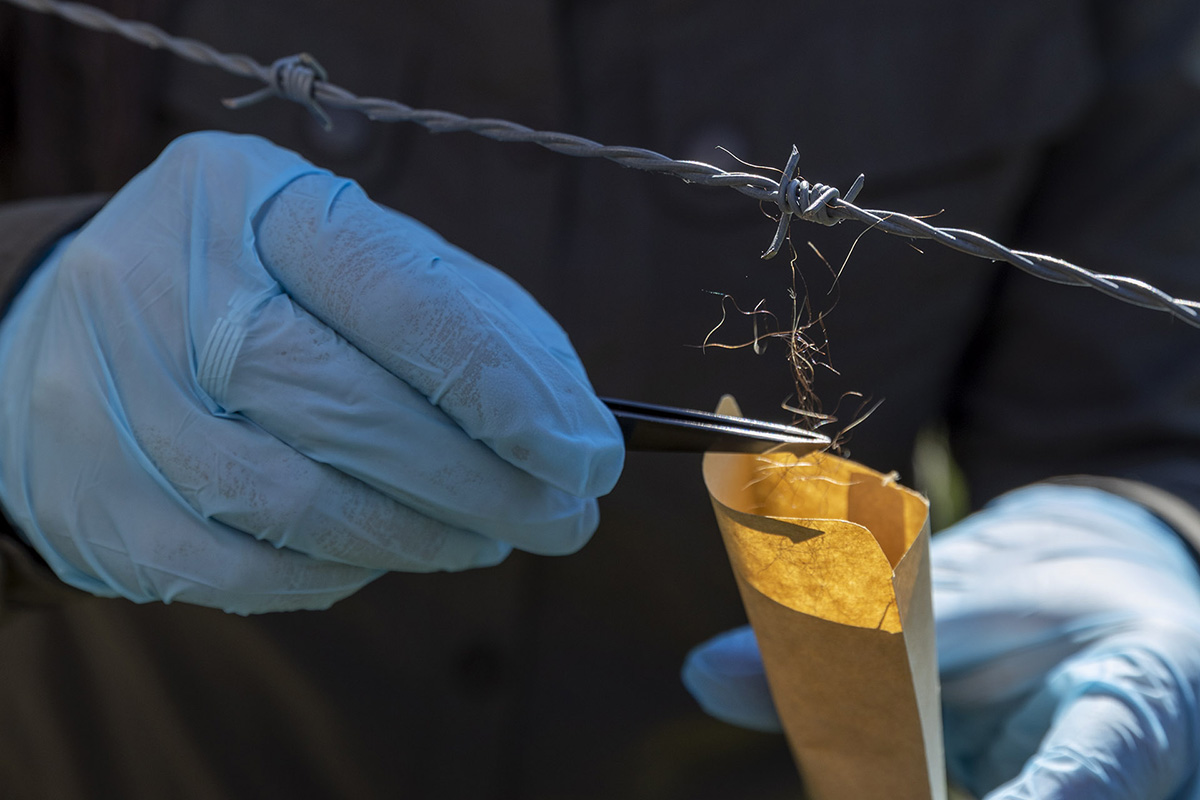
Karen Noyce

Research strategy and techniques applied in the Abruzzo, Lazio and Molise National Park over the last 16 years.

Many discreet eyes to study the bear’s reproductive capabilities.

Bears reproduce very slowly and this is why any change in the number of females breeding each year can drastically affect population trends. If the number of females is increasing over time, it is very likely that the number of bears is also increasing. This is why the technique adopted in the PNALM involves counting females with young. This is achieved by identifying and counting the females reproducing each year in a given study area, complemented by other data collection strategies, direct observations and use of camera traps. Targeted observations and camera trap monitoring are carried out from early spring to late summer throughout the study area, while, from August to September, simultaneous direct observations are made from around 30-40 fixed locations in the areas where the alpine buckthorn berries are ripening where the bears congregate each year. The strategic locations, times of day and seasons when the bears are most likely to be observed were identified through an experimental study initiated in the first year of the project. How to identify females with young and then count them? Contrary to popular belief, it is difficult, if not impossible, to distinguish one female from another. Three criteria are therefore employed. If a female is already known and has ear tags (positioned by researchers when the bears are captured and fitted with tracking collars) and the other is not, then they are different. If neither of the two is marked and they are seen at the same time, they obviously cannot be the same. And in all other cases? The females with tracking collars have taught the researchers in what way and how far a female moves about in the Park. Using this information, it is possible to determine with a very high probability whether the observed females are the same or not.

Since 2006, technicians and researchers have been counting females with their young in the PNALM using a variety of techniques, from direct observations to photographic monitoring.

The adult and reproductive females can be calculated based on the number of females with young. In the Park, females reproduce at least every three years. So in any given year, females that had cubs in the two previous years are unlikely to reproduce. Adding up the number of females with young counted in those three years therefore gives the number of adult females in the population capable of reproducing. How to interpret the data? The number of females with young counted should not be considered as an absolute number, but a good approximation of reality. We cannot, in fact, be sure that some family groups have not escaped our binoculars. However, we can use this number as an index, in other words, a number that tells us how births vary in the Park (for example, if they increase, decrease or remain stable), or even better, that tells us about the health of the population (if cubs are born, then the females are healthy and if the number of females reproducing increases, then so does the population). The same also applies to reproductive females. We know that most females breed every three years, but some may breed every two, or every four years. So, of course, by counting the females every three years, the aim is to get closer to the actual situation, to focus not on the numbers, but on the trend.

“For as long as I can remember, research has been my dream. It is my passion, my main interest and also important for society. Mankind is causing the loss of biodiversity, animal species and environments and I hope I can help show that animals are an integral part of our world.”

Andreas Zedrossser

Hairs and excrement can tell us about the eating habits of individual bears and how they change over the seasons and the years.

The feeding behaviour of the bears has been identified mainly by analysing the content of their excreta. Given the omnivorous nature of bears, the analyses are carried out seasonally and annually, with excreta collected on a monthly basis to identify the changing availability of the food sources used by the animals. The collection itineraries are designed to coincide with the routes followed by the bears as they move around, passing through as many environments as possible and in radial sectors throughout the Park. Where there are bears with tracking collars, collection was targeted on the known locations of the animals to maximise the probability of detecting every food source. The strategy adopted allowed more than 2000 excreta to be collected over a four year period, enabling us to describe the eating habits of the entire population. Quantification of the diet involves hours and hours spent in the laboratory, sampling the excreta (only two 50 ml samples per excrement are analysed), manually separating and identifying the undigested remains and measuring their volume. In the analysis phase, the volumes of undigested remains are converted into measures of biomass and assimilated energy by using correction coefficients (taking into account the digestibility of each food and its nutritional content) developed from food experiments conducted in captivity on brown bears in other study areas.

Technicians and researchers identify and quantify the undigested remains in bear excrement to study their eating habits.

In 2014, the hair collection conducted to count the bears enabled the diet of individual bears to be quantified by applying stable carbon and nitrogen isotope analysis. The isotopic signatures reflect the carbohydrate and protein components deriving from the diet and thus assimilated from a specific food source. As each food source has its own isotopic signature, hair analysis enables the bear’s diet one year prior to collection to be reconstructed. What’s more, since hairs grow gradually, by analysing successive segments of the hairs in order of growth from base to tip, it is possible to study the seasonal changes in the diet of each individual identified through DNA.

In 2021, the first results of a dietary study conducted between 2013 and 2014 involving isotope analysis of 35 hair samples from 27 different bears (16 females and 11 males) were published in an international scientific journal. What emerged? When compared with the study conducted between 2006 and 2009, the study confirmed that Apennine bears are mainly vegetarian, in other words, grasses and various fruits are the main meal in every season. Meat consumption continues to be secondary compared to other foods, peaking between March and July when bears feed mainly on red and roe deer and wild boar. In summer and autumn, the bears don’t let a single fruit escape their attention. In summer they mainly eat wild fruits, while in autumn, these are rivalled by cultivated fruit. Male bears are more voracious for meat in spring and autumn, while females prefer to search for grasses and ants in the former season and nuts in the latter. Although all bears have access to all foods, each bear was found to have its own preferred diet. Finally, the diets of confident and wilder bears do not differ greatly from season to season, although the former consume more cultivated fruit in autumn. The consumption of wild food generally prevails over food of human origin, once again confirming the wealth of food available in the PNALM. A wealth that must be preserved and supported.

“Research is important to me because I’m a curious person. There is nothing more fascinating than studying bears in the wild. They are intelligent, adaptable and do a thousand different things. Every day is a continuous discovery.”
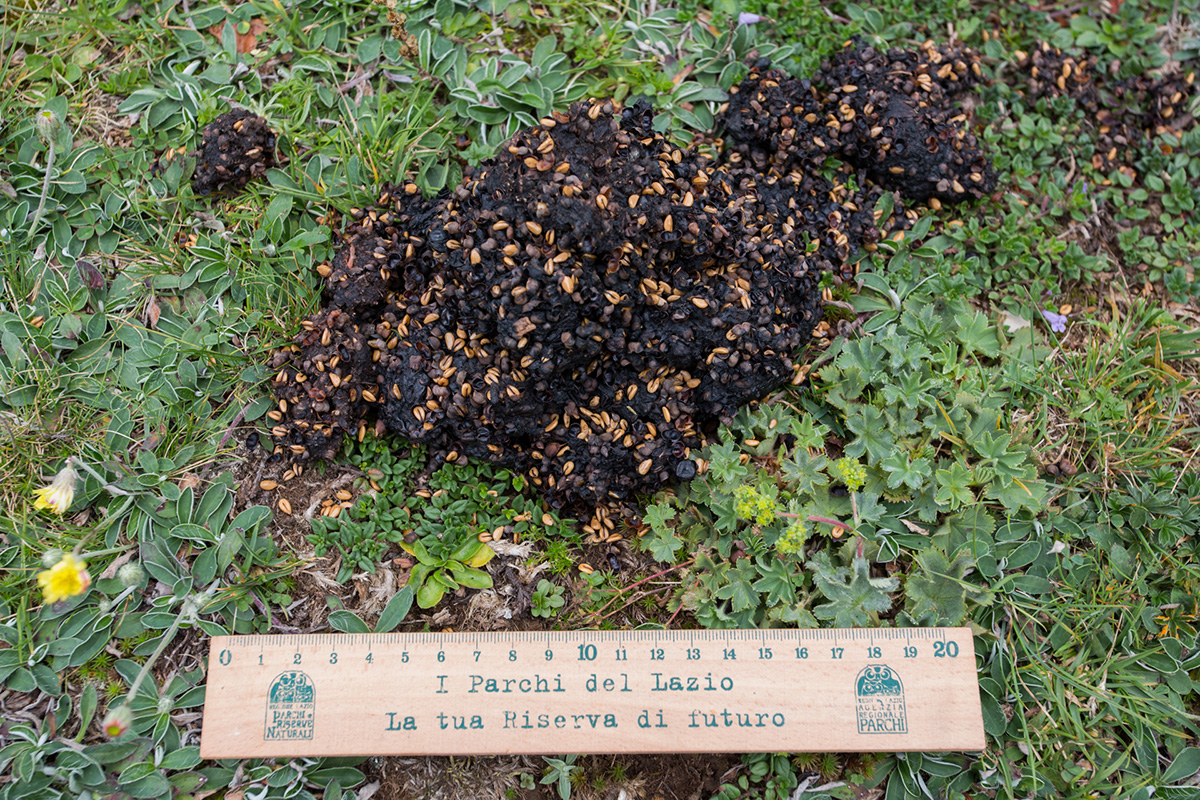
David Mattson

The most effective technique for studying particularly elusive animals is satellite telemetry. This method enables the animals to be located and followed at a distance, but also to monitor their survival. The system consists of a GPS tracker incorporated into a tracking collar attached to the captured animal. The collar also has a VHF radio transmitter, enabling the animal to be located manually from a car or on foot via a receiver and antenna. Normally, however, information such as date, time and geographic coordinates are sent directly to the computer or mobile phone using specific applications and software. These collars are also capable of detecting the bears’ activity on a scale of seconds (moving or resting) by measuring the oscillations of the collar in three directions, thus providing information on the animal’s mortality by sending a message if the collar remains stationary for more than eight hours. The amazing thing about this technology is that you can dialogue with it. In other words, you can programme the collar whenever and however you want, asking it to let you know the location of the bear every five minutes, or once a day, depending on your research goals.

Satellite and digital cellular telephone (GSM) systems work together to track the bears’ movements.

PNALM staff engaged in all the stages leading to application of a tracking collar to female bear F24 and male bear M18, from installation of the snares to the actual capture itself.

But how do you capture a bear? For scientific, ethical and legal reasons, the captures are planned to ensure the absolute safety of the captured animals. The captures serve not only to fit the collar to follow the animals’ activity and movement, but also to collect biological samples (blood, nasal and rectal swabs and faeces) and biometric measurements (weight and morphometric measurements) to assess the nutritional status of the individuals. Special snares known as “Aldrich snares” are used to catch the animal’s leg with a snap mechanism equipped with safety systems including an anti-twist ring and spring-loaded tear-proof system to anchor it to a tree. Each snare is linked to a transmitter providing real-time notification of the capture, allowing the team to arrive at the site in less than 20-30 minutes. The snares are triggered at compulsory points of passage by experienced personnel, taking care not to leave any odours. Once captured, the animals are doped, examined, measured, marked and fitted with tracking collars. An antidote is then administered, enabling the animal to recover its strength and faculties immediately. On average, the entire procedure, from anaesthesia to actual release, takes no more than an hour.

Research and conservation can go hand-in-hand, the former providing the basis for making more informed and well-founded choices, the latter putting them into action.

The Apennine bear

The Apennine bear

Stories of adventure, privilege and identity

READING TIME 20 MIN

In the 18th century, the Apennine mountains appeared as a harsh, wild, remote land, made up of impenetrable forests… magnificent, but disquieting to the eyes of a city dweller.

The drove trails and mule and cart tracks providing access to the mountainous parts of Abruzzo and Molise were difficult to follow with the vehicles of the time, such as wagons and carriages, and this would remain true for at least another couple of centuries. Reaching these places was an adventurous experience, not to mention the long, prohibitive winters and the risk of being plundered by brigands or attacked by wild beasts.

In this historical image, dating back to the early 20th century, one can see numerous pastures and cultivated fields at the foot of the Camosciara Amphitheatre in the Abruzzo, Lazio and Molise National Park, now almost completely taken over by nature and covered by dense secondary vegetation. (© Archivio Ente PNALM)

The central Apennines were not uninhabited lands, but instead were home to an agro-pastoral society made up of shepherds and farmers who utilised the mountains for a purely subsistence economy, transforming the steep slopes into fields to grow cereals and pulses, cutting down the woods to create pastures and using the higher meadows to graze animals in the summer. It was also a land of hunters and fishermen. They hunted for sustenance, to obtain meat and furs. The main prey consisted of hares and various species of bird, while otters, stone-martens and wild cats were sought after for their pelt. They also hunted vermin such as wolves, foxes and mustelids to protect their flocks, herds and poultry. It was at this time that the famous “lupari” or wolf-hunters made their appearance, paid to exterminate the predators with rifles, traps and poisoned bait. The practice of killing vermin continued until the 1970s. Lastly, big game species not considered either as vermin or valuable were also hunted for the purposes of recreation, adventure and celebrity. Once red and roe deer had become extinct, chamois and particularly bears were the main game.

This photograph shows the moment when the women say goodbye to the men as they leave with their flocks for the long transhumance to the Tavoliere delle Puglie. (© Archivio Ente PNALM)

Who hunted bears? Bear hunting was the privilege of a few wealthy families with the time and resources necessary to organise the hunts, together with a few particularly experienced and courageous locals who gained fame as “orsari” (bear-hunters). Bears were also sometimes killed by shepherds defending their flocks. According to some testimonies of the time, the bear was considered a placid, almost tameable and shy animal. It avoided man when it could, but was endowed with an extraordinary and brutal strength, especially if wounded, provoked or in defence of its young. The bear was not considered vermin, even though it might “steal” a sheep from the flock now and then. Some sources claim that certain famous inhabitants of the Sangro Valley captured or killed more than thirty bears in their lifetime, some in genuine hand-to-hand combat. So bears were therefore killed in defence of the flocks or as a display of strength and hunting skills.

The historian Luigi Piccioni tells us how the complex and even contradictory relationship with humans and bears evolved from the XVIII centuries up to nowadays.

With the arrival of the national, constitutional monarchy led by King Vittorio Emanuele II, improvements in the road network marked the end of the region’s geographical isolation, accompanied by a change in the history of bears in the Apennines. At the beginning of the last century, under pressure from notables and wealthy families from the Sangro Valley in Abruzzo, an area destined to later become part of the future Abruzzo National Park was designated as a hunting reserve, repeatedly closed and reopened during its troubled history.

At the end of a hunt, which took place well before the establishment of the National Park and the protection of the species, the heads of two slaughtered bears are surrounded by the trophies of some Apennine chamois in a macabre arrangement. (© Archivio Ente PNALM)

The Apennine mountains were on the 19th century aristocratic hunting circuit and the bear became an act of homage and submission by the most influential local families to enter society and make a political career. Giving a bearskin or bear cub to the nobles or inviting royalty for a hunting party was considered a sign of respect and affiliation to the royal family of Savoy and all that orbited around it and, in fact, gifts to the nobility had been a recurring theme from Roman times through to the medieval nobility. In the Apennines, the bear thus became a symbol not only of adventure, skill and courage, but also of homage and privilege.

Amedeo di Savoia-Aosta, the Duca delle Puglie e his bear trophy at the end of the hunt of 1921. (© Archivio M.Mancini – Campobasso)

As the 19th century drew to a close, the mountain valleys became increasingly accessible as new roads were opened up, while at the same time there were also major changes in the customs of the time. Hunting was no longer the only leisure activity, but other recreational and sporting activities began to gain ground, including horse riding, tennis and cycling, while hunting also became increasingly popular among the urban middle classes. It was especially during the two periods when the Royal Reserve was closed (1878, 1919), with the accompanying absence of constraints and restrictions, that bear hunting came to resemble a genuine massacre, with the participation of both locals and outsiders. In other words, the bear could once again be freely hunted. It was precisely these events that resulted in the emergence of the first nature conservation movements at both local and national level. Between 1921 and 1922, these finally led to establishment of the Abruzzo National Park. The bear and the chamois became two protected species and, in 1931, the last bear hunt was granted in honour of the king. At the same time, a further change in customs took place… big game hunting disappeared among the main leisure activities and the Apennines became a centre of attraction for winter sports.

Vintage photo showing some notables and local personages involved in the last official bear hunt in the Abruzzo National Park in 1931. (© Archivio M.Mancini – Campobasso)

With establishment of the Park, the image of the bear underwent a further metamorphosis to become a source of local pride, a tourist attraction and a symbol of the conservation and protection of animals… in other words, of a protected area, today’s Abruzzo, Lazio and Molise National Park. Since the 1970s, the sitting bear has been the Park’s official “my friend the bear” symbol, reinforcing the symbolic familiarity with this animal. In the same years (and particularly over the last decade with emergence of the social media), there has been a growing awareness of the environment and its protection. Bears have increasingly become a public (and consequently also an emotional and political) issue, involving not only protected areas, but also the worlds of research and associations and the public in general.

“My bear friend”, sticker put into circulation by PNALM in the early 1980s, in which the slogan and the Park’s friendly logo contributed to the creation of a brand new image of the plantigrade.

The relationship between the inhabitants of the Apennines and bears has evolved over the centuries. Central to these changes has been the complex and even contradictory relationship with hunting.

BACK
error: Content is protected !!