The tree of plenty

The tree of plenty

Beechnuts are genuine calorie bombs for bears

READING TIME 10 MIN

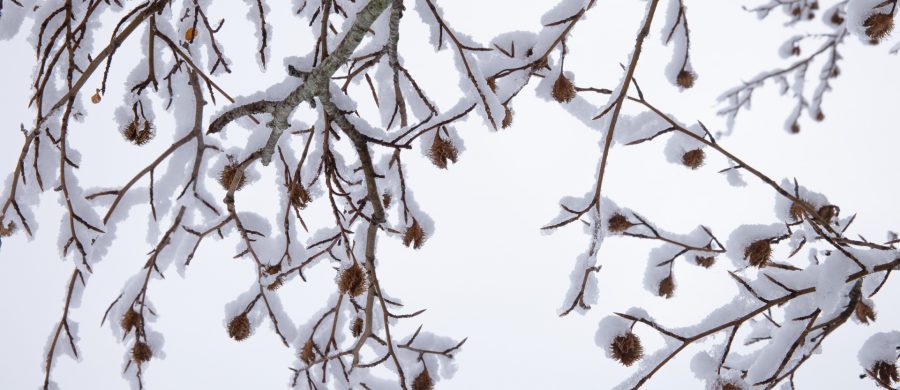
Promise is in the air in the central Apennines. After several years of waiting, the beech trees bloom in spring and as early as late July, the branches are bending under the weight of the unripe fruits.

A single tree can produce more than 30,000 fruits (beechnuts) in one growing season. A real bonanza for hundreds of animal species, providing the fruits are able to ripen, something that occurs in just a few very special years. But in these years, it is in autumn that the forests are especially full of life. The tree branches are targeted by birds such as tits and finches, together with rodents, including dormice and squirrels that hoard the fruits. Ripe beechnuts fall to the ground by gravity, helped by the numerous visitors and gusts of autumn wind. The forest litter is covered with thousands of spiny leathery cupulas and crunches under the weight of wild boar and red and roe deer as they dig deep with their noses in search of food. But there is also turmoil below ground. Industrious voles transport the beechnuts to their burrows where they hoard them to guarantee a reserve of food for the winter and following spring. Bears are obviously not indifferent to this bonanza.

The invisible eye of a remote video camera placed in a remote forest reveals the movements of bears and wild boars in search of beech masts in the early winter.

The autumn of 2007 was an extraordinary bumper year in the Park. As early as the first week of October, the bears seemed to have fixed a date to meet up. Within a few weeks, two adult females, F07 and F06, and a young male, M09, had taken up position in the same valley in one of the most verdant forests in the heart of the Park. When beechnuts are very abundant, individuals can feed for long periods in even very small areas without ever leaving them. By using radio telemetry, we discovered that some bears frequented areas smaller than half a square kilometre for almost a week.

Elisabetta

Tons of calories

The fruit of the beech tree, the beechnut, consists of a leathery husk known as a cupula containing two achenes, woody semi-triangular seeds rich in sugars and abundant oils. Each beechnut corresponds to about 2 kilocalories. In a bumper year, a forest can produce an average of 246 kg of beechnuts per hectare, so each hectare of forest can contain up to 500,000 kcal. Considering that in the Park there are about 24,455 ha of beech forests, they can produce more than 6,000 tons of beechnuts in a single year. Compared to other fleshy fruits (such as apples or pears), beechnuts are richer not only in fats (18.4%) but also proteins (14.6%) and minerals. With just this one type of food, bears can put on weight quickly with almost no effort. This high-calorie, nutritious food allows females to complete their pregnancy, then deliver and nurse their young.

In autumn when the fruits are fully ripe and “raining” down onto the ground, the bears spend their days ploughing up the ground like wild boars. In years when beechnuts are scarce, the competition with birds, rodents and wild boars is so high that the bears adopt another strategy… they climb the trees and pick the nuts directly from the branches. After a bumper autumn, the seeds are first hidden among the dead leaves in the litter, then covered by the winter snow where they await spring, as do the bears in their dens. From April to June, the beechnuts that have managed for months to resist the attack of mould, bacteria, insects and even birds and mammals become an exceptional nutrient supplement in the bears’ diet. The animals use their refined sense of smell and acute hearing to dig through the leaves and rummage in the stores of small rodents. Although red deer and wild boar are present in large numbers in the Park, in bumper years, bears can still find abundant acorns and beechnuts even in spring. In short: there’s enough for everyone.
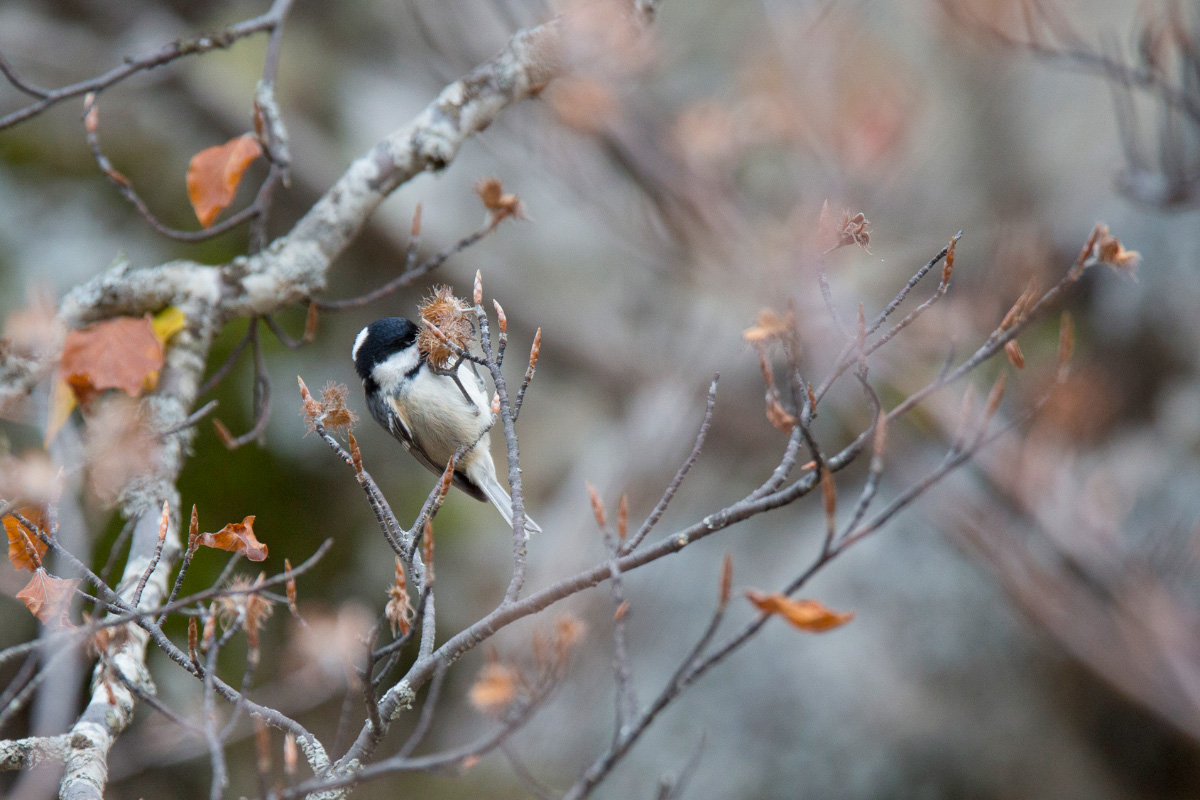
A coal tit pecks at a beech mast still attached to the tree. In the Apennines it is not only bears that take advantage of the years of grazing, but dozens of different species.

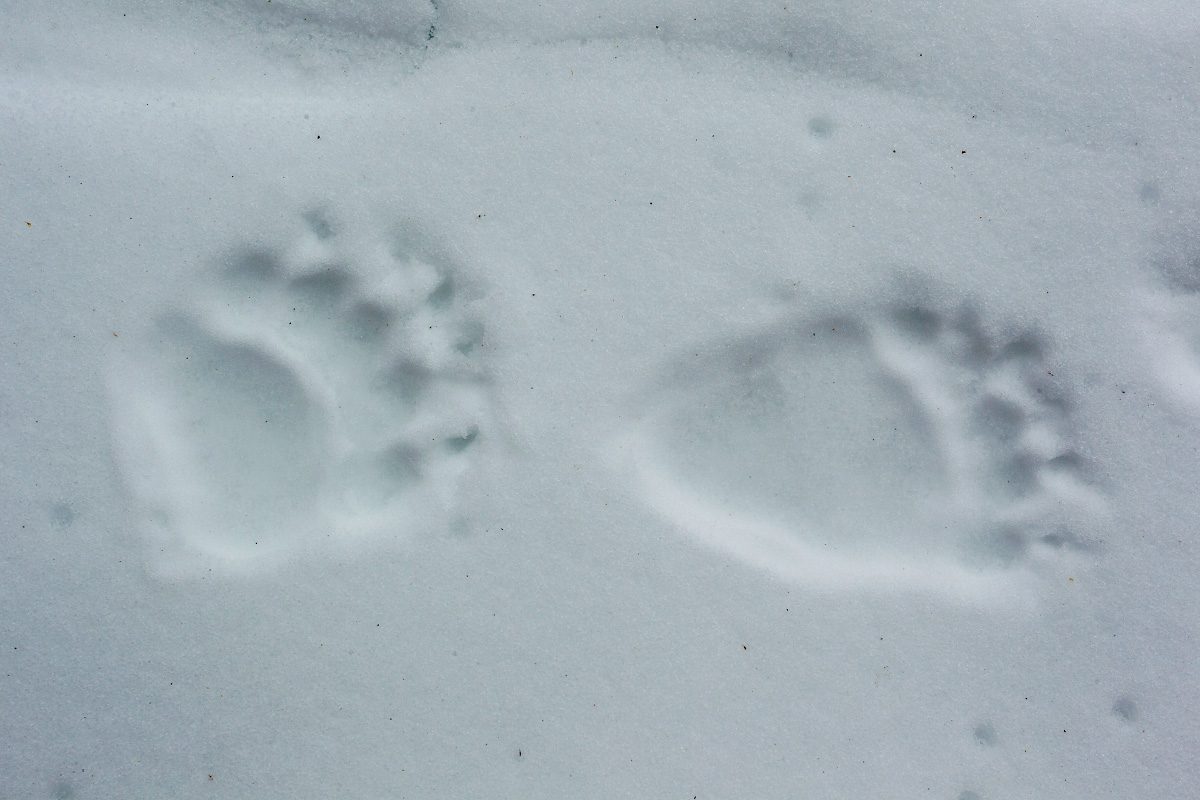
It was 14 December 2007. Three of the bears we were tracking had been in the same area for weeks. We used telemetry to make sure the bears were far away, then entered the forest, trying to overlap our steps to avoid making a noise. I remember it was a very windy day and probably the thudding of the beechnuts on the ground muffled the sound of our footsteps, because a few dozen metres away from us, a bear was calmly circling around the base of the trees, to then move on in a straight line again, slowly, a few metres a minute. His nose was almost always to the ground, although he raised his head from time to time to listen and look around. He ate like a true gentleman. He grasped the beechnuts gently with his lips, chewed the cupula and let it fall from the side of his mouth, then swallowed the seeds. The fascinating thing was that as he moved, he lingered on each paw with his full weight, almost as though wanting to leave a cast of each foot in the litter. This is how a bear marks and signals its passage to other bears. A way of avoiding stepping on each other’s toes too much.

Elisabetta
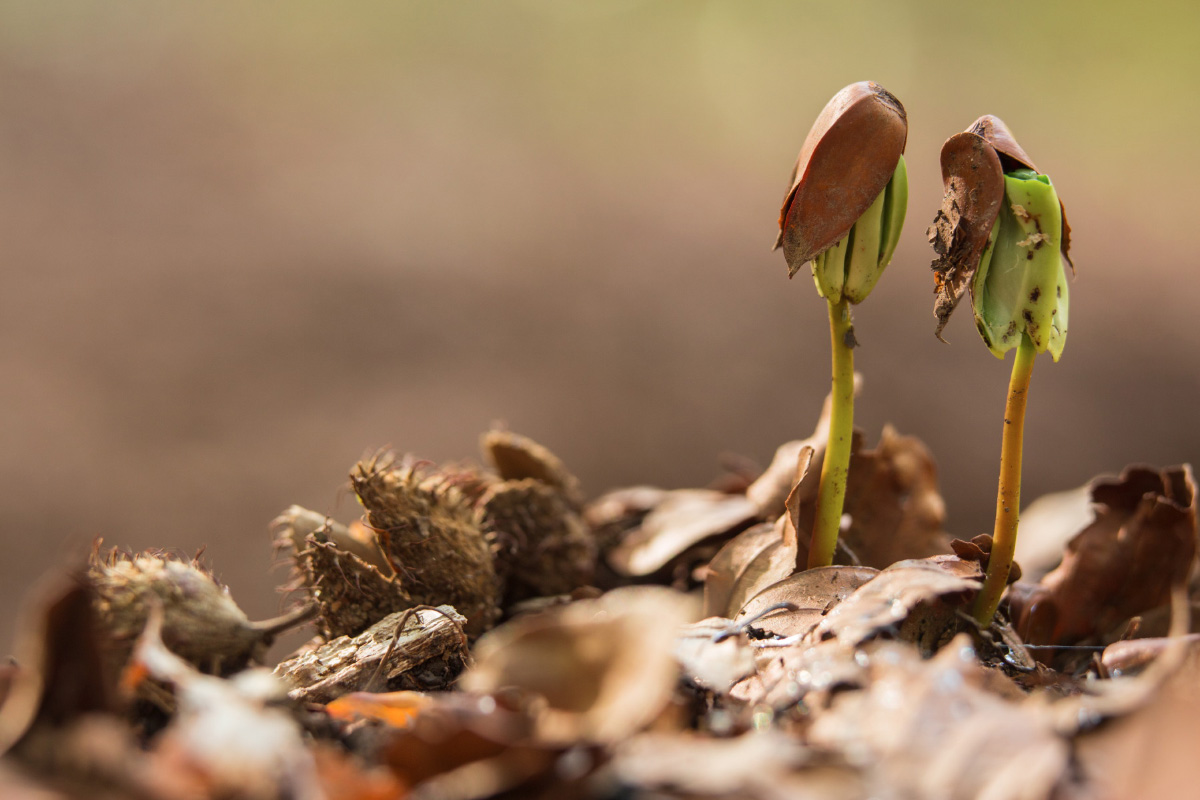
The bud of a young beech tree. After the winter, millions of beech masts cover the ground and the trees of the future grow from those that have survived fungi, mould and animals.

The presence of large quantities of beechnuts controls both the bears’ movements and their winter metabolism. For example, in bumper years, some bears not only enter the den later, but also sleep less. These extra months of feeding benefit mainly the bears that need the most energy, two-year-olds and females with cubs. In the winter of 2006-2007, the young bear M09 never entered a den, while the female F06 interrupted her long sleep for an exploratory beechnut supply trip.
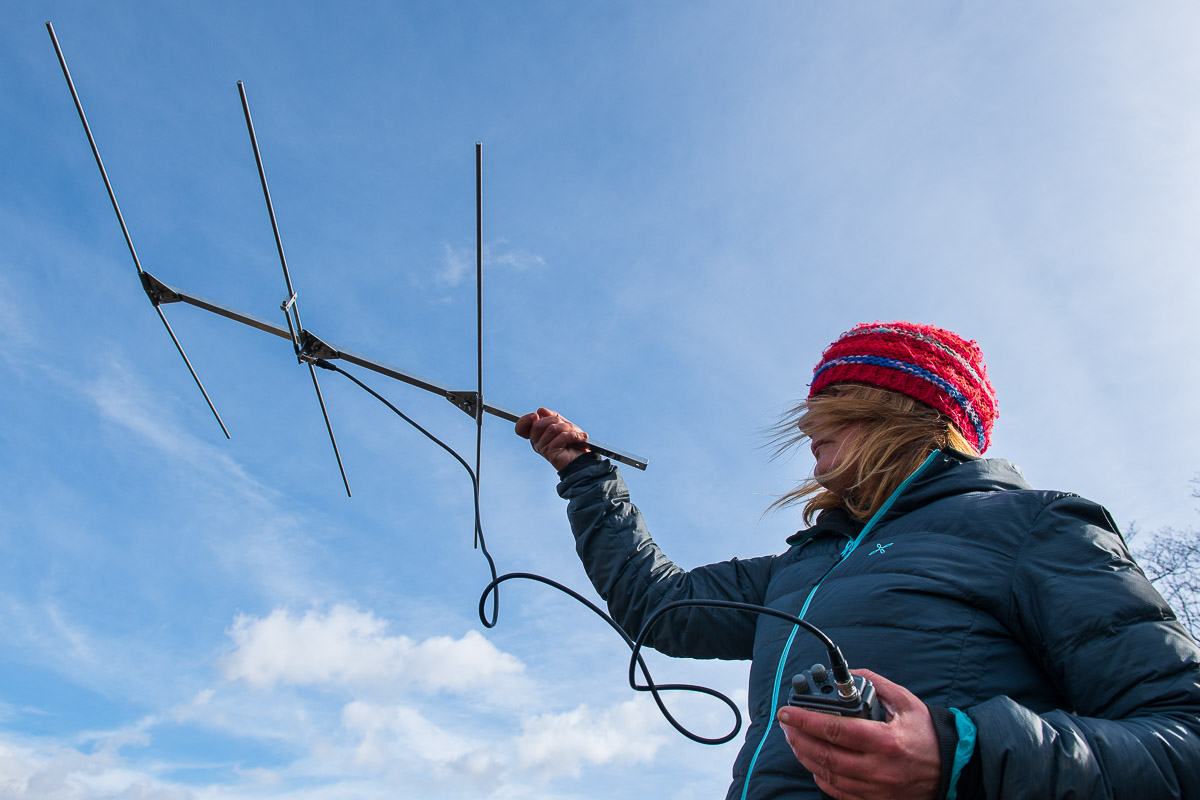
A researcher holds a telemetry antenna to follow the movements of a radio collared bear from a distance. This technique is essential for understanding the behavior of these animals during the beech mast season.

It was 25 February 2007 when we detected the collar signal of bear F06 in a different direction than usual. We used to walk through the valley every other day to check and verify from a distance that the bear was in her den. This wasn’t the first time I’d walked through that valley in winter. But that year the valley was different. The snow was a complete mess. The valley was criss-crossed by hundreds of wild boar and red deer tracks and there were signs of digging everywhere. F06 had left her den, while the young male M09 had never even entered it. The snow was about 40-50 cm high, but in some places it was as much as a metre deep. I followed the bear’s tracks down a steep slope and through a series of dolines, then abandoned them as they entered a new valley. Along the entire 5 km route, the bear had stopped several times, repeatedly plunging her nose into the snow for about ten centimetres, digging circular holes each time. At one point she had even dug herself a bed under a rotten log, probably to rest. She remained active in the adjacent valley for about seven days, then returned to the original den area until the first week of April.

Elisabetta

The first snow show the passage of a family of bears through a beech forest. With the arrival of winter, in the mast years, the activity of these animals is highly concentrated in the forests.

But beechnuts give bears genuine “power”. From 2004 to 2019, bears had to wait for a bumper crop for from two to as many as five years. In the years after a bumper year, technicians and researchers have confirmed that more females become mothers, as is also the case, for example, with black bears. But the rule does not always apply. Despite the scarce production of beechnuts observed from 2015 to 2018, the number of births in fact remained high, an indication that even in these years, the female bears found plenty of food, including acorns (turkey and downy oak) and other fruits that ripen in summer and autumn. For bears, the extraordinary nature of the Apennines is precisely this abundant supply of nuts and fleshy fruits and protecting them can help guarantee the survival of this adaptable animal.

L’esperto di orsi americano David Mattson ci spiega l’importanza dei frutti secchi, in generale, come risorsa alimentare per gli orsi e la dipendenza degli orsi grizzly per i semi di pino cembro e il ruolo che gli scoiattoli rossi svolgono nel trasferire i semi dagli alberi all’orso.

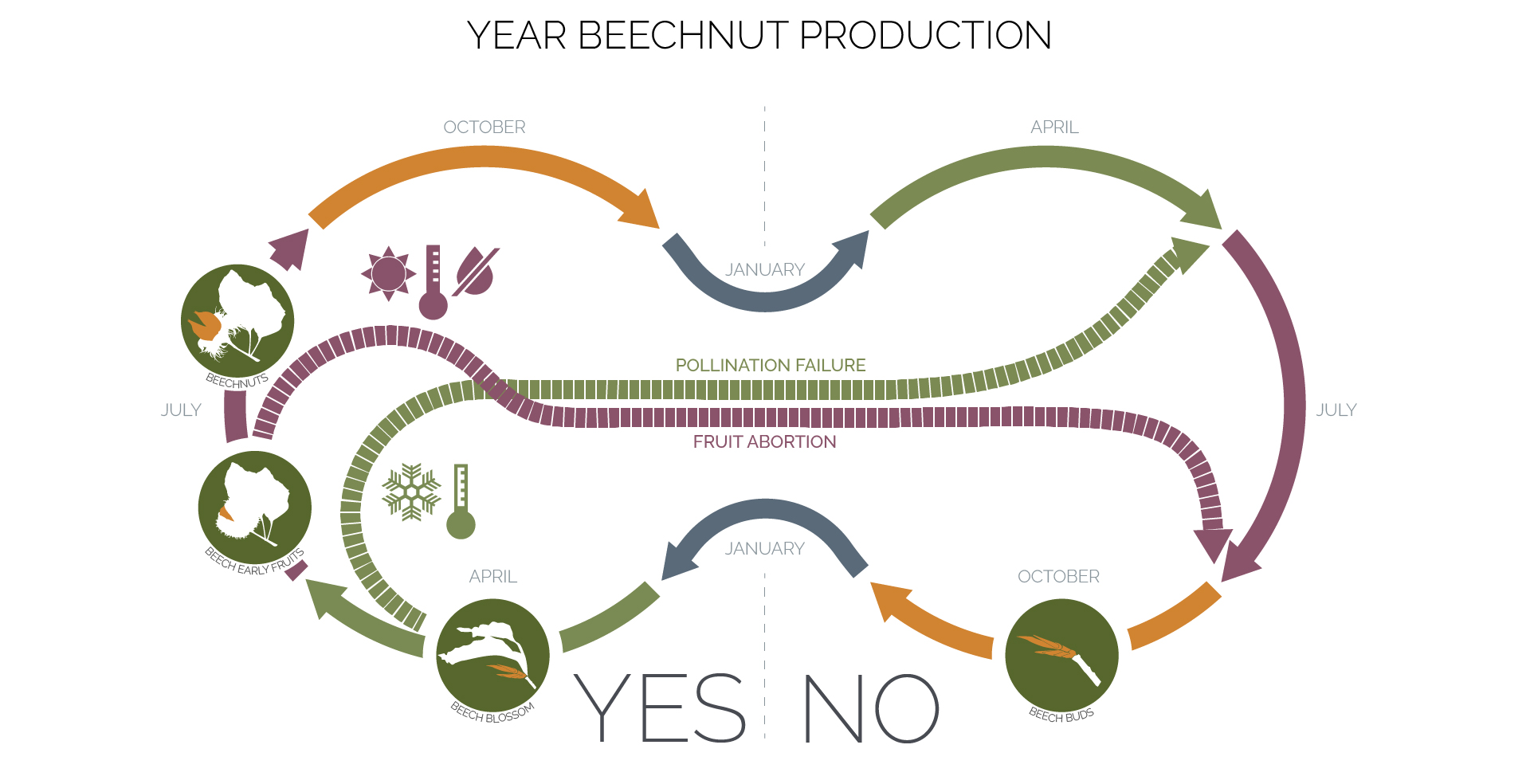
In some years, each beech tree produces more flowers than in previous years and this is true for all, or almost all, the trees in the population, a phenomenon that usually occurs at intervals of from 2 to 10 years. The synchronisation enables the wind-pollinated plants to maximise the probability of regeneration. But this only happens in certain weather and climate conditions. If a cold, wet summer is followed by a hot, dry summer, the following year, the beech trees stop growing to reproduce, in other words, to flower, provided the spring has been mild. Plants over thirty years old usually produce the most fruits. After profuse flowering, the trees rarely have sufficient energy to flower abundantly again the following year. Hence the periodicity with which the flowers (and consequently the fruits) are produced. But what can cause a bumper year to fail? Heavy rainfall and spring frosts can inhibit pollen formation, pollination and thus the formation of fruits, just as severe summer drought can cause the fruits to abort, even if pollination has taken place. This sensitivity to drought makes the beech tree very susceptible to climate change, more so than oaks.
Especially in summer and autumn, bears can consume up to 20,000 kilocalories and when possible, they use every hour in the day to find food. Beech forests cover more than half the protected area in the heart of the Park and bears can find not only food there, but also safety and tranquillity. At lower altitudes of around 1,000 to 2,000 metres, the beech forests give way to oak woods: hundreds of square kilometres of turkey and downy oak woodland with highly nutritious acorns, very appetising for bears in autumn. For example, almost every year a turkey oak forest can produce an average of more than 500 kg of acorns in a thousand square metres. But in some years, acorn production may be more abundant than usual… even oaks have their bumper years and this inevitably attracts bears to less safe and less tranquil areas.
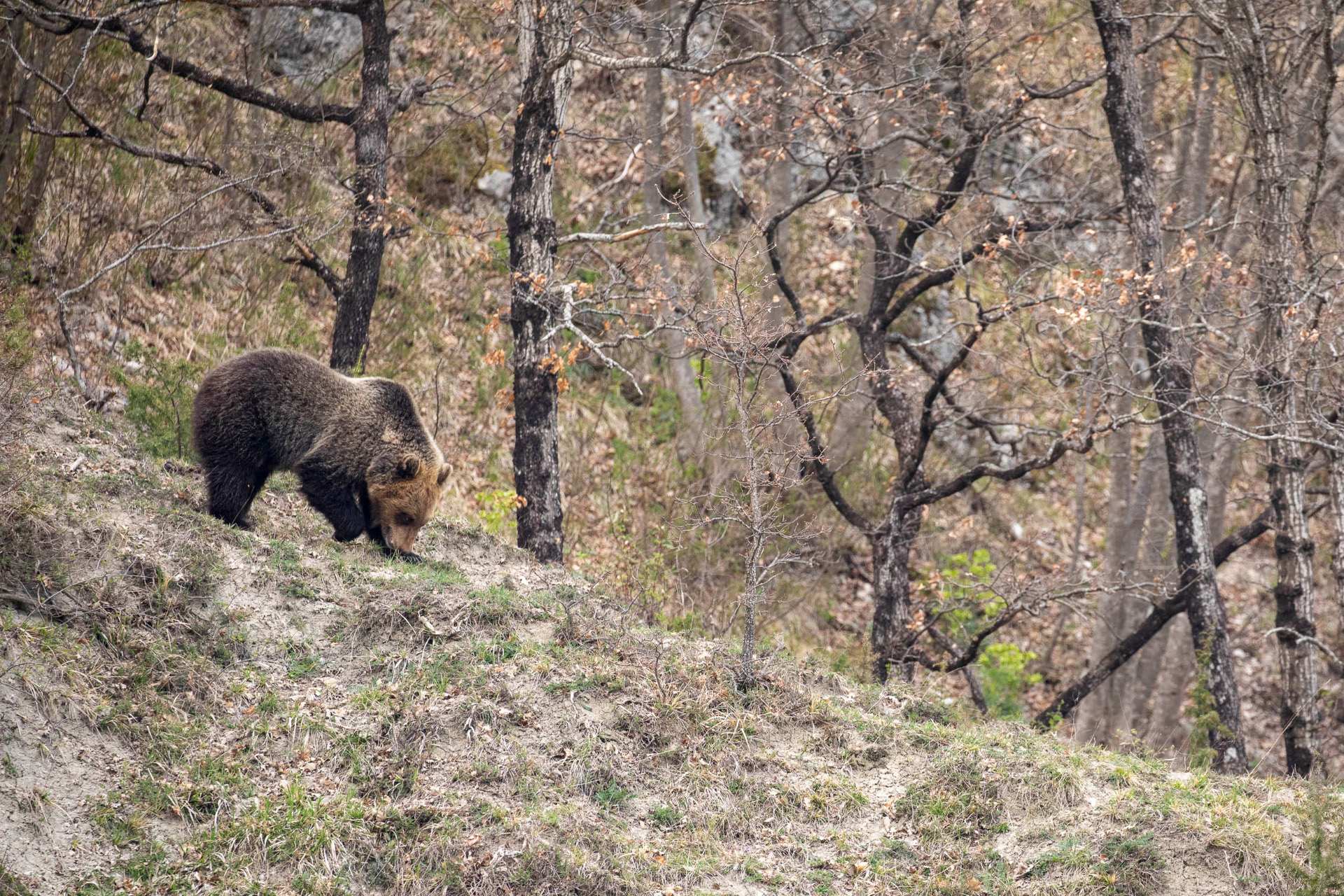
At the end of winter, a bear feeds on acorns that have fallen to the ground. Compared to beechnuts, the fruit of the oak tree is a more widespread and accessible food resource.

Outside protected areas, uncontrolled use of the land in beech forests and oak woods during the autumn for recreation and productive purposes may prevent bears from feeding adequately in a very critical season. Protecting them also depends on our daily choices.
The bear and the ant

The bear and the ant

True rulers of the Earth, ants weave the fabric of existence for dozens of species of plants and animals, including bears.

READING TIME 12 MIN

On a mid-May day when the air is humid and hot, you only have to lower your viewpoint to a few millimetres from the ground to enter an incredible kingdom, the realm of ants.

When temperatures rise about 20 degrees centigrade, turmoil breaks out, both above and below ground. Ants swarm on the top of boulders, among the tufts of grass and bushes, on the mounds of earth, through the dead leaves on the forest floor and over the roots and bark of the trees. In just a few square metres, millions of ants in columns explore the territory in search of caterpillars, spiders, seeds and fruits, while others tend and “milk” aphids, or fight and enlist allies to defend their colony. In the shelter of the nests, the workers of a single colony build and defend the nest and take care of the queen mothers, cleaning and feeding them, together with the eggs they lay, which will become larvae, then pupae and finally adults. The future of the colony in fact depends on the birth of new virgin queens and winged males. The life of the colony revolves around a single objective: to reproduce, defend and propagate itself. An ant colony can be considered as a self-sufficient macro-organism and its strength lies in the ants’ ability to create strong links and complex social arrangements. Each ant has its own role within a hierarchical structure organised into castes. Unity is strength and each colony has its own unique identifying odour that strengthens the bonds. When the breeding season arrives from late June onwards, swarms of virgin queens and winged males emerge from the nests and swarm in the air to mate. The queens that survive toads, spiders, birds and attack by other territorial ants tear off their wings and either look for a place to dig a new nest or return to their original nests. The males, on the other hand, die within hours, leaving behind thousands of descendants.

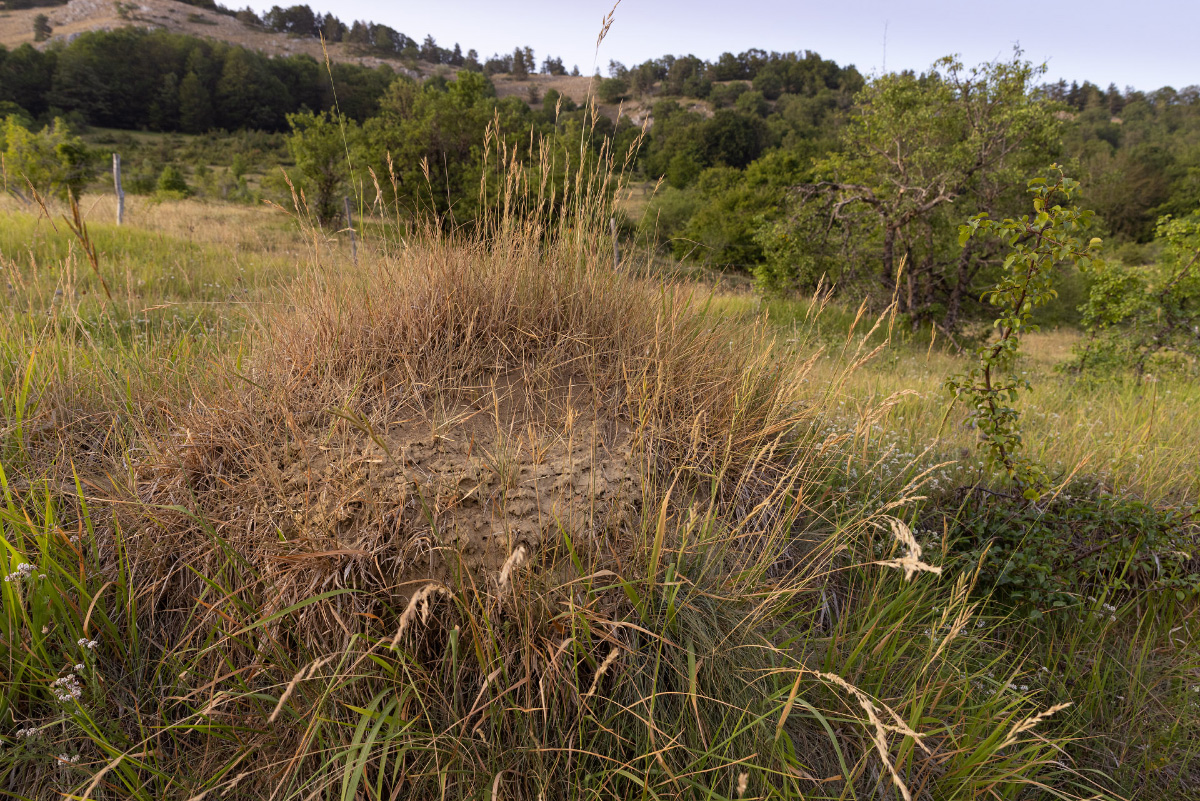
Just 20 square metres of land can contain dozens of nests of different ant species. Each of these contains thousands of insects, an opportunity not to be missed for bears.

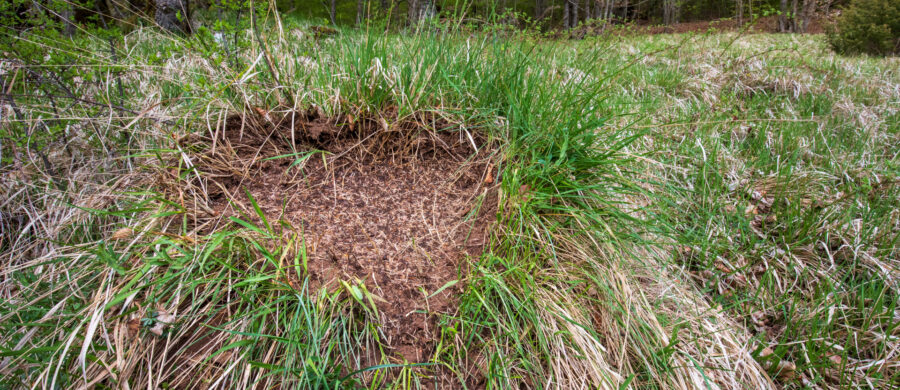
To the untrained eye, all ants look the same, but this is not the case. In recent years, detailed analysis of the ant remains found in bear droppings has revealed that bears feed on more than forty different species. The richness of the Park’s environments (grasslands, clearings, scrub and forests) provides an ideal environment for the life of these insects and it is home to well over eighty different species. Ants build below and above ground “skyscrapers” that can reach several metres in depth and width. The workers are formidable engineers, digging nests vertically and moving between the different levels, transporting the future generations to the best “apartments” This is a strategy to cope with possible variations in environmental conditions that could compromise the reproductive success of the colony, such as temperatures that are either too cold (below 10 degrees) or too hot (above 30 degrees). The nests are, in fact, conceived to ensure the right temperature and humidity conditions needed to raise the broods. The ants concentrate their nests under generally flat rocks, partly buried in the ground and well exposed to the sun. By warming up quickly, the stones create the right temperature to “wake up” the colony, while the warmth and food provided by the workers make the larvae grow faster. Other species construct mounds of earth known as anthills which may include leaves, grass stems and conifer needles. Reaching as much as a metre in height, the anthills are full of interconnecting galleries and chambers. Then there are other species that build their nests in pre-existing cavities in usually dead or dying trees or trunks.

Foragers of Lasius fuliginosus patrol their territory searching for foods to bring in their nests built inside cracks or holes in old beech trees.

Between June and July, bears spend a great deal of time rummaging under rocks, dead trees or mounds of earth in search of the ant nests that teem with adult insects and their broods during these months.

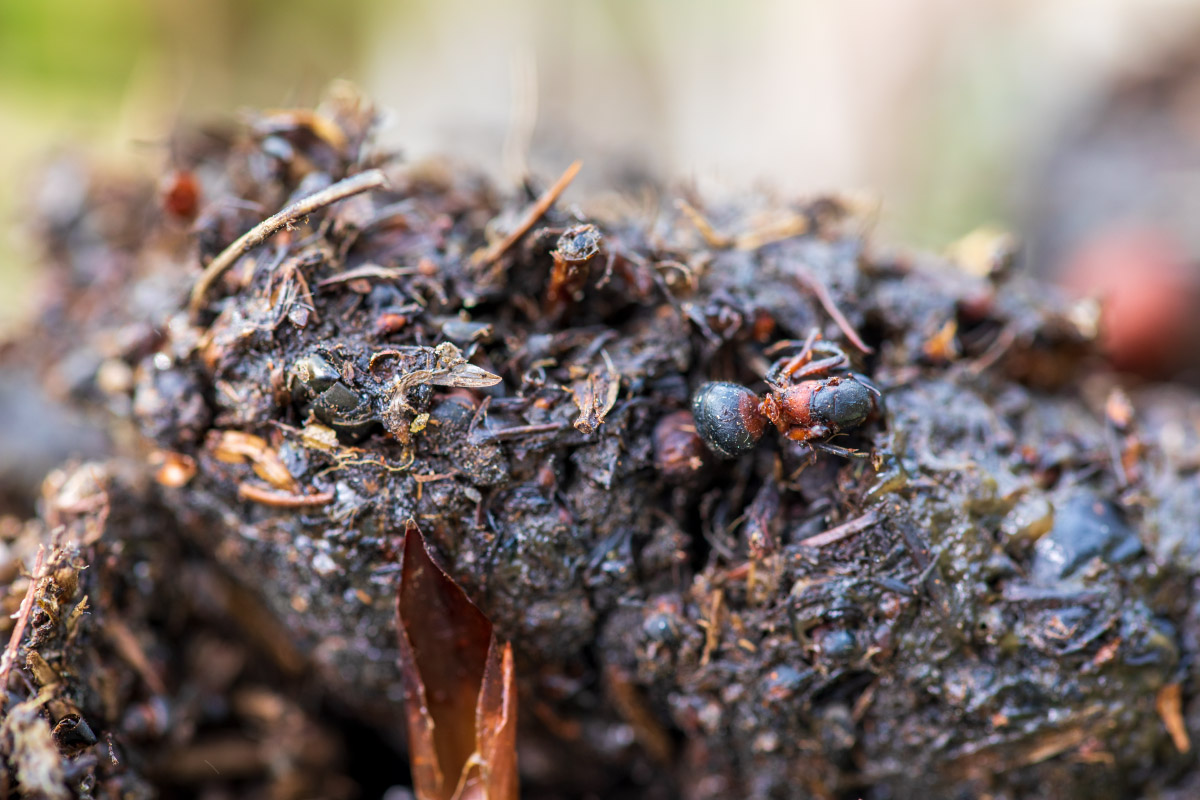
Between June and July, more than 36% of a bear’s diet is provided by ants. During particularly hot and dry years, almost half the diet may consist of ants alone. These values are comparable with those of other populations of both brown and black bears, but are among the highest documented for brown bears in Europe. Consumption peaks between late June and mid-July, coinciding with the presence of the broods (eggs, pupae and larvae) in the nests, but bears may consume adult ants all year round. They rely on their claws to gain access to the nests, whether under a rock or inside a log or anthill. They lift rocks measuring as much as three square metres and weighing several quintals to scoop away the surface of the nests with quick paw strokes. If the ants are aggressive, the bears let them swarm over their legs, then lick them off, otherwise they lick the damaged surface directly. The workers usually take more than ten or so seconds to move the brood to safety in the depths of the nest, giving the bear the opportunity for a genuine raid. Along with the ants, however, bears also swallow soil debris and the leaves forming part of the nest, as is evident from close examination of bear droppings.

An experienced myrmecologist may identify ants recovered in the bear scats based on morphological differences of the undigested remains of their heads, thoraxes, and abdomens.

Why do bears eat ants? Ants are rich in proteins, fats and very rare amino acids that bears lack, all essential nutrients for building body mass, growing and storing fat. Each ant can provide about 0.004 kilocalories and bears can consume even millions of kilocalories of ants per day. A few hours digging out nests and tipping stones can meet a large part of their energy needs. During the spring, adult bears need to replenish the protein reserves they may have lost during hibernation (bears can lose 20 to 40% of the weight accumulated in autumn), while cubs as young as 5-6 months old (born in the den) need them to grow.

In early summer, a bear is roaming among Juniper shrubs searching for ant nests. When they are under attack, the workers of Formica pratensis defend their colony by spraying formic acid from a distance of tens of centimeters.

Bears have only one philosophy of life: eat a lot with little effort. In the case of ants, they prefer to spend a long time over a few plentiful nests, or they may wander around lifting all the stones and logs they come across.

Bears feed mainly on five genera of ants. The Formica and Lasius genera occur in more than 70% of the droppings containing these hymenopterans. These are followed by Tetramorium (about 40%), Camponotus (about 24%) and Myrmica (about 20%), also the most abundant genera in the Park. Among the Lasius genus, bears are especially fond of the small honey-coloured yellow species. When bears find their nests, they feed on these alone. The ants form very large colonies, both above and below ground and very close together. The workers also produce a secretion, a sweet strong-smelling pheromone which seems to attract bears. When disturbed, these ants are also among the slowest to save their brood. Most ants of the Formica genus build visible mounds housing very large colonies, excellent pickings for bears, as they can thus eat for a long time without moving around too much, saving a great deal of energy. Species such as Formica pratensis and Formica sanguinea belonging to the Serviformica group dominate. The other genera, found everywhere in the Park, form smaller, or at least less “conspicuous”, colonies. The presence in the bear’s diet of ants of the Myrmica genus is curious, as they are very aggressive, bellicose insects with a sting and generally shunned by many mammals, including insectivores. But this does not seem to be the case with the Marsican bear. Bears in the Apennines prefer to feed mainly on ants living in open grasslands or in areas of transition with forests. On the other hand, they consume very few species (in practice only two) of the ants that inhabit the beech forests and dig their nests in the wood. These are Lasius fuliginosus and Aphaenogaster subterranea. From one to six different ant species have been found in bear droppings, depending on the bears’ feeding strategy.

Millions of years of evolution have enabled these insects measuring just a few millimetres to regulate the life of entire ecosystems.

Yellow Lasius ants build their colony by parasitising and enslaving other Lasius ants until they gain the upper hand. In the Apennines, these insects dig their nests under rocks, but they also build voluminous mounds of soil and plant debris. They are experts at farming aphids and feed almost exclusively on sugary substances obtained from the excretions of these insects. Aphids in fact feed on the sugary sap of plant phloem, sucking it up through their needle-like proboscis. The ant approaches with its antennae and forelegs and the aphid responds by emitting a drop of liquid from its anus. The ant reacts by licking the honeydew and passes from one aphid to another, feeding from them until its abdomen swells. Satiated, it returns to the nest and regurgitates the honeydew into the mouths of its companions. These ants are genuine farmers and the aphids are farmed at a distance, or even in the nest itself. This type of relationship is known as mutualistic symbiosis or trophobiosis: food in exchange for protection.

Lasius fuliginosus is the “master” of the beech forest. It is a very territorial species and defends itself by preying on enemy ants. The foragers patrol exclusive areas up to hundreds of square metres in size and including dozens of trees, which in turn are used both to farm aphids and as primary and secondary nests. The workers build their nests inside cracks or holes in old beech trees. The nests seem to be constructed from cardboard, but they are actually made of wood macerated and cemented by the ants’ saliva. They forage non-stop day and night, forming conspicuous columns that swarm from tree to tree. But they don’t always manage to come back with a mouthful, as there is a genuine confidence trickster lying in wait. This is a beetle in the Amphotis genus, adept at acting like a “sister worker” in search of food. The beetle drums the ants’ heads and stimulates regurgitation. When the ants realise the deception, they attack, but the beetle withdraws its legs and becomes practically untouchable.

In the sequence: Lasius giallo spp., Lasius Fuliginosus, Formica pratensis, Tetramorium spp.

Formica pratensis is easily recognisable for its red nuances and the anthills measuring up to several metres in diameter constructed with juniper needles, earth and grass. They are known to be “more specialised predators” than other ants, but above all they have a very effective defence system. When they feel under attack, they launch themselves at the enemy, rear up on their hind legs and spray formic acid from a distance of tens of centimetres. Ants can in general be likened to armed battalions, with every detail of a complex strategy of attack and defence stored in their genetic code. The colony comes first.

Compared to the Lasius and Formica genera, Tetramorium ants form smaller colonies dominated by a single queen. These ants prey on spiders and other insects, as well as feeding on sugary substances. They have also come to an “understanding” with the caterpillar of a lycaenid butterfly in the Polyommatus genus. With no intrinsic protection against predators and the wasps that can parasitise it by depositing their eggs inside its body, the caterpillar has developed a stable form of symbiosis with these ants. Special glands enable the caterpillars to produce a liquid rich in sugars and amino acids which the ants love. This prompts them to protect the caterpillars by surrounding them with walls of earth or hiding them in their own nests.

Each year, regardless of age and gender, bears in the Apennines consume ants on a constant basis. A staple in the bears’ diet, ants are essential for the growth and survival of the cubs. Females and cubs are smaller than adult males and can therefore put on weight more quickly for the same number of ants consumed. Ants can also be found everywhere, so they do not attract several bears to the same spot, as for example a deer carcass might. This means that females with young can find quiet, safe places away from adult males, which in the spring can be very dangerous for newborn cubs.

A voluminous earthen mound built as a nest by workers of Lasius yellow ants.

Minnesota and the Apennines, two countries, two bears, same story

American bear expert Karen Noyce explains the importance of ants for black bears in Minnesota. “In northern Minnesota – Karen explains with contagious enthusiasm – black bears eat a surprising amount of ants, especially when compared to other black bear populations. From June to mid-July, more than 50% of their diet consists of ants, including adults, larvae and pupae. Ants are crucial for bears she studied. Karen explains to us that when they come out of their dens, young bears, females that gave birth the previous year and those that have just given birth, need to get their strength back. Young bears especially need to use all their time to build up bones and muscles. As the months progress, the grass becomes increasingly low in protein and the fruit season is far away, but that’s when protein and fat rich ants become active and reproduce. “Right on cue! – Karen explains –”At least in our study area, thanks to the ants, the young bears continue to grow and don’t lose weight as happens in other study areas.” This is not the end of the story. When Karen started to study the diet of black bears in northern Minnesota, her biggest surprise was that of all the ant species she and her collaborators observed swarming above ground in the woods, virtually none were present in the bears’ droppings. The bears fed exclusively on a small yellow ant called Lasius umbratus, but there were no apparent traces of this species anywhere in their study area. Hence their curiosity and desire to find an answer. Yellow ants lead a more discreet and secluded life than other ants. They live deep underground and feed mainly on honeydew produced by insects, the aphids the ants themselves raise. As Karen explains with a smile: “Once you’ve found the nest (that is if you do manage to find it), you’ll see thousands of ants with their larvae. They’re calm and don’t escape. At most they release a defensive substance that smells like citronella and makes them perhaps even more attractive or detectable. An easy, nutritious meal that doesn’t escape the bear’s nose”. The same thing happened to researchers from the University of Rome, because Apennine bears also find yellow ants irresistible: Says Maurizio Mei of La Sapienza University: “The only time I really managed to see large numbers of them all together was during a nuptial flight. They flew right over my head.”

Bears in the Apennines eat ants all year round. Ants are a rich, constant and important source of nutrients for the growth and survival of this population and also the resource that will perhaps be least affected by climate change: a guarantee for the future of the bear.

A special berry

A special berry

A tiny but sweet fruit’s incredible attraction for bears

READING TIME 11 MIN

It’s late July when the curtain falls on the bears’ breeding season. A solitary animal determinedly crosses an amphitheatre of high-altitude clearings and scree, pausing to investigate some bushes.

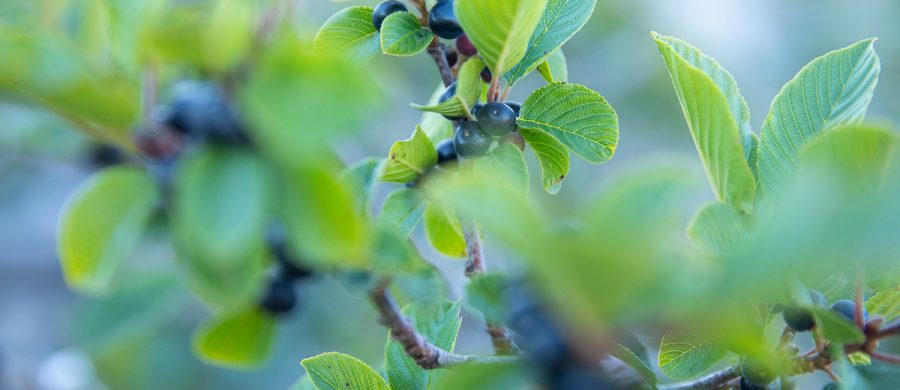
Small clusters of dark red, fleshy, spherical fruits emerge from their leaves; the bear sniffs them insistently, then moves on to the next bush. These are alpine buckthorn bushes and we are in an area of buckthorn scrub. There is a sense of industrious anticipation in the air ahead of the coming months. Depending on the season and slope, in a few days or weeks the berries will turn black and become appetising for bears. Around the same time and in much the same way year after year, the bears in the Park come to these sunny rocky areas from all directions. For the bears, it’s buckthorn time.

The phenomenon is very similar to what happens in the salmon rivers of North America, although of course the scale is different. There, you can see more than sixty bears feeding together and tolerating each other in the same area. But even in the park, it’s not that rare to see up to ten bears taking turns among the bushes a few dozen metres apart.

Elisabetta

For more than 10 years, PNALM researchers and technicians have been spending their summers observing bears feeding in the buckthorn scrub. The first bears start to arrive as early as the first week of August, but the peak of the gatherings occurs between mid-August and the first week of September. Every year, males and females of all ages and females with cubs or juveniles in tow have between thirty and sixty days to feed on these fruits, depending on the weather (rain and temperature) which influences their ripeness and persistence. As the weeks pass, the bears move from one amphitheatre to another following the ripening of the berries, staying for almost a month in some particularly buckthorn-rich sites. From mid-September, sightings become very rare and the bears move down to lower altitudes in search of pears, apples, acorns or beechnuts, depending on the year.

Why bears eat buckthorn

Alpine buckthorn (family: Rhamnaceae) is a perennial, pioneer shrub typically found in the altitude band above beech (between 1125 and 2225 metres). The bushes, just a few metres high, grow on arid, sun-exposed calcareous rocky slopes, in rock crevices, on ledges, on the edges of beech forests and in clearings. The fruits are grouped in clusters of 3-8 drupes and may contain up to 2-3 seeds. In a territory of about 1800 km2, the buckthorn grows in an area of no more than 30 km2, forming more or less continuous populations varying in size from 3 to 13 km2. Each fruit has a calorie content of about 2.8 kilocalories of metabolisable energy. Assuming that the bears feed at maximum efficiency, using ingestion efficiency values recorded in captivity and a defecation rate of 7 droppings per day, each containing up to 5000 buckthorn seeds (corresponding to about 1700 fruits), a bear could consume over ten thousand fruits per day, corresponding to a meal of about 8000 kilocalories (enough to feed a person for two whole days!).

Buckthorn can contribute more than half a bear’s daily energy needs – an excellent food for gaining weight before winter.

This berry, just a few millimetres in diameter and weighing just 0.26 grams, seems to have all the characteristics needed to enable bears to fatten up and prepare for winter. In late summer, bears can choose from more than nineteen different species of fruit, but most of the nourishment and energy comes from eating this one berry. In some years, it contributes more than 70% of their energy intake and even in years when there is an abundance of sugar and fat rich nuts such as beech nuts, buckthorn alone contributes almost half the summer diet. A study carried out between 2006 and 2008 using various techniques (direct observations and genetic and radiotelemetric monitoring) found that more than half the Park’s bears regularly visit these areas each year between August and September. A diet consisting only of fruit could have high metabolic costs for a bear, but with their reduced requirements, Apennine bears are less constrained by an essentially frugivorous diet than larger bears. Young bears and in particular females, sometimes weighing considerably less than half the weight of an adult male bear, can easily accumulate fat and lean mass by eating mainly fruits.

Bears don’t miss a beat when it comes to food. For a bear, buckthorn is a tasty morsel obtained without excessive effort.

The ease with which bears find, handle and assimilate nutrients from the buckthorn makes this fruit an ideal food during the period of hyperphagia. The bushes are distributed in groups throughout the territory, making this resource easy to look for and locally abundant. Bears concentrate more than half their feeding and resting activities in an area of just a few hundred metres around the buckthorn scrub. In practice, bears sleep and eat in the same place. The bushes are just a few tens of centimetres high and the berries are clearly visible grouped in clusters at the tip of the branches, so they can be easily grasped and manipulated. Often in a sitting position, the bears bend the branches apparently effortlessly and grasp the fruit with their lips. They do not waste even a single bite and, in fact, only berry residues (skin and seeds) are found in the excrement, with no leaves or twigs.

Buckthorn acts as a magnet and bears move the centre of their activity to these areas between August and September. During this season between 2006 and 2010, twelve male and female bears were monitored with tracking collars. As the buckthorn ripens, the females in particular restrict their movements to an area of a few tens of square kilometres (around 30 km2) and the buckthorn scrub can occupy up to 40% of the territory used by the bears during this period. But each bear obtains energy and nourishment from its environment in a different way. There is no single recipe for all bears. Age, gender, individual history, the proximity of the buckthorn scrub to the bear’s habitual territory and the availability of other natural foods, not to mention competition with other bears or animals, are all factors that can influence a bear’s daily choice of how and where to feed. Some bears spend no more than three days in the buckthorn scrub, while others remain there for more than a month. But most animals move between the bushes for an average of at least eighteen days, with no difference between males and females.

Buckthorn lays down the law. It takes a lot of time for a bear to satisfy its hunger with fruits weighing less than a gram. Several factors may change bears’ behaviour during this season, including the presence of tourists and other bears.

In summer, neither males nor females have exclusively nocturnal rhythms. Females limit their movements between seven in the morning and three in the afternoon, while males are more twilight animals and only start moving again after five in the afternoon. However, during the long years of research and monitoring carried out to date, it has not been uncommon to see young bears and females with cubs moving through the bushes even in the middle of the day, perhaps taking advantage of a cloudy sky. The bears’ hours of inactivity coincide with the times when those areas are most heavily frequented by tourists and also the hottest hours of the day. In the Park, the choice of when and for how long to feed therefore seems to represent a balance between the costs of feeding at high temperatures and the risk of encountering humans. The number of hours/day available for feeding can, on the other hand, significantly limit the amount of berries a bear is able to ingest. Females with cubs and juveniles, the groups with special needs and able to benefit most from a strictly frugivorous diet, also face the most risks. Going out during the day can not only ensure an optimal meal, it also lets you enjoy the peace of mind of eating away from potentially aggressive adult males. And, in fact, the infanticide of two cubs by a male bear was documented for the first time in 2007 right in an area of buckthorn scrub.

After hundreds of hours of observation, we can now say that bears spend most of their time eating in buckthorn scrub. Sometimes they even seem to ignore each other. In fact, they are always very alert and react to any noise. Greater tension is observed when they first emerge from the woods, a behaviour they share with deer or hares. They stop, scour the area and keep alert, sniffing the air and craning their necks to the left and right. It is probably the conditions of reduced peripheral visibility that induce this behaviour. This enables the bears to assess the presence or absence of possible sources of danger. However, the most reactive are the females with cubs, who may threaten other bears with vigour and determination if they feel they’re in danger.

Elisabetta

Life in the buckthorn scrub is a big change for bears in the Park. Bears move from being alone to all-out gatherings and therefore have to deal with the tensions that can arise from a life that is a little too social. But they do not come unprepared and show great ability in overcoming the problems of coexistence that may arise from this forced sociability. All this is the result of a long process of mutual understanding established over the years. In more than 14 hours of observation between 2006 and 2007, bears were seen to spend more than 70% of their available time feeding almost exclusively on buckthorn (and more rarely on ants, grass and roots), moving around the area from bush to bush. Bears spend no more than 5% of their time on the alert and only 1% in social interaction, mostly involving states of vigilance or alertness towards other bears or parental interactions in the case of females with yearling cubs.

But life in the buckthorn scrub has many more twists and turns than you might think. Bears provide a vital link in the transport of nutrients from high altitudes to the valley floor. Because of their mobility and relatively long intestinal retention time (over 5 hours in the case of the berries), bears can play a key role in seed dispersal between distant environments. Droppings with buckthorn have also been found at low altitudes (~3-5 km away and 1000 m below the feeding grounds). The seeds may then be dispersed again by small mammals and birds, which in turn derive a source of nourishment. In practice, bears are like farmers, planting seeds everywhere and growing a plant community that feeds both themselves and other animals, while at the same time providing food to meet the energy needs of many species.

Why you shouldn’t disturb a bear while its eating

During a study carried out in the Park between 2006 and 2007, without interference and from a distance, researchers observed the behaviour of bears in the buckthorn scrub, in the absence or presence of hikers or people watching them. The study involved more than 500 hours of observation and 16 interactions were observed. On all occasions, when the bears were surprised by sudden noises (rolling stones) or people talking, especially if in large groups and even from as far away as 300 metres, or when approached at less than 100 metres including on an official footpath, the bears became alarmed or fled and did not return to feed, at least during daylight hours. All this has costs for a bear. For every minute a bear does not feed, it can lose up to 6 kcal, plus the energy costs associated with stress and escaping. According to a study conducted on black bears, to gain weight on berries alone, a bear would need to feed uninterruptedly for at least 12 hours. Time is a tyrant for bears living in environments such as the Apennines with a heavy human presence, making them adopt more twilight and nocturnal habits. So bears may not have ways or time to compensate for the effects of repeated disturbance. Bears may also become accustomed to people if their experiences are not excessively negative. And this has, in fact, been observed in a number of the more touristy areas of buckthorn scrub. But habituation is not a panacea for a bear, because appearances can sometimes be deceptive. A lack of reactivity may conceal a state of tension. As in humans, if stress persists over time it can cause serious physical and behavioural disorders.

All the information gathered underlines the exclusive importance for bears of buckthorn bushes and scrub within the Park. Any factor adversely affecting the level of berry productivity or the times available for the bears to feed can significantly reduce the energy provided by this food. The worse affected are mainly females with cubs and juveniles. However, although remote, these areas are today a destination for hikers and enthusiasts, a phenomenon in expansion in recent years, especially associated with the possibility of seeing bears. The high incidence of both wild and domestic ungulates observed feeding in the buckthorn scrub could also have some effect on the future productivity of the various populations.

Maintaining areas of buckthorn scrub where bears are free from human interference or other disturbance is a guarantee for the reproductive success of bears in the Park.

The carnivorous bear

The carnivorous bear

Necrophagous and skilful predators, bears eat meat whenever they can

READING TIME 12 MIN

With the rains in April and first warm days in May, nature wakes from its winter torpor. The vegetation starts growing again, flowers bloom and many herbivores, including red and roe deer, wild boar and chamois, give birth.

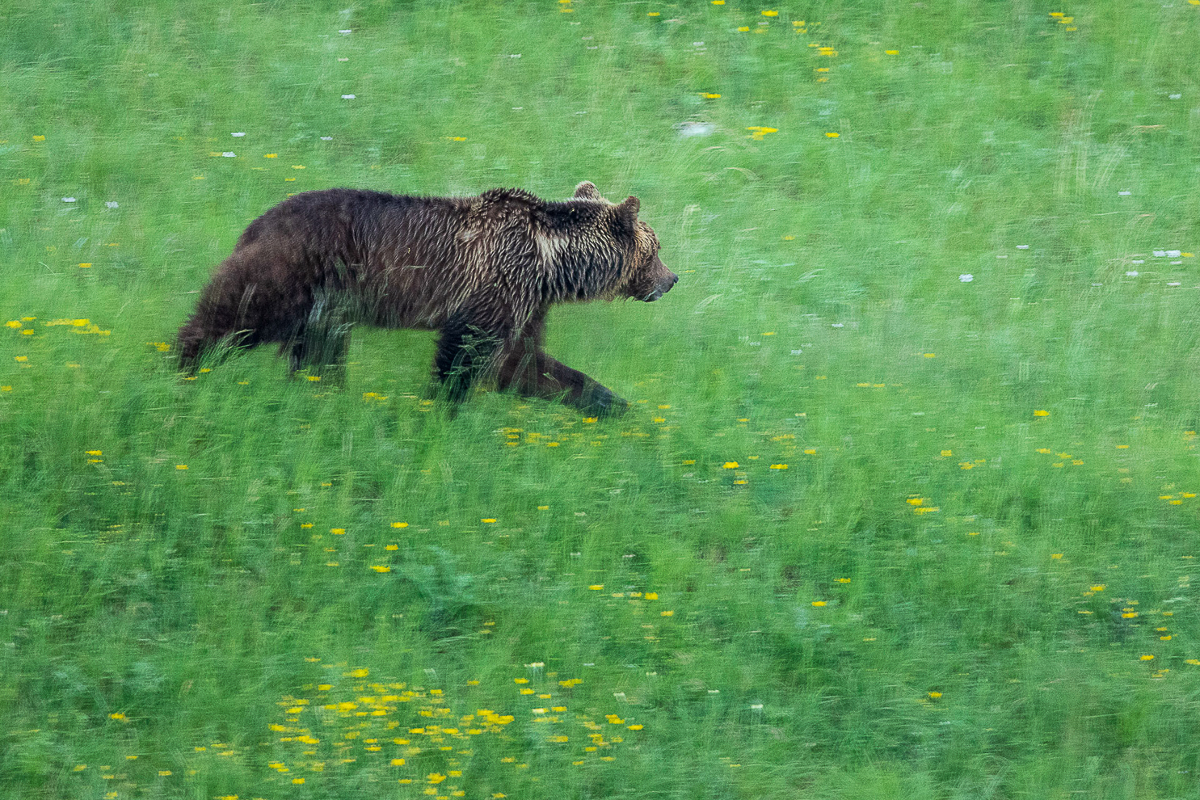
At dusk, bears make their appearance in the clearings at the bottom of the valley in search of fresh vegetation, but that’s not all. A bear is quietly grazing downwind, browsing on leaves and shoots. Hidden in the tall grass no more than 150 metres from the bear, an alert doe concentrates on the potential predator. As soon as the wind veers in its favour, the bear stops, sniffs the air and rises up a little on its hind legs. It starts moving again like a bloodhound in search of its prey. It zigzags with its nose to the ground, sniffs the air, then retraces its steps again and again. The distance between the doe and the bear gets shorter and shorter. After about twenty minutes, when the bear is just a few dozen metres away, the doe leaps sideways, but does not flee. Then surprisingly, she starts jumping about in all directions in front of the predator. Drawing attention to herself would seem suicidal or desperate. The bear ignores the doe and goes back to sniffing determinedly in the direction the doe sprung out from. When it reaches its target, the bear plunges its head down into the grass, then walks away into the woods, clutching in its jaws the inert corpse of a fawn just a few weeks old. So this is what the doe wanted to protect: her newborn infant.

A bear in search of food crosses a spring pasture, using its sense of smell to pick up various scents. These are the situations when a bear has the greatest possibility of finding and killing a red or roe deer fawn.

Marsican bears are able to eat meat in all seasons and more than 90% of the energy assimilated through this resource comes mainly from ungulates, both wild (red and roe deer and wild boar) and domestic (cows, sheep, goats and horses).

But when the opportunity arises, bears may also feed on hares, dormice, squirrels and voles. In the 1970s, bears rarely ate meat (only 2% of excrement) and exclusively of domestic ungulates (sheep and goats). However, since the 1980s, following reintroduction of red and roe deer to the central Apennines, Marsican bears eat meat ever more frequently. Among the various species bears prey on, red deer appear most often in their diet. The red deer is the most widespread and numerous wild species in the Park and also the most vulnerable, especially in certain seasons. 

Male bears generally consume almost twice as much meat as females, in line with their different life strategies. A female needs to accumulate mainly fat to carry a pregnancy to term, whereas for males, having a more powerful muscle mass enables them to compete in strength with other males. It is also true that males move around in much larger territories and are therefore more likely to come across available carcasses.

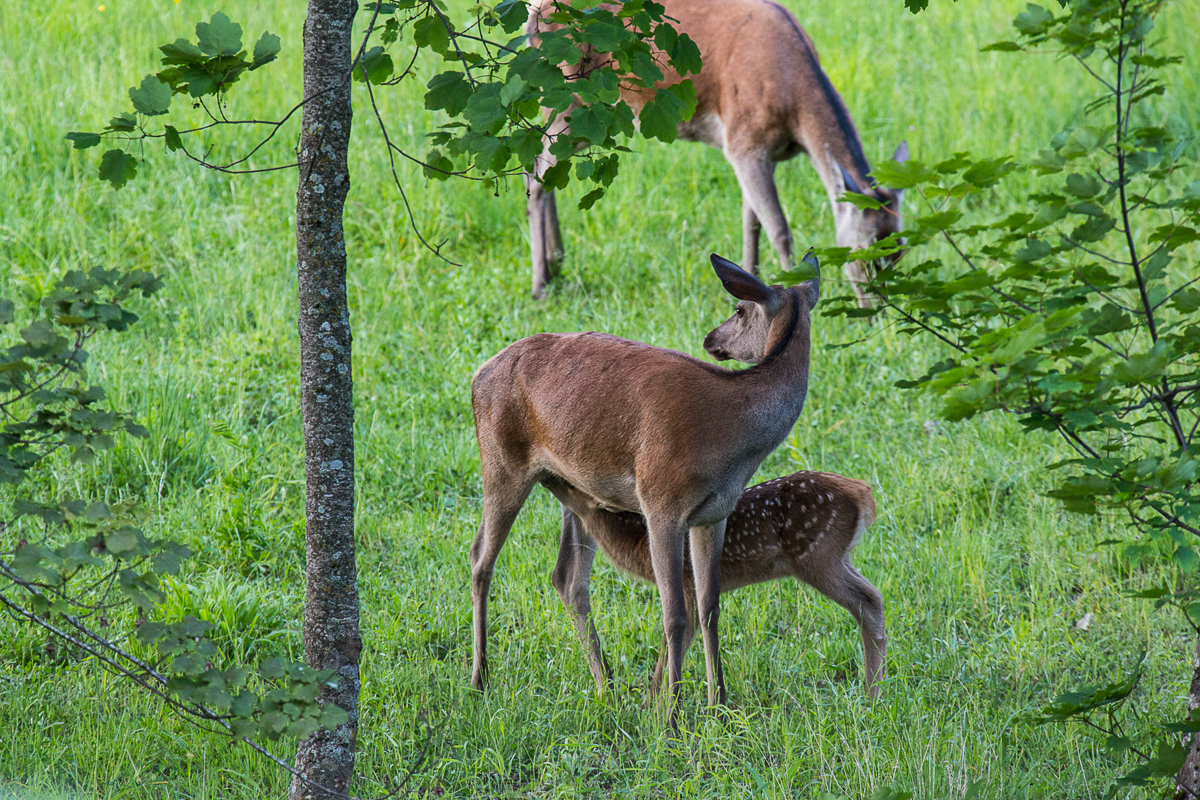
A red deer hind suckles her fawn, just a few days old. Deer give birth in the spring and the hinds must be particularly vigilant to protect their young from predators.

Consumption of wild ungulates peaks between April and June, during the first few months after the bears leave their den. Before the snow has completely melted, the bears go in search of animals that have died during the winter, been buried by avalanches or preyed on by wolves. A bear can sniff out the remains of a dead deer, even after dozens of days, especially if well preserved under snow. But during these months, the bears mainly prey on newborn deer and wild boar. Bears locate their prey by following the scent of the young or its mother, or by bursting into the herds in an attempt to flush out the mothers and make them flee so they can then locate the fawns.

As the season progresses, the young wild animals become less and less vulnerable, but sheep, goats, cows and horses make their appearance in the pastures, even high up in the mountains, and from July to September, these become the main source of animal protein for the bears. From October onwards, meat consumption drops to an annual low and bears eat almost exclusively wild prey. This season coincides with the mating season and the stags, worn out by fasting and exhausting fights to defend their harem of females, fall easy prey to bears and wolves. Many also die of starvation.

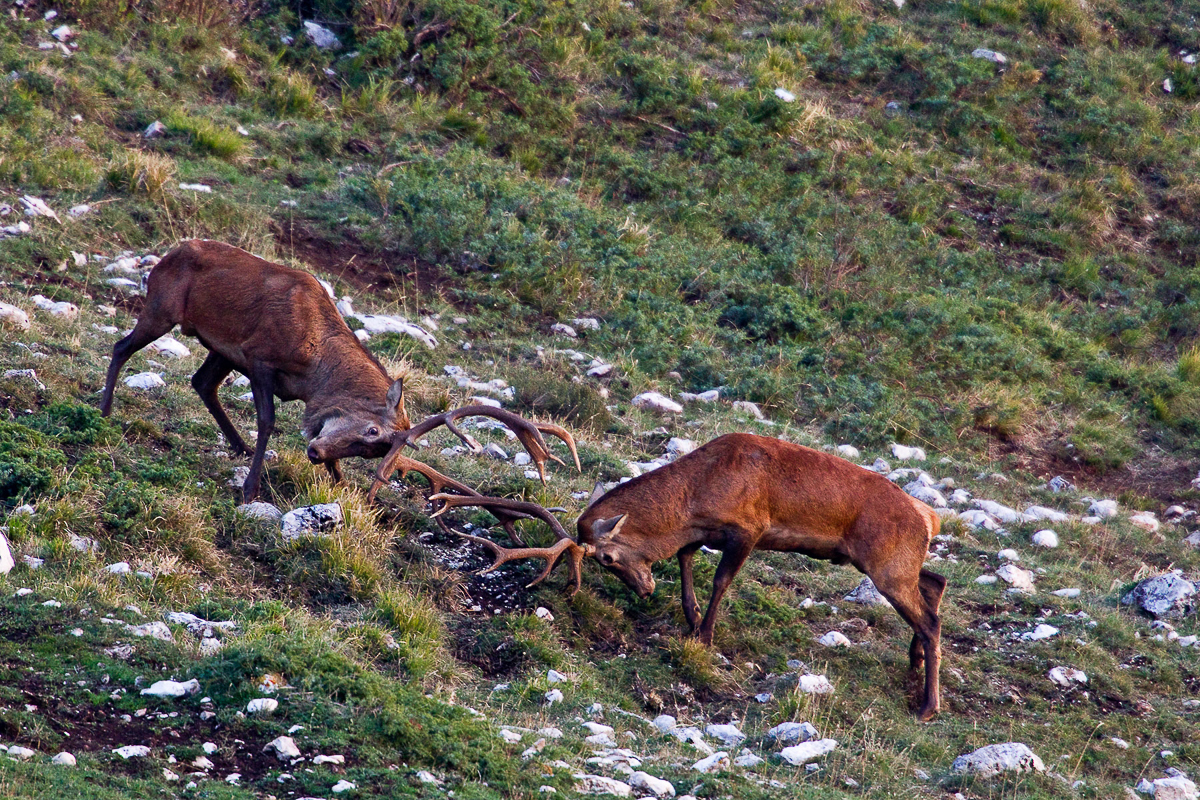
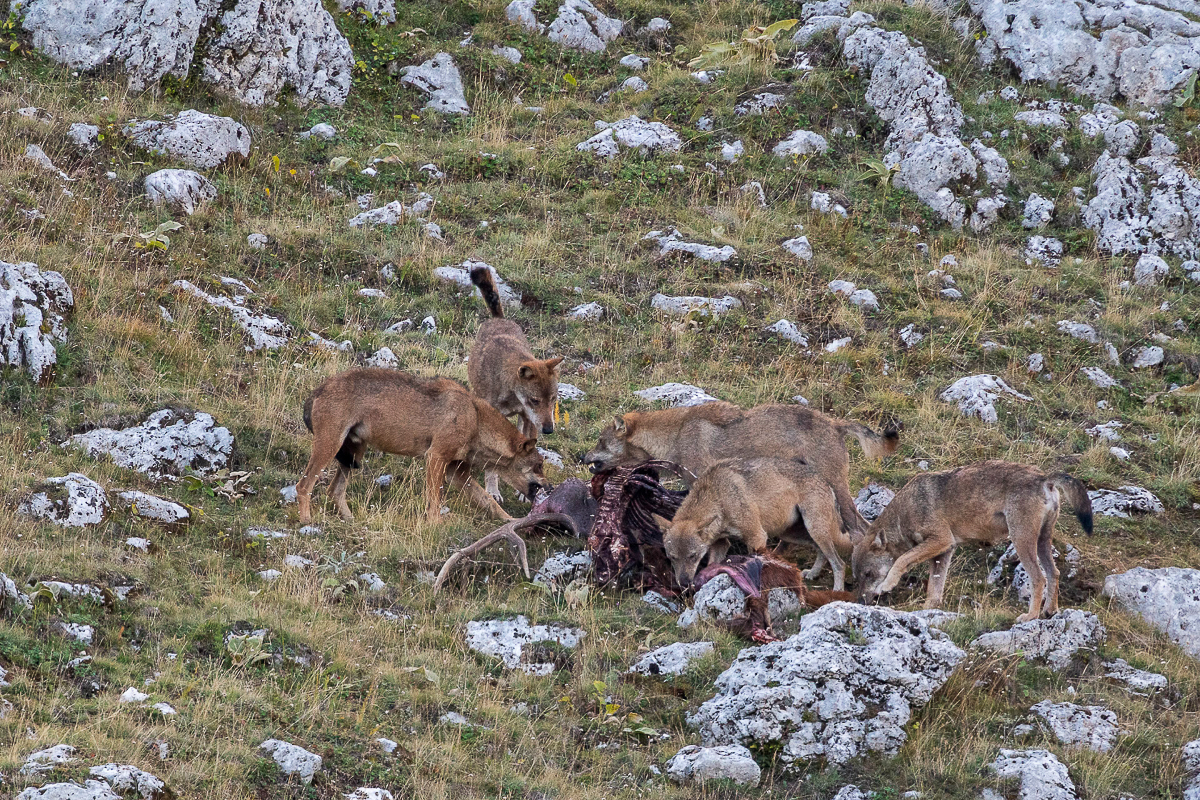
Two adult stags fight during the mating season. Fights can sometimes become bloody and one or both contenders may die. During this period, carnivorous and necrophagous animals take advantage of the presence of carcasses. In the photo on the right, a pack of wolves feeds on the carcass of a deer that died following a violent encounter.

Meat ranks only third in the Marsican bear’s annual diet, just as in other populations living in more southerly latitudes.

This may seem a paradox when you think, for example, that only one or two species of wild ungulate live in the boreal forests, whereas there may be as many as seven in southern Europe. Actually though, it’s not so surprising if you consider three factors: temperature, snow conditions and the availability of food. In northern latitudes, bears have very short summers and very long winters and they have very little time indeed to fatten up by eating mainly fruits and herbaceous plants. The hibernation period can last over six months and bears lose much more weight than do their southern counterparts. The trees in those forests do not produce nutritious energy-rich seeds, such as pine nuts, beechnuts, acorns or chestnuts. But the harsh, snowy winters debilitate the elk, making them an easy meal in the first few months after the snow melts. Its smaller size and physiological and morphological adaptations for a strictly vegetarian diet make the Marsican bear one of the brown bears most able to gain weight by feeding mainly on plants.

Brown bears are basically necrophages (in other words, they eat animals that are already dead), but they can also prey on red and roe deer, elk and even bison, albeit with less agility than wolves. It’s the opportunity that makes the bear a predator. The more a prey is vulnerable, available (present in large numbers) and accessible (non-aggressive and easy to isolate), the more likely it is to be chosen for an attack. The general rule is to avoid large, aggressive animals that could put the predator’s own life at risk. But even eating only carcasses is not such an obvious choice, because you can only benefit if you’re the only one eating them. The larger the carcass, the more likely it is to attract other competitors, but the smaller it is, the less likely it is to be found before being eaten by other scavengers. Bears have specialised in usurping carcasses killed by other predators such as wolves and lynxes, a phenomenon known as kleptoparasitism. So for bears, the best strategy is to prey on the young of a species, then to only attack the adults when they are at their weakest, or to feed on the carcasses of medium and large animals whenever possible.

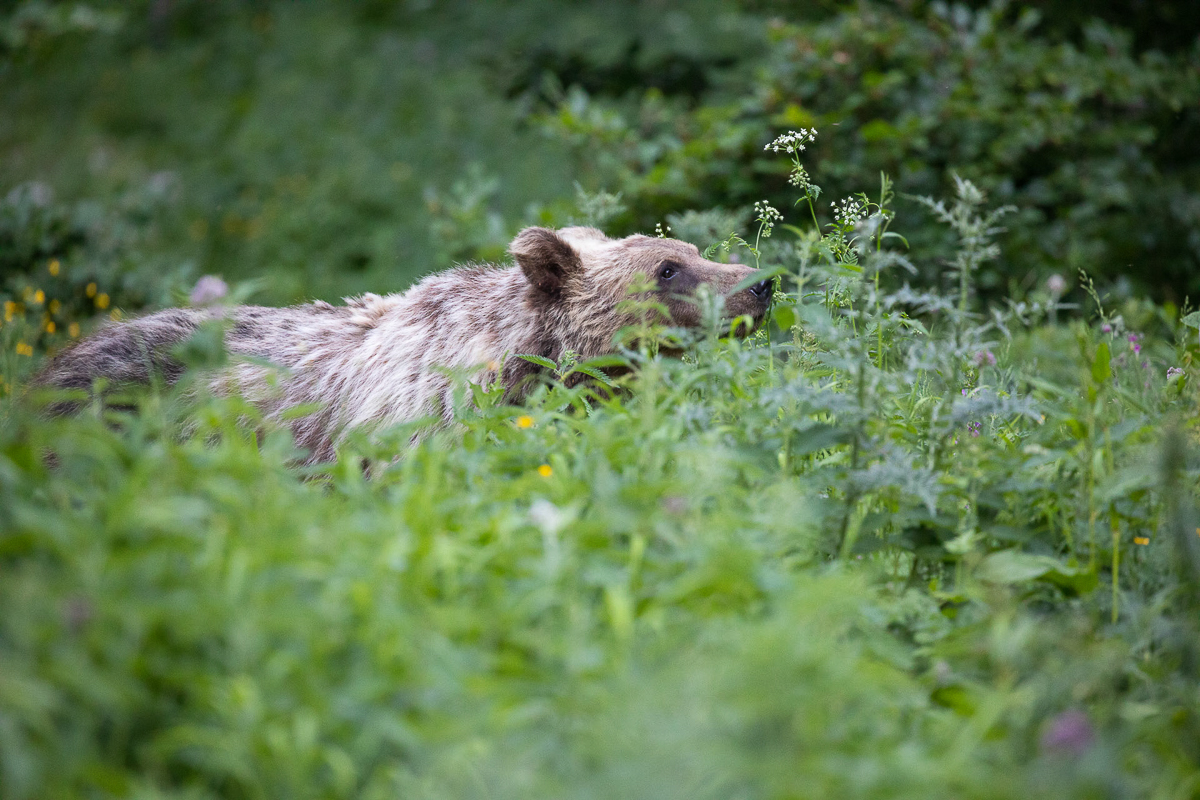
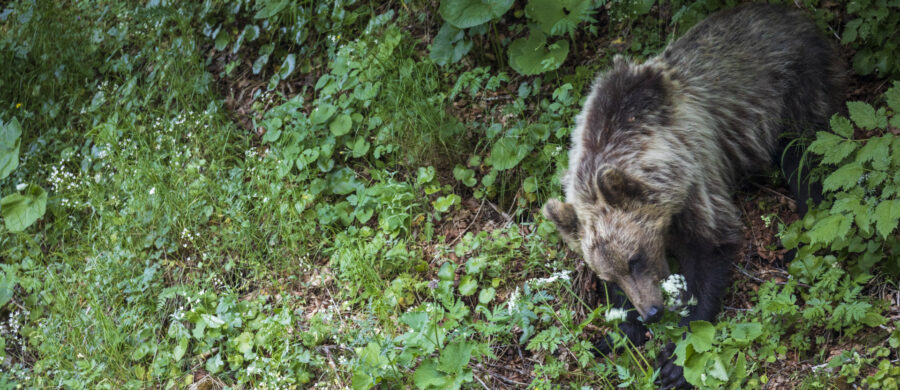
The Apennine bear is predominantly vegetarian. A bear crosses the lush vegetation of a damp, shady valley. Here it can find the umbellifers it feeds on in early summer.

The Park certainly offers a great many opportunities for bears to feed on carcasses all year around.

A study carried out in the Park s in this area between 2006 and 2010, showed that domestic livestock accounts for an average of 63% of the biomass ingested by wolves, followed by wild prey (mainly wild boar and red and roe deer). However, a targeted study carried out in winter, when it is possible to follow the wolf tracks in the snow and interpret their behaviour, found that both solitary wolves and packs feed for 73% on pre-existing carcasses, with 76% of these being the carcasses of domestic animals that have died for reasons other than predation (such as disease and malnutrition). This suggests that the great availability of domestic animal carcasses in the Park may reduce the need, attitude and behaviour of a true predator such as the wolf. Bears are certainly among the first to take advantage of this situation, obviously in summer, when there are more domestic animals, and therefore also carcasses, available at high altitudes.

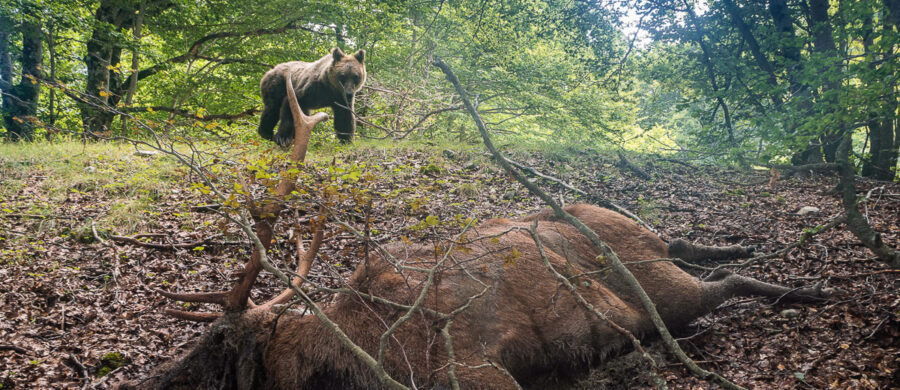
Over the years we have accumulated hundreds of minutes of camera trap footage of predator and scavenger interactions on deer, horse and cow carcasses. We have observed bears, wolves and foxes feeding simultaneously on the same carcass. On other occasions, while the bears were eating, the wolves had to wait their turn a few dozen metres away, taking turns. In all cases it seems to be the bears that dictate the rules and the “change of shift”. These anecdotes confirm that maybe the competition is not so fierce and “there is something for everyone.

Elisabetta

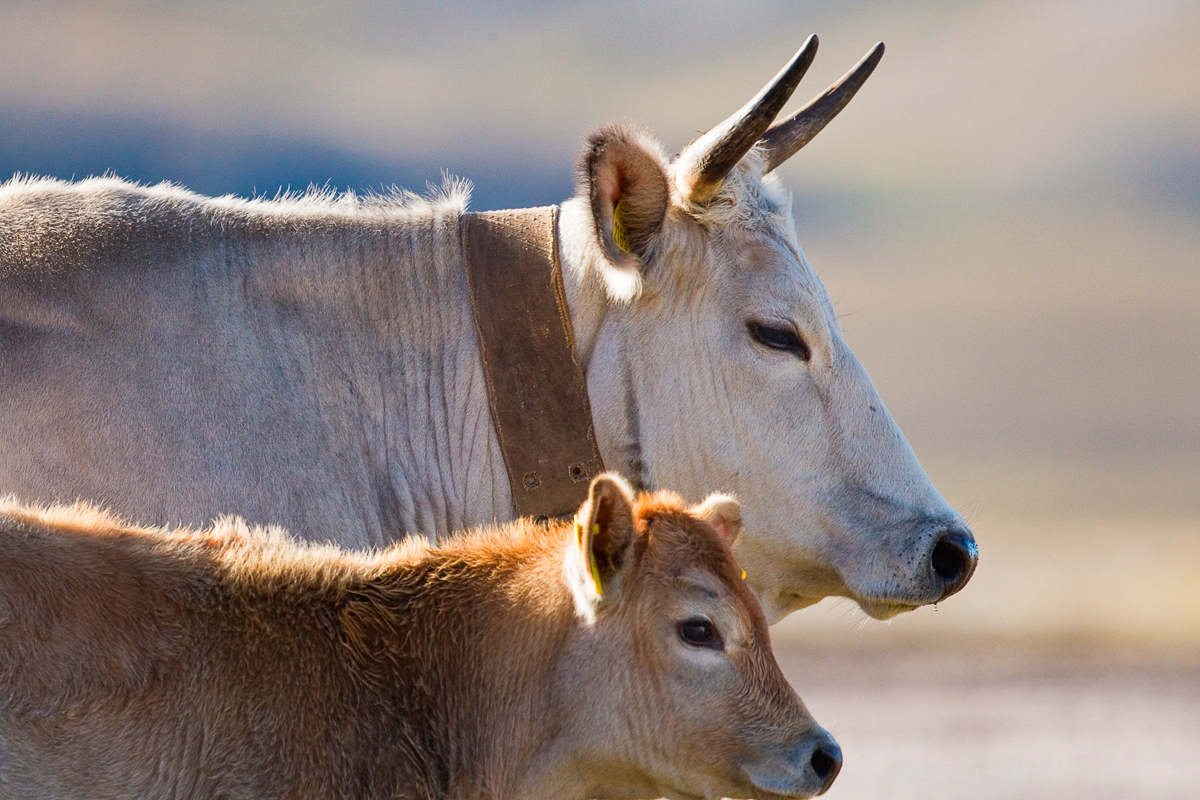
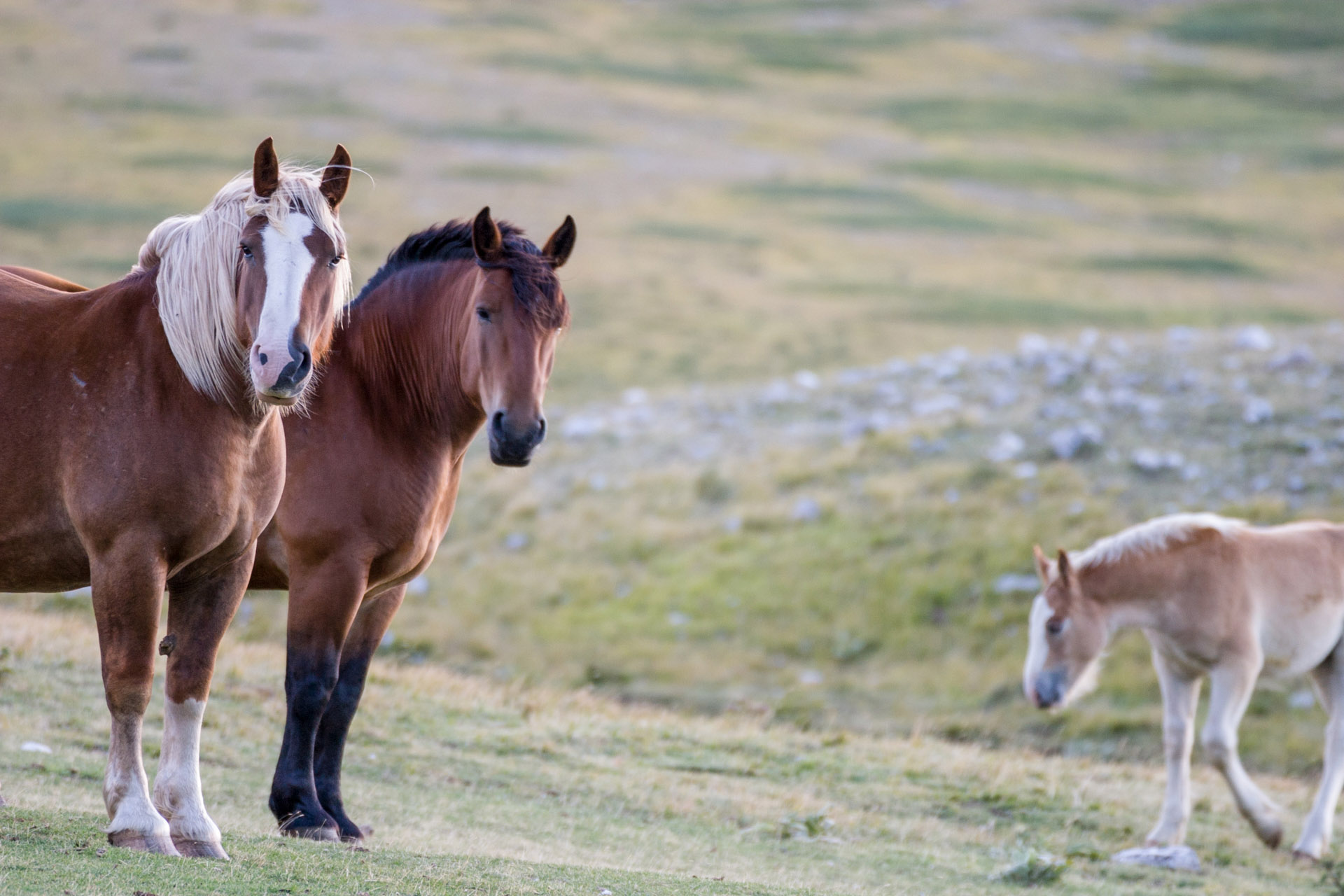
In the Apennines, livestock is frequently left in a semi-wild state, with herds of cattle and horses often remaining in the mountains for several months a year.

Domestic animals are easy prey for bears and wolves because they lack strategies against predators, unlike a deer born and raised to escape them.

This is why bears prefer attacking domestic livestock. According to compensation reports, more than half of the bear damage reported is attributable to large domestic animals, followed by poultry, orchards and crops. Compensation reports compiled over the last twenty years show that sheep and goats represent the most preyed on category, followed by cows and horses. In the case of cows and horses, more than 90% of the animals preyed on are usually only a few weeks or months old, the most vulnerable category. The high frequency of attacks on sheep and goats can be explained partly by the lack of prevention systems, partly by particular environmental conditions (such as foggy or stormy days) and partly by the simple fact of their abundance in the Park. Attacks on cows and horses, on the other hand, are due to the habit of leaving livestock grazing unattended in high altitude meadows.

A targeted study conducted between 2009 and 2010 in the Abruzzo, Lazio and Molise National Park shows that six bears consumed a total of at least 52 carcasses during the summer and autumn, corresponding to one carcass every 8-28 days for the females and one every 3-9 days for the males. The carcases were mainly of cattle and horses, followed by deer and sheep or goats. Considering an average annual active period of 244 days, this consumption could easily meet more than 50% of the bears’ basic active energy costs. Several studies show that the brown bears that eat most meat reproduce more, grow larger and live in larger populations. This is the case in coastal areas of North America, where bears have access to abundant seasonal protein resources such as salmon. The relationship would seem to be less strong in contexts similar to the Apennines. But it is also true that bears discard almost nothing of, for example, a deer. They are still physiologically carnivorous animals and can digest and assimilate 90% of the meat they eat, accumulating both protein and fat. In practice, bears gain weight more quickly by eating meat. However, bears cannot eat protein alone. The perfect recipe, the optimum way for the bears to gain weight, should contain 17% animal protein, plus fats and carbohydrates.

American bear expert David Mattson explains the importance of meat as a food source for brown bears.

The first time we saw a bear feeding on a carcass was amazing. It was 6.00 on the morning of 10 August 2008. My colleague and I had literally crawled to a vantage point about 800 metres away. The carcass appeared intact and everything seemed calm. There was only one wolf lying about 50 metres from the remains. We couldn’t interpret the situation. After an hour or so we began to see the cow’s belly move and the skin lift up. And there was a bear emerging from the cow’s abdomen with a deft about turn. As the day dawned, the bear moved away. Only then did the wolf timidly approach the carcass, but with its tail between its legs.

Elisabetta

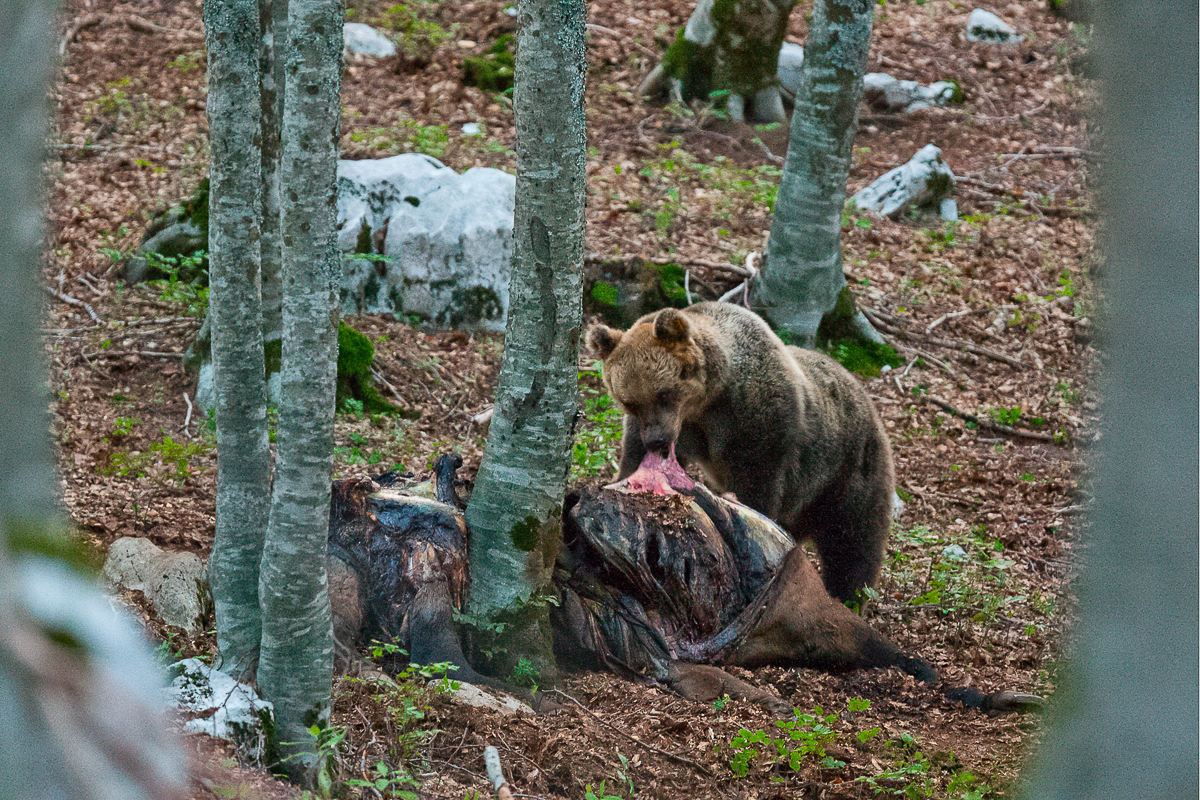
An adult Apennine bear feeds on the carcass of a mule, found in the woods. The animal assumes a dominant attitude to defend it from competitors.

Arrivare per primi ad una carcassa è sicuramente un vantaggio per qualsiasi animale.

Getting to a carcass first is certainly an advantage for any animal. Bears can eat up to 40 kg of meat per day. If they find an intact carcass, they first gut it in search of the lungs, liver and heart, the most nutritious and digestible parts. The bear never touches the contents of the stomach or intestines and rarely eats the skin. The carcasses look as though they’ve been skinned. After the viscera, the preferred morsels are the rump and the parts nearest to the hind limbs. In the case of a stag, bears do not disdain the antlers, especially if still covered in velvet, or they may feed on the bony tips, rich in calcium and minerals. As skilful usurpers, bears try to secure exclusivity by partially burying the carcass with earth, leaf litter and branches, or where possible, by dragging it into the bushes or woods where they can eat it in peace, safe from danger or competitors. Some researchers have observed that bears do not consume the carcass immediately, but may wait up to three days before eating it. This would slow down decomposition and at the same time allow the meat to mature and thus become more palatable. Other bears use a more effective strategy to avoid theft, sleeping on the carcass, or guarding it at close range.

In August 2007 we had an opportunity to reconstruct the activities of two bears around two different carcasses, thanks to the presence of satellite tracking collars. Having found the carcass of a cow weighing around 500 kg, the adult male M06 spent about ten days within two kilometres of the carcass, visiting it at least twice a day, almost always at night, and staying there from a few to eight consecutive hours. During this time, the bear also ate apples and pears and drank a lot to aid digestion, visiting a drinking trough about a kilometre away several times. A well-balanced textbook diet. When M06 was not present, at least two other bears and several wolves were observed feeding on the cow during the day. During the same summer a known female, F07, discovered an intact male deer carcass. She ate a whole deer weighing almost 200 kilograms in just six days. During this period, the bear monopolised the carcass by both day and night, staying near the remains for up to 13 consecutive hours. The bear practically slept in the vicinity of the remains, as documented by the discovery of several beds and droppings, only leaving to drink from a spring and eat beechnuts.

Anecdotal evidence suggests that in the Park it is rare for one bear alone to eat a cow or deer carcass. An average of at least three bears have been observed feeding on the same carcass on the same day, rarely together, as well as wolves, foxes and griffon vultures. The links between predators are very complex. Researchers have shown that bears generally prevail over other predators such as wolves, even when these are in groups, while other predators act as facilitators for the bear, in other words, they provide them with free carcasses. It is surprising how even the simple act of eating or preying on another animal can affect the lives of numerous other animals, including birds, reptiles, amphibians and insects… even plants. But bears can be very aggressive towards other scavengers, even when these are other bears. Females with cubs tend to avoid carcasses if they can, as the presence of males in the vicinity can compromise the safety of their young. In Yellowstone National Park, one of the main causes of cub death is the simultaneous presence of males and females on the same carcass.

A dead cow abandoned in a clearing can be an irresistible attraction for wolves and bears, especially in the autumn. In the sequence, at twilight a pack of wolves is driven away from the carcass by a female bear accompanied by her yearling cub.

The great availability of domestic animal carcasses and their extensive use by bears confirm the importance of this resource in the diet of this species in the Apennines. What to do with livestock carcasses has always been a problem in the mountains, where it is often difficult or impossible to reach them with appropriate means of transport and tools to dispose of them. On one hand, these carcasses represent a very important source of nutrition. On the other, through a mechanism of food habituation, they may expose bears to increased risks of poaching, conflict, accidents and disease transmission.

For bears, getting used to eating livestock carcasses may be risky. In the Apennines, there have been many cases of bears dying after eating a poisoned sheep, or after being hit by a car while making their way to heaps of slaughter waste left by the roadside.

The omnivorous bear

The omnivorous bear

A bear’s diet is an explosion of energy and nutrition

READING TIME 8 MIN

The Marsican brown bear is essentially omnivorous, with a diet made up of various species of plant and animal.

Bears are always on the lookout for the most abundant and nutritious foods and this is why their diet is so diverse from season to season. In terms of energy, 65% of a bear’s diet consists of fruits and nuts, followed by herbaceous plants and insects (25%), domestic and wild ungulates (8%) and finally roots (2%). The diet of a bear in the Apennines is amazingly nourishing. In every season, it includes proteins, sugars and fats… an “explosive” mixture that ensures efficient digestion and rapid weight gain. All foods are not, however, the same and some play a really key role that a bear just can’t do without. But these animals are also very adaptable and if there is a shortage of a particularly important resource, they find a way to replace it.

In four years of research, we analysed about 2400 bear droppings collected in all seasons. A painstaking search for seeds, fruit skins, leaf and insect fragments, hair and bones to find out what bears eat, how often, in what volume and, most importantly, when. It took 2000 hours of work by researchers, experts and students with tweezers in hand, atlases and reference collections close by and many hours at the microscope. Each excrement is a kind of crystal ball able to reveal the secrets of an entire ecosystem. Bears feed on at least twelve species of mammal, about fifty species of insect and over twenty different species of fruit, as well as other plant species. This is the bear’s environment. This is the Apennines, a rich and diverse assortment of ecosystems where the lives of plants and animals intertwine, from those weighing just a few milligrams such as ants, to bears that can weigh over 200 kilograms.

Elisabetta

A food for every season: the wealth of environments and species in the central Apennines gives bears access to a wide variety of natural food resources.

From the end of March to July when bears need to build up muscle mass, they feed mainly on animal and vegetable proteins.

Spring is when plants start to grow again. As the trees burst into bud, the meadows begin to turn green again, starting from the valley floor, then moving ever higher up the mountains as summer progresses. From late March to May, almost 40% of a bear’s diet is made up of herbaceous plants. Bears feed mainly on grasses, taking advantage of the more digestible and nutritious first clumps, but they also eat tree buds. From June and throughout July, bears prefer to eat the roots, leaves and flowers of other herbaceous plants, three times more nutritious than grasses. But consumption of plants during the spring is minimal following a year with a bumper crop of beechnuts, when the nuts that fell to the ground the previous autumn make up more than 30% of the bears’ diet. They continue eating these beechnuts until the end of July, although to a lesser extent. Red and roe deer and wild boar make up an important part of the bears’ diet in both spring (13%) and early summer (5%). From June, with the start of the grazing season, domestic ungulates also make an appearance in the diet (4%). Bears can nevertheless meet their animal protein and fat requirements by feeding mainly on insects (such as ants) which represent between 32% and 48% of the diet, depending on the year. From March to July, bears also get their fill of the highly digestible sugars contained in rosehips in spring and both wild and domestic cherries in early summer.

Hover on the colors to know details of bear’s diet.

Starting in the summer and continuing through the autumn, bears seek out foods that will allow them to build up fat reserves to consume during hibernation.

As the summer progresses, the bears’ appetite increases, as does their weight. From August onwards, they in fact enter the period of so-called “hyperphagia”, peaking in autumn, when bears require three times as much energy as in the spring. From the end of September, brown bears can consume up to 20,000 kilocalories, even putting on more than a kilo per day. But during this period, putting on weight means above all accumulating fat reserves, and bears achieve this by feeding on sugar-rich fruits easily converted into adipose reserves. Between August and September, a bear’s diet is essentially frugivorous, with fruit contributing more than 70% of their energy intake. They consume around twenty different species of berries and larger fruits, but the key resource is the alpine buckthorn, a berry just a few millimetres in size that ripens on high-altitude scree and can contribute from 30% to 70% of the diet, depending on the year. Although very high in proteins and lipids, nuts contribute little during the summer, except in years of abundant beechnuts, when their consumption quadruples. Bears also feed on insects, herbaceous plants, livestock, wild ungulates and roots. Each of these resources contributes from 2% to 8%. As early as July, the insects they feed on include bees, bumblebees and the larvae of flies and other insects, the latter probably associated with the consumption of carcasses.

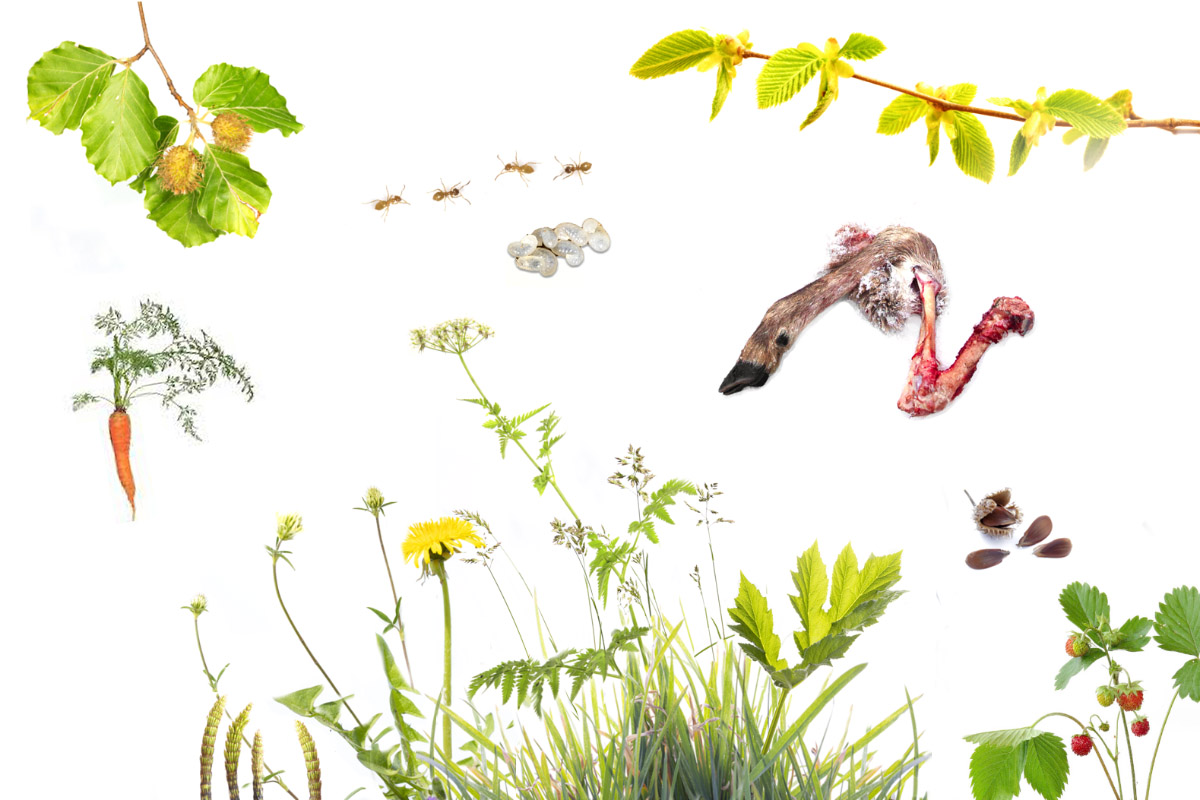
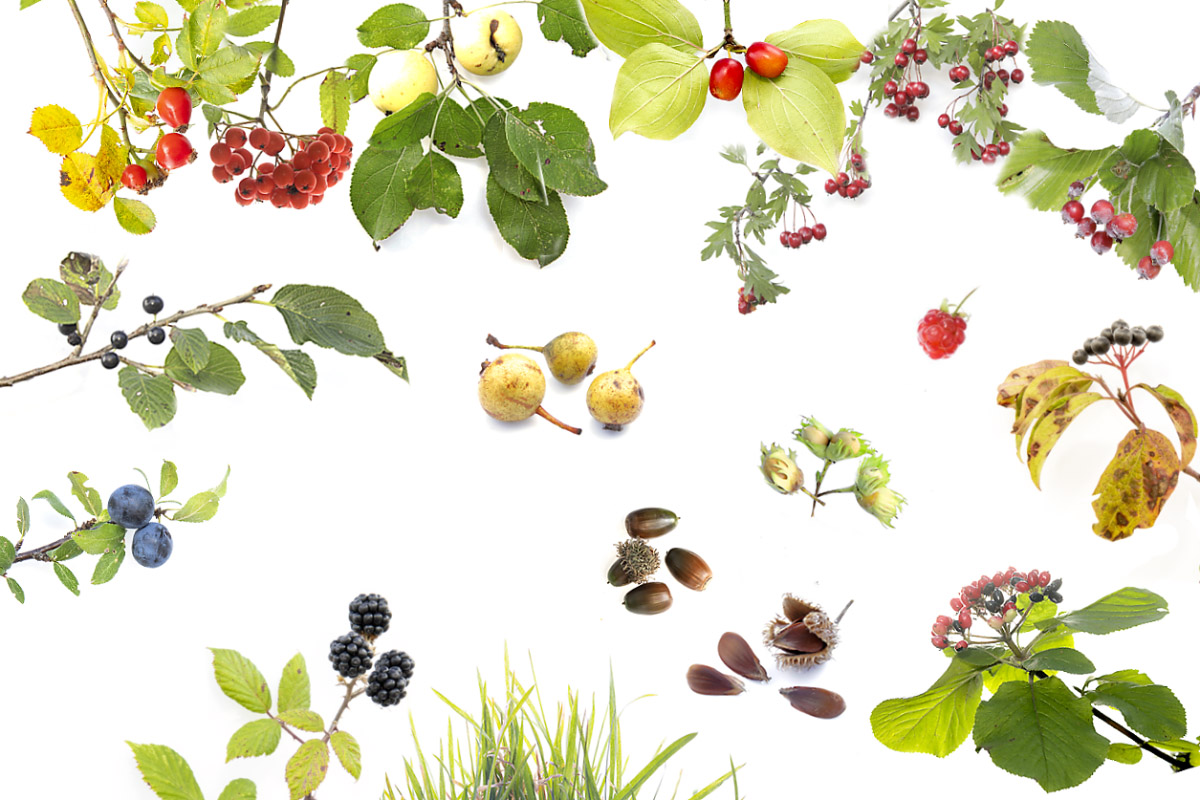
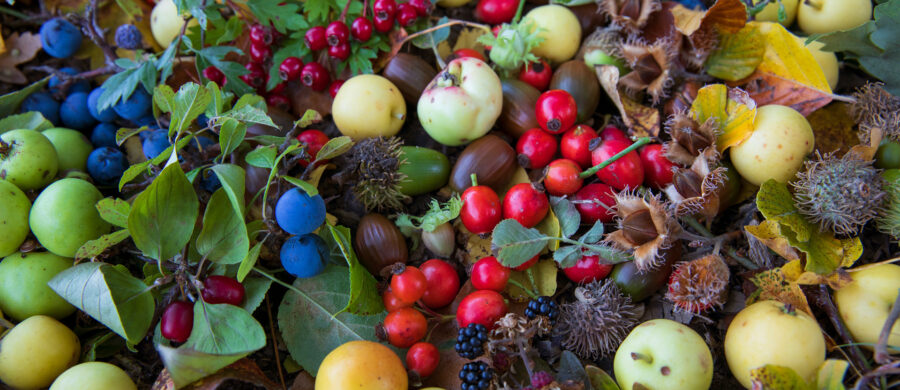
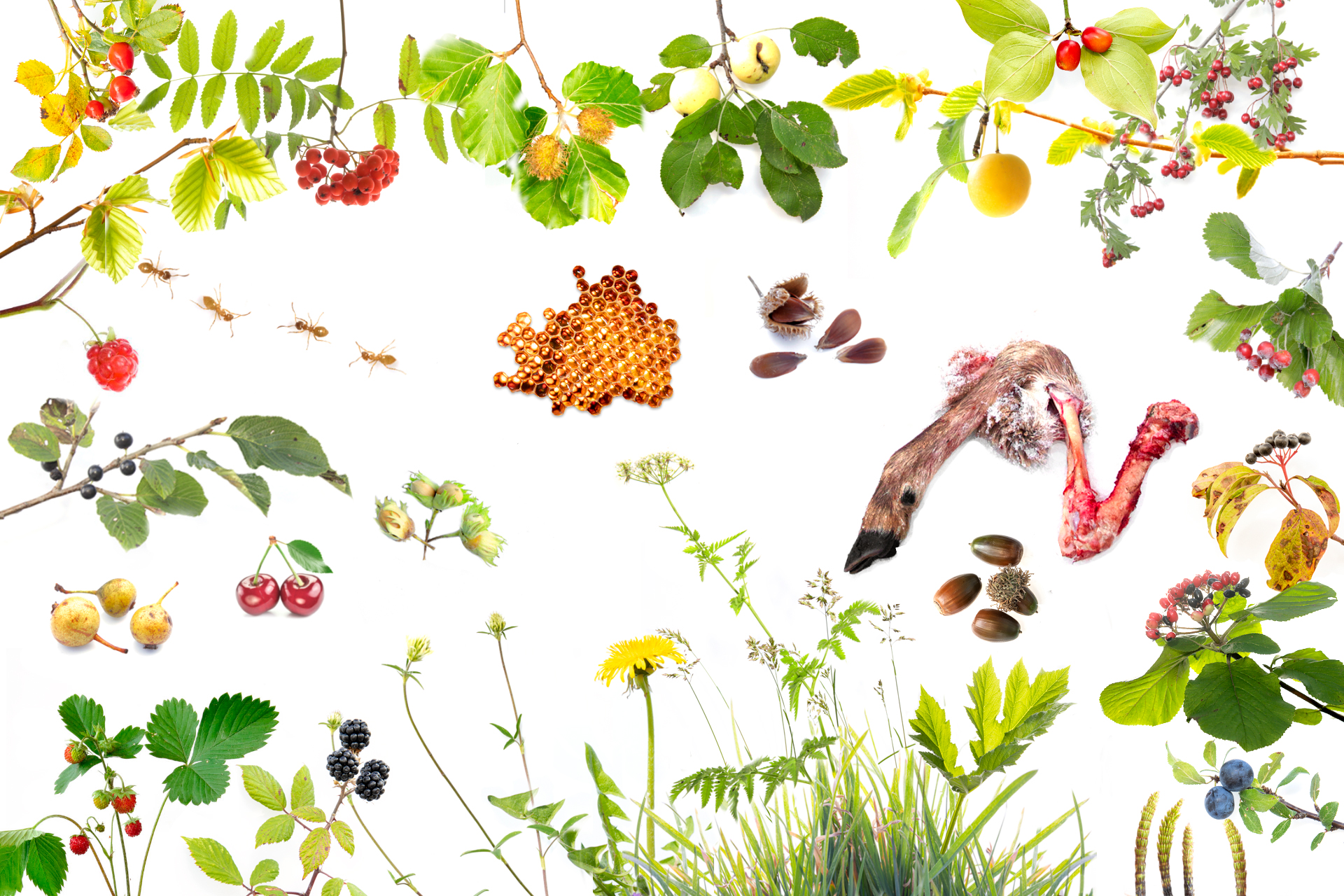
The collage of images provides an overview of some of the most common foods in the diet of the Apennine brown bear during hypophagia (left) and hyperphagia (right).

But it is in autumn that the diet of a bear gets really “fatty”. During this season, as well as eating fruit, especially apples and pears, bears also consume nuts, rich not only in sugars, but also in oils and proteins. Nut consumption peaks during this season and can account for from 49% to over 90% of the diet. The predominant nuts in a bear’s autumn diet are acorns (the fruits of turkey, downy and other species of oak) and beechnuts. Acorns are produced in roughly the same quantity year after year, but every 2 to 5 years or so, there is a bumper crop of beechnuts. Years with massive beechnut production, well above the long-term average, are known in Italian as “pasciona”. In these years, bears feed almost exclusively on beechnuts. In all other years, bears compensate for the scarcity of beechnuts by feeding on at least fifteen other species of berry and fruit, in addition to pears, apples and acorns. The rest of their diet consists of herbaceous plants, coinciding with the second phase of vegetative growth at higher altitudes, deer and insects. Autumn coincides with the deer’s breeding season and males in particular, undernourished and weakened by their “amorous” battles, become easy prey for wolves and bears.

Hover on the colors to know details of bear’s diet.

Data on bears’ diets would seem to confirm the richness of Apennine ecosystems. There has never been evidence of nutritional stress among the bears captured and monitored during the years of study, indicating that years when all kinds of food resource are scarce are very rare indeed, at least within the Park. These conclusions are further reinforced by a study conducted in 2013 and 2014 in which the diet of eight bears was reconstructed using an alternative technique (analysis of the stable isotopes contained in hair samples). The study found that the diet of each bear both overlaps and differs from that of other bears, again highlighting the fact that these animals have many different types of food available. Since the birth and survival of the cubs is closely linked to the health of their mother, and since average birth rates have remained high over the past 15 years, it can also be assumed that the bears have always found enough food to eat.

In the film made with video traps, a bear at the peak of its autumn hyperphagia feeds on wild pear fruits fallen to the ground in a hillside forest.

According to research, bears in the Park appear to have a very “wild” diet and eat mainly natural foods, in other words, no notable dependence on human-derived foods has been documented. Bears may, however, sometimes eat domestic animals and fruit from cultivated plants (such as damsons, plums, cherries, apples and pears), a phenomenon favoured by the overlap between the bears’ territories and cultivated land or pastures. In the entire park area, including the external protection zone, there are generally just a few dozen cases per year of damage to crops (mainly involving pear, apple and cherry trees), while damage to livestock is no more than double this, most commonly involving livestock, farmyard animals and beehives.

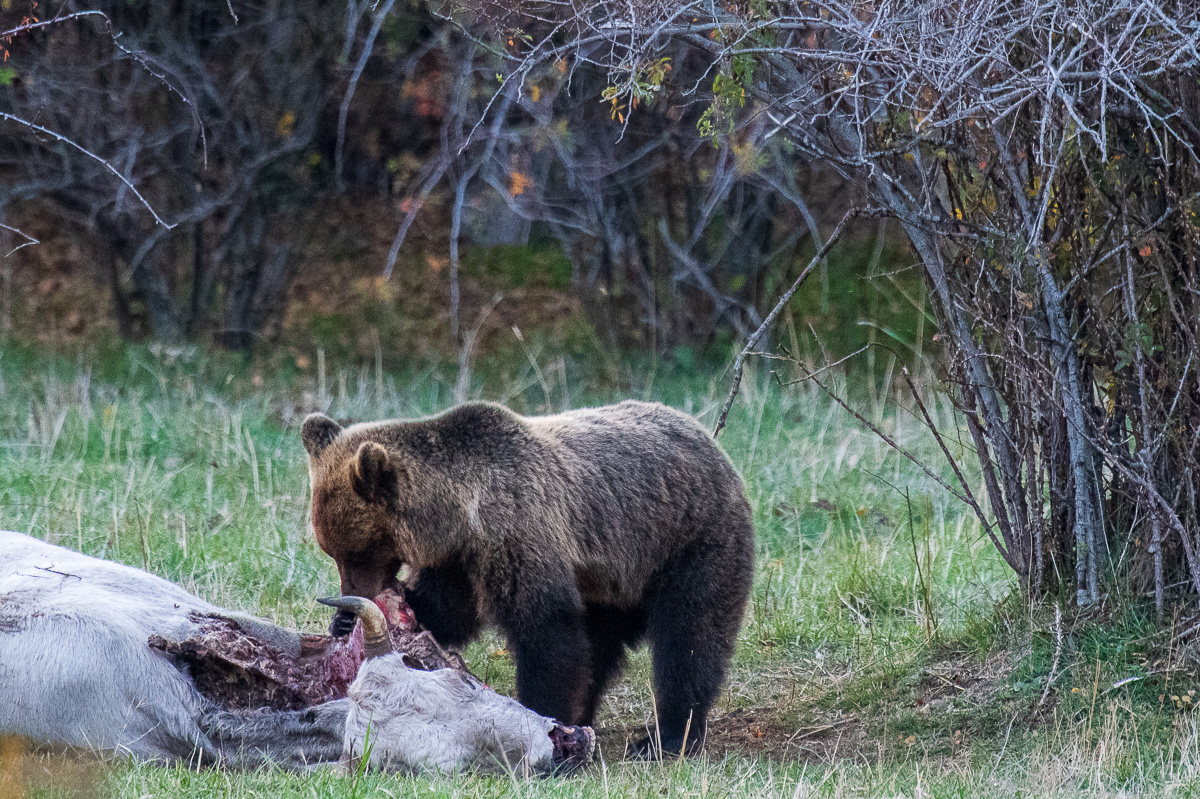
A bear feeds on the remains of a cow that died of natural causes. The presence of domestic animal carcasses in the area occupied by the Apennine bear is controversial. While it is an important resource for the bears, it can also give rise to conflict and health and management issues.

Some bears may, however, become bolder and even go in search of food in populated areas. Studies demonstrate that this phenomenon may be caused by a multitude of often interacting factors (age, sex, the animal’s temperament, social hierarchy, the seasonal and annual fluctuation of natural food sources and the availability and accessibility of human-derived food sources). For a bear that needs to gain tens of kilograms in a few months, any food of human origin is equivalent to “fast food”… nutritious, appetising, plentiful and easy to acquire. Under these conditions and especially in a protected area where they feel safe, some bears give in to temptation and may get used to frequenting built-up areas where there is little competition with other bears. This phenomenon could also be triggered by human carelessness. Research has shown widespread consumption of roots, which are nothing but the carrots left in vast quantities for cows and horses out to pasture. As well as creating dependency (tons of carrots are available throughout the summer), this resource has also been associated with the onset of confident (loss of mistrust of humans and frequentation of populated areas) and problematic (chronic damage to human activities) behaviour.

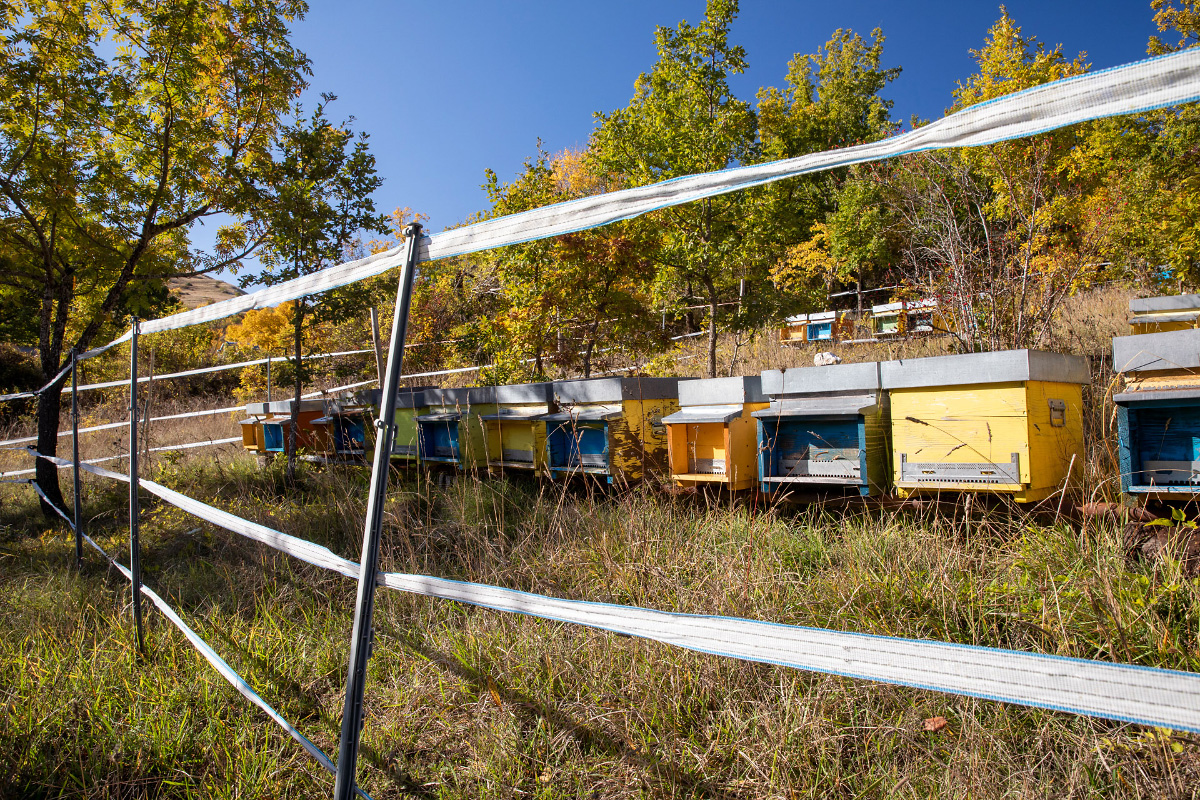
Beehives protected by electric fencing. Preventing or limiting bears’ access to human-derived food resources is the best way to prevent conflict with the species.

As can be expected, the resources bears feed on naturally fluctuate from year to year and this will be ever more the case in the light of current and future climate change. Prudent and proactive “bear-proof” management should aim to maintain abundant and mature populations of beech and oak trees, in order to preserve the long-term availability of all the other key resources. All this, in parallel with the adoption of a series of good practices aimed at reducing the sources of attraction for bears in populated areas and their dependence on human-derived resources, the origin of conflicts more social than economic.

The Apennines are rich in natural food resources, more than enough for the present bear population. A wealth to be protected to preserve the ecosystems of which bears are an integral part and their equilibrium, and lastly, to avoid conflict with our species.

The miracle of hibernation

The miracle of hibernation

Bears can spend up to six months sleeping in a den

READING TIME 14 MIN

It’s a late November morning. There’s been a light snowfall overnight and the ground is covered by a thin icy blanket, the prelude to heavier snow on the way.

Bear tracks lead up the valley floor and disappear into the beech forest, from where the bear will not emerge again until at least the end of March.
With the onset of winter, bears find themselves facing unfavourable conditions, with freezing temperatures and food shortages. They are, however, true strategists and spend all winter resting safely in a den. But their rest is more than just immobility.
Between the fourth and second week before the long winter sleep, bears in the Apennines gradually become lazier and more nocturnal. They limit their movements to no more than a kilometre from their future winter shelter and lose their appetite, until they enter a genuine state of dormancy, known more correctly as hibernation. In this state, bears do not feed, defecate or urinate. Their breathing slow down at 1 to 2 breaths per minute, white their heart rate at 8-10 beats per minute. Their metabolism “takes a break”. They literally “cool down” and their body temperature may drop as low as four to five degrees Celsius. And something amazing happens… it is precisely during this period that the pregnant females are about to give birth.

With the first snowfall, the bears’ long sleep begins in the safety of their caves.

Many of the physiological changes bears experience during hibernation are unique and still unknown.

Bears manage to counteract all the problems associated with months of immobility, fasting and urine retention. Something that smacks of magic even to the experts. To begin with, they don’t suffer from uraemia or dehydration. During hibernation, kidney function is drastically reduced and all urea is reabsorbed in the bladder. The volume of plasma flow decreases by 90%, as does oxygen consumption (up to 70% less) and filtration rate. Despite this, urea levels in the blood do not increase, quite the opposite, paradoxically they decrease.

How is that possible? Urea is a product of protein metabolism and during hibernation bears consume mainly fats. So urea production in bears is two to ten times slower in winter than in summer. In addition, the urea reabsorbed by the bladder passes into the intestinal lumen, where it is hydrolysed into ammonia by certain symbiotic bacteria. Once transported to the liver, the ammonia reacts with the glycerol released during lipolysis of the fat to produce amino acids, ideal to prevent loss of muscle mass. Incredibly, during hibernation the bears’ muscles do not, in fact, atrophy or lose strength. Bears lose just ten to fifteen percent of their muscle proteins and keep their muscles active and toned by shivering, with very short (about 0.2 seconds) muscle contractions repeated every three to ten seconds. Neither do bears suffer from osteoporosis, meaning their bone tissue doesn’t degenerate and lose density. They can therefore tolerate the high levels of fat in circulation without risking atherosclerosis or heart disease.

A life born from sleep and in counter-tendency

Unlike other bears, the body temperature of pregnant females increases from late November and remains high until about February. The embryo requires heat (euthermia) to develop. Bears are the only mammals capable of giving birth and nursing in such extreme conditions. But what happens in females during the months leading up to winter? After fertilisation in spring or early summer, the embryo stops developing and enters diapause at the blastocyst stage (a few hundred cells). The female bear may enter the den as early as October or November and this does not necessarily coincide with resumption of gestation, usually between November and December. One of the factors triggering development of the foetus in the females is undoubtedly the shorter photoperiod (the number of hours of light typical of early winter). Females therefore remain warm until they give birth. From then on, the female goes into a state of inactivity to avoid crushing and suffocating the young.

The moment when the bears enter or leave the den is triggered by a variety of environmental factors and the characteristics of the individual bears.

How long do bears hibernate? This depends on the interaction of numerous factors: environmental conditions, physical needs and the nutritional status of the animals. The first snowfall, a drop in outside temperatures, the hours of light and amount of food available in the wild are all decisive in triggering the beginning of the long sleep. At southern latitudes, for example, brown bears enter the den later and spend less time in hibernation than bears living at colder, snowier northern latitudes. But to determine the duration of hibernation, an optimal ratio between weight and accumulated fat is decisive. Where the energy balance of feeding during winter is more favourable than hibernation, it may be advantageous for some bears to remain active for all or part of the winter. In fact, in temperate climates where food sources are accessible even during winter, individuals with a delicate energy balance, such as young bears just a few years old, or females accompanied by cubs born during the summer, remain more alert than other bears. In the Apennines, most of the bears monitored spend the winter in the den, but in years with little snow and preceded by an autumn with abundant production of beech nuts or acorns, a juvenile and a female in the company of her two cubs spent the entire winter eating nuts.

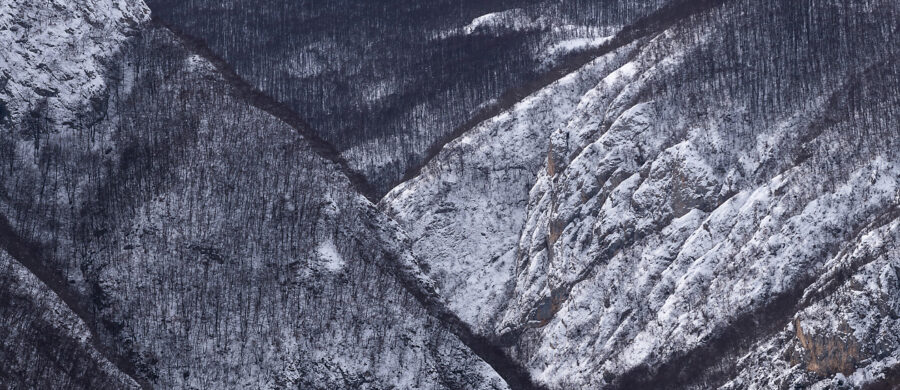
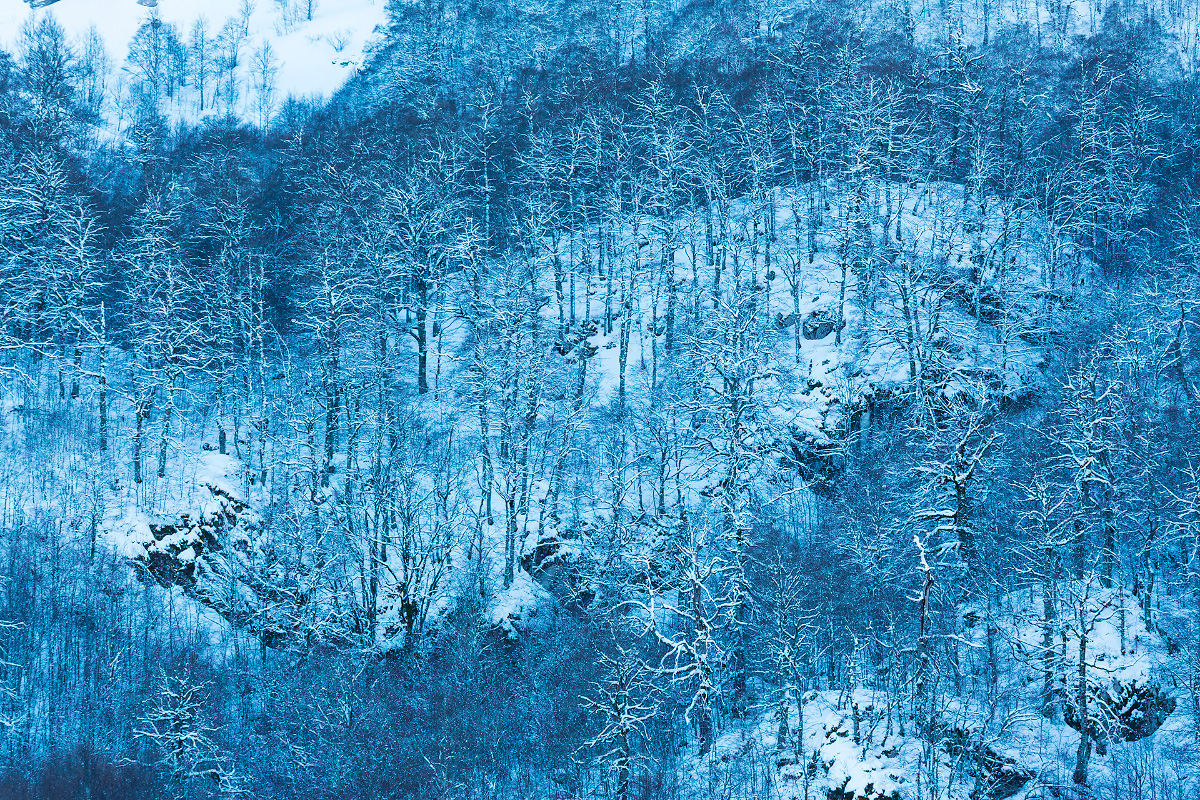
Most of the known bear dens in the Apennines are located in rock systems within the most remote and tranquil beech forests.

In the Apennines, bears generally enter the den with the season’s first snowfall. Females are the first to retire around the end of November, but some may already be in their den as early as the first week of November. The latest generally wait at most until mid-December. Males wait longer. They usually make up their minds around 8 December, but may put hibernation off until the end of the year. Due to their size and weight, males consume energy more slowly and so can stay active longer. The reawakening of bears is as gradual as their entry into the den. They first go through a phase of “walking hibernation” and do not resume their normal pace until a week after leaving the den. At the end of March, males and females abandon their den, although females may wait until mid-April when the temperatures are rising the fastest and the snows are melting. The “sleepiest” are the pregnant females who usually enter the den first and may remain nearby until as late as the end of May, given that they need to take care of the still relatively immobile cubs.

Hibernation and climate change

Do bears sleep less when it’s warm? That’s the question some researchers have tried to answer by analysing 69 years of den entry and exit data from 12 protected areas in Russia. The findings show that a rise in ambient temperature in the period immediately before the bears come out of their den does in fact induce them to wake up from their winter sleep earlier. A 20-year study in the Cantabrian Mountains in Spain came to the same conclusion: in particularly warm springs, females with their young emerge from their dens ahead of time. What impact could this have on a bear’s life? Researchers as yet don’t have the answer. What is certain is that it will all depend on the effect of climate change in the spring on the foods bears find most appetising.

In the Apennines, some bears remain in hibernation all through winter, others interrupt the period of dormancy for even as long as 10 days in search of food.

More than half the bears studied generally used just one winter den throughout the entire hibernation period, while the remaining animals changed dens at least once between January and March, finding a second den within a few kilometres of the first. Although a den may be abandoned for natural reasons (floods, earthquakes), man is the main cause. During research, it was demonstrated that the abandonment of a den between January and February coincided with the passage of hikers. But the changes occurring between late February and March generally coincided with an increase in average seasonal temperatures, perhaps suggesting an early attempt to explore or move nearer to the spring feeding grounds. In fact, excrement was found in more than half the second dens, indicating that the bears had fed in the meantime.

The natural rock cavities chosen by bears for their dens have small openings and just the right size to accommodate a single animal, ideal for keeping warm.

The choice of an ideal shelter is critical as it must provide protection from adverse weather conditions and predators, especially in the case of nursing mothers. Bears may use their den as a simple bed, or they may even excavate a genuine underground “mini-apartment”. All depends on the local climate and geomorphology, together with, last but not least, the animal’s sex, age and, in the case of a female, whether or not she will be giving birth. But brown bears usually dig out a tunnel or look for natural caves. In the Apennines, the karst geomorphology provides them with a wide choice of cavities and natural caves. And in fact, a natural cavity offers not only physical protection, but also a relatively stable, dry and thermally and acoustically insulated environment. These characteristics are ideal in humid temperate environments where temperatures rarely fall below -10°C and where winter precipitation may sometimes be in the form of rain.

What is a bear’s den like in the Apennines? A den generally consists of an entrance, a tunnel or “antechamber” and a main “room”. The entrance is usually low and wide to encourage accumulation of snow in front, providing thermal insulation and reducing heat loss. The height and width of the chamber are proportional to the size of the bear and in most cases (80% of the dens examined) it contains a bed made of earth, leaves and twigs, ideal for insulating the animal from the ground. The small size of the den compared to the dimensions of the bear guarantees better thermal stability.

Bears tend to hibernate in inaccessible places with very complex orography and little human disturbance.

Bears generally do not use the same dens from one year to the next. However, one or more individuals may choose to hibernate in the same areas. What are the ideal requirements of a hibernation site? A stable temperature, security, tranquillity and proximity to spring foods. In the Apennines, bears select inaccessible, undisturbed locations. Most of the dens are situated at high altitudes (about 1600 m), below the limit of the trees in beech forests, on very steep slopes (with gradients of about 35°) and one to three kilometres away from roads or inhabited areas. Steep slopes at high altitudes also help keep the den thermally insulated. On one hand, the more abundant snow cover closes the entrance, on the other, these slopes are the first to be freed from the snow in the spring. Bears do not have a preferred exposure, but take into account the local microclimate deriving from the physical structure and vegetation in the area immediately surrounding the den (presence of rocks, trees and vegetation). Proximity to spring feeding areas would seem to be a factor, especially for females. In the first weeks after leaving the den, the females, in fact, tend to move around and feed in a limited area of about three to four kilometres around the location of the den.

On a warm April afternoon, a bear moves around near the den where it spent the winter.

Bears have a light sleep. In the den, they remain very reactive to disturbance and once awake they are immediately in full form.

The body temperature of bears decreases in the den, but only slightly, so they can still react to external stimuli. But what are a bear’s reactions if disturbed while sleeping? In the best of situations, the bears stay in their dens, but their heart rate and temperature increase and do not return to hibernation rhythms until two or three weeks later, with considerable consumption of energy reserves. On the other hand, as documented by a number of studies, the presence of human activities (forestry, hunting, the passage of people and research activities) even as far away as a kilometre (200 m at drastic levels) from a winter den can induce bears to move away. This is especially so if the disturbance occurs in the first few months after entry. When this happens, bears may experience significant weight loss (over 25%). In Sweden, a study of 90 bears fitted with tracking collars showed that 22% of bears leave or change dens during the winter. In the case of pregnant females in particular, this change led to the abandonment or death of the young. Under extreme conditions (for example, if the bears were captured and handled in their den), the abandonment rate rose to 92%. Some bears were able to find a new den, but only after several weeks and by travelling long distances, while others interrupted their winter sleep definitively. All this in extreme temperatures and with no opportunity to feed.

In the Apennines, only three to four females breed each year. To give births to cubs, they need safe and inaccessible places. This is why it is essential to strictly protect these very sensitive areas. Especially in winter, it is important not to leave the established paths and to respect any regulations issued by the competent authorities.

In the Apennines, almost half the known dens fall outside the protected area of the Abruzzo, Lazio and Molise National Park. The dates of den entry and exit coincide with the start of numerous human activities (hunting, forestry, dog training, sports and recreational activities, truffle hunting and the search for deer antlers) which could interfere with the bear’s dormancy.

When a female leaves the den prematurely, not only is there a high energy cost, but also a tenfold increase in the risk of the cubs dying. Failure to take action to reduce the impact of these activities in these areas will seriously jeopardise the future of this species.

The Bear and the Ant

A journey between science and emotion to discover Apennine bears and their mountains

Fifty brown bears survive in the wild heart of Italy, between the regions of Abruzzo, Lazio and Molise. L’Orso e la Formica (The Bear and the Ant) is a multimedia initiative created to tell the wonderful natural and cultural history of these special animals and their mountains through scientific data and engaging images, with the aim of inspiring greater awareness for their conservation.

Follow us on this journey, because every month you will find fresh stories, news and insights.
To better enjoy the multimedia content of the site we recommend a desktop view.

L’Orso e la Formica is online!

5 February 2021

Today, after five years of passionate work among the forests of the Apennines and the archives of the most important scientific magazines, we are launching L'Orso e la Formica, a multimedia journey between emotion and science to get to know Apennine bears and their mountains.

READ MORE
The physical makeup of a bear

The physical makeup of a bear

Bears have the “physique” to climb, dig, gather, catch prey and court

READING TIME 11 MIN

A bear typically advances with a swinging gait and ambling pace, moving both limbs on the same side almost simultaneously.

With their massive build, these animals usually move at a slow pace. Their weight is greatly influenced by age and the season. They reach maximum weight in autumn, when they continue accumulating excess body fat until they become practically obese. Carrying this amount of weight greatly limits their speed of movement and modifies their posture, but it allows the bears to survive in a state of dormancy known as hibernation for up to six months without eating or drinking.

The anatomy of the brown bear enables it to perform a variety of actions, combining strength with delicacy.

Bears are among the largest land carnivores and at birth a cub may weigh 500 times less than its mother.

An adult Apennine male weighs an average of about 144 kg (between 66 and 205 kg), while females are lighter, with an average weight of 93 kg (68-151 kg). Each year, the weight of a bear can increase by as much as 30-40 kg before hibernation. Males are a total of 133-181 cm long with a shoulder height of from 71-100 cm, while females measure 122-150 cm and 62-87 cm respectively. When standing upright on its hind legs, a bear can therefore reach as much as a couple of metres in height. Bears are among the mammals with the greatest weight difference between birth and adulthood. The cubs are born prematurely and are defined as altricial. When newly born, they are blind and hairless and weigh no more than 500 grams. The growth of bears is concentrated during the first five years of life, but they may also continue growing as adults, especially the males, as size is an important factor in competition for females.

Male bears (left) are significantly larger than females (right). The former can reach a weight of 200 kg and a height of 180 cm, while the latter rarely reach 100 kg and 150 cm respectively.

The muscles and skeleton of the limbs have evolved over time to make bears the strongest and most agile of the land carnivores, but also the slowest.

The limbs of bears have adapted to withstand the load of their “excess” weight. The muscles are well developed along the entire length of the limb. Their shoulder blades have become stronger and “disproportionately” large compared with other carnivores to provide a strong anchor point for the mighty “oversized” shoulder muscles. But the other bones of the forelimb are also characteristic. The humerus is more robust and the radius is slightly curved, while the morphology of the olecranon process has adapted to support the bicep muscles more effectively. The elbow and wrist joints have become more mobile, enabling the feet in particular to assume both supine and prone positions. Most carnivores walk on the tips of their feet, but like man, bears place their weight on the soles of their feet, a plantigrade posture providing support and stability. As a result, bears generally amble rather than run, but when they do run they can reach speeds of as much as 45-50 km/h, although over very short distances. Their strong and specifically structured limbs also give bears many other “powers”. They can climb anywhere to eat or escape danger, dig for food, build a winter shelter and manipulate objects with dexterity.

Each foot has long, curved claws, ideal not only for digging and clasping objects, but also for wrestling with other bears.

A bear’s tracks are unmistakable for their size, shape and the presence of five claws. The palms of the front and back feet consist of a thick adipose membrane covered by a thickened epidermis. Known as the plantar cushion, this is kidney-shaped and extends transversely in the front foot and pyriform and longitudinal in the back foot. The front foot of an adult bear is 9-15 cm long and 9-14 cm wide, while the back foot measures 14-23 cm and 8-19 cm respectively. The five strong, curved, non-retractile claws can be as much as 10 cm long. Being a plantigrade enables bears to stand upright on two legs, a posture they assume when uncertain or curious.

A large male Apennine bear on alert stands up on its hind legs. Pass the mouse over the image to show the powerful muscles of the pectorals and forelimbs, as well as their skeletal structure, culminating in claws up to 10 centimetres long. (Illustration © Lorenzo Peter Castelletto)

Over time, the structure of the teeth and skull have undergone modifications to adapt them perfectly to an omnivorous diet.

Bears have 36-42 teeth and complete their dentition at an age of about 15 months. The vestigial premolars are often deciduous, few in number, small, or even missing altogether in some individuals. Bears use their incisors and canines to seize and cut and molars to grind and crush. Their dentition has several characteristic features, including the presence of a diastema (toothless space behind the canines), also found in herbivores and ideal for tearing grass. A bear’s molars have a long, large surface and are particularly flat with a tubular appearance (bunodont teeth), ideal for grinding various kinds of food.

Comparison of Apennine bear, wolf and chamois jawbones (not to scale). The characteristics of the teeth of an omnivorous animal like the bear are midway between those of a herbivore and a pure carnivore.

Marsican bears have a unique skull, shorter, wider, taller and with a much shorter rostrum than any other European brown bear. It is characterised by the expansion of the two supraorbital apophyses and greater distance between the two zygomatic arches, with consequent enlargement of the facial profile. From an evolutionary point of view, experts believe the enlarged temporal fossa to be a consequence of the expansion of the masseter-pterygoid and temporal muscles used in mastication, making for a stronger bite. This modification would appear to be associated with a higher content of fibrous plant material and nuts in the bears’ diet. The modified shape of the first molar would seem to confirm this hypothesis. Variations in the shape of the teeth, zygomatic arch and temporal fossa have also been observed in the exclusively vegetarian panda. Considered together with the exclusive presence of certain digestive enzymes specifically for herbaceous plants, the Marsican bear is one of the most specialised brown bears for a vegetarian diet.

The zoologist Anna Loy explains the particular features of an Apennine bear skull that differentiate it from all other brown bears and emphasise its uniqueness.

Bears mostly “follow their nose” to find food and communicate, but short-range vision and hearing can also be a great help in making the right choices.
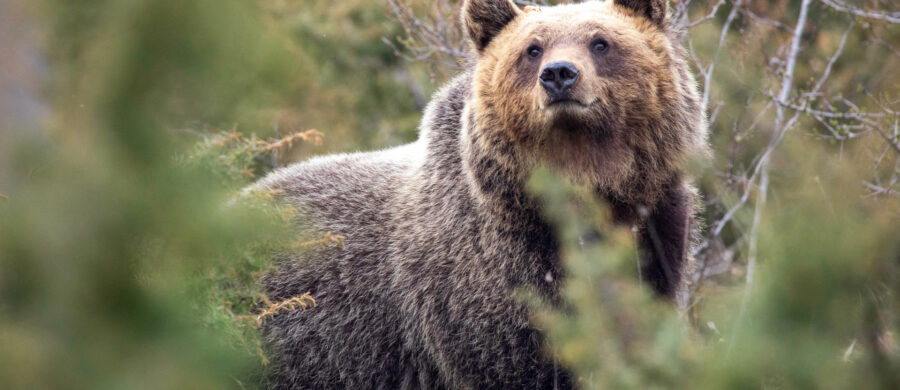
Smell plays an important role in the lives of bears. When a bear moves through its territory, it uses its sense of smell to locate all the thousands of smells it encounters, whether food, water, mates, competitors or dangers. Recent studies have shown that these animals are able to communicate with each other by releasing and laying odorous chemical “trails”. The bear’s sense of smell is over two thousand times better than that of man, although comparable with other carnivores. The area of the brain responsible for the sense of smell (known as the olfactory bulb) is at least five times larger than the same area in the human brain and much more innervated than in other carnivores. The nasal epithelium of bears has hundreds of times more receptors than that of man. Some studies conducted on polar bears have shown that bears use air currents, positioning themselves downwind to pinpoint dead animal carcasses as much as several kilometres away. But bears are also very adept at locating food underground, including rodents, bulbs or insects.
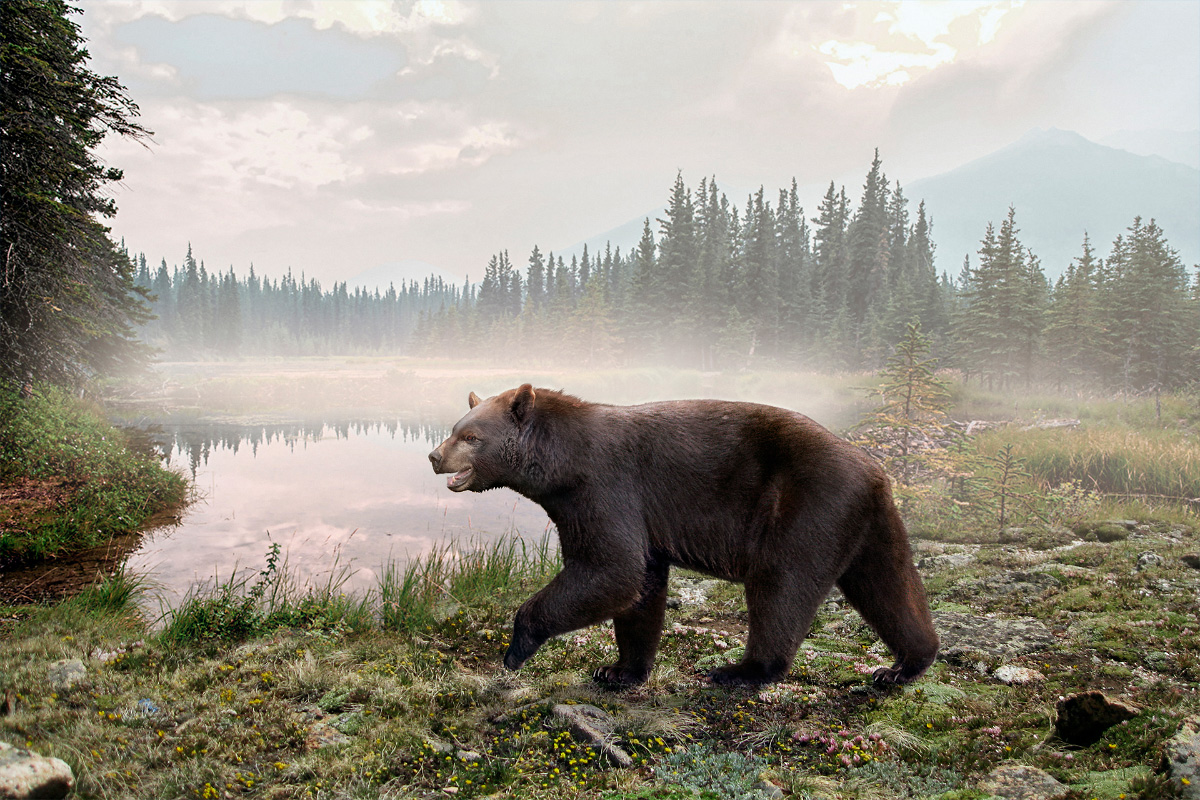
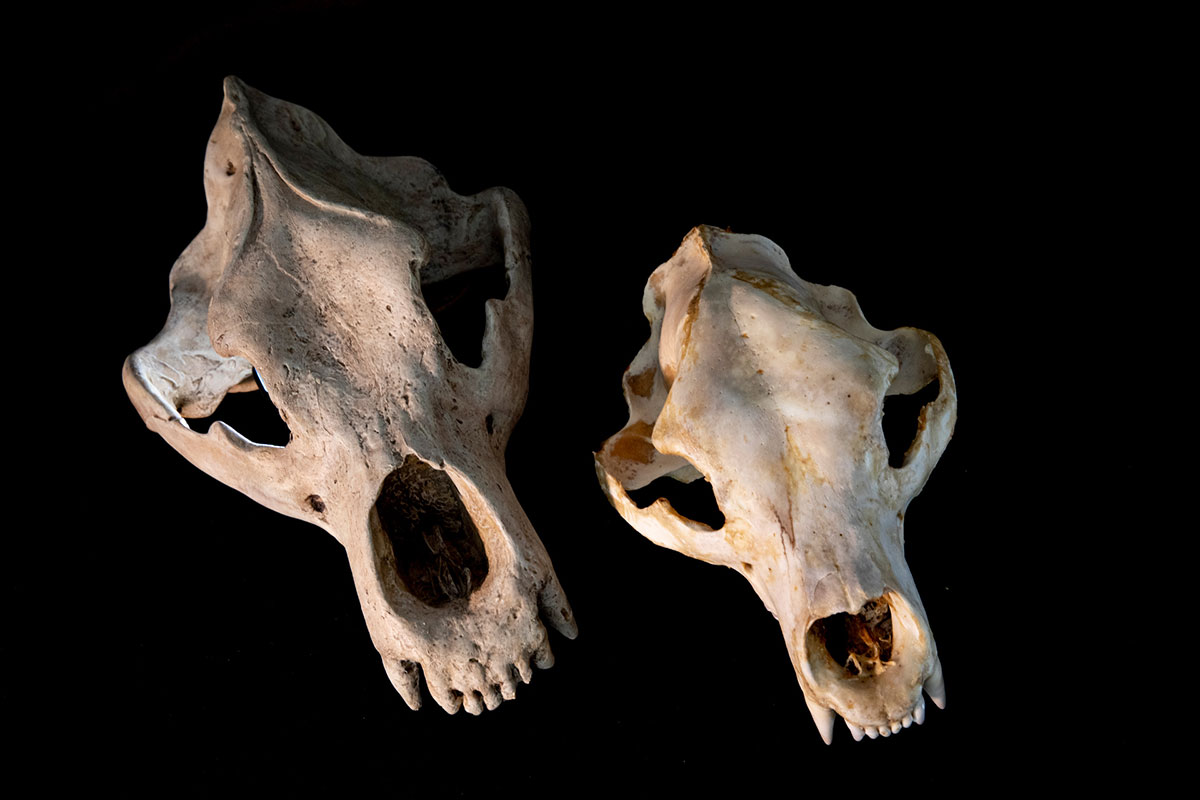
Close-up of a young bear on alert. In order to interpret the signals coming from outside, the animal utilises all its senses simultaneously, although the sense of smell prevails.

Bears have very small eyes compared to the size of their brains and are to all intents and purposes short-sighted. Sight is used by bears in coordination with smell, for example, to identify the most palatable parts of a specific plant. Bears communicate by vocalising with other bears, but also with other competitive carnivores. For example, some studies have shown that bears and lynxes compete for carcasses by vocalising, using their calls to signal their presence and reduce competition. But their hearing also allows bears to locate small prey underground, or find carcasses of wild ungulates by following the sound of hunters’ gunfire. This shows that although their hearing is less acute and well-developed than in other carnivores, it nevertheless plays an important role in the life of bears.

A bear’s whole life revolves around finding food. They must put on weight to hibernate and breed. So it is not surprising that their morphology has evolved to enhance their ability to find food and compete, or that they use mainly the sense of smell to “define” their ecological and social world.

Bears have remarkable cognitive abilities, such as solving problems or using tools, which some scientists believe may have evolved together with their ability to feed on anything.

The long road of bears

The long road of bears

After millions of years of evolution the Apennine bear walks in the shadow of many ancestors

READING TIME 12 MIN

The highly complex evolutionary history of bears is not always easy to “decipher” considering the frequent cross-breeding that occurred between the ancestors of today’s animals.

The phylogenesis of bears has been traced through palaeontology (the study of fossil remains) and genetics (the study of mitochondrial DNA and genetic makeup or genome). The bears alive today have relatively recent progenitors, but to reconstruct their history we have to go back several millions of years, to the subfamily Hemicyoninae and genus Cephalogale in particular. This group appeared for the first time in Eurasia during the mid-Oligocene, about 30 million years ago, from a branch that split off from the line that originated today’s canids. The first representatives of this genus were mostly very tiny, smaller than a fox, although some species could reach almost the size of modern bears. The first bears are thought to have derived from this genus during the Miocene, namely about 20 million years ago. These animals belonging to the Ursavus genus spread progressively through the Asian continent, North America and Europe, originating all today’s bears and their countless predecessors. The first line to break away was the Ailuropodidae subfamily (about 15 million years ago), that of today’s giant panda (Ailuropoda melanoleuca). Subsequently, between six to thirteen million years ago, a second split occurred, originating two other subfamilies: the Tremarctinae and the Ursinae. The former originated several species of bear that proliferated in North America, but the only one still surviving today is the spectacled bear (Tremarctos ornatus), widespread in South America.

BEFORE THE ICE AGE

Numerous bears belonging to the Tremarctinae family thrived in North America, then became extinct. Among the best known is the short-faced bear (Arctodus simus), a giant weighing at least 650 kg with limbs up to two metres long. Arctodus simus was much faster than modern brown bears and could easily reach 90 km per hour.  Reconstructions of the shape of the teeth (the carnassials are still present) and structure of the skull have shown it to be one of the few completely carnivorous bears (in common with the polar bear) and it is believed to have been one of the most powerful predators of bison, deer, horses and sloths during the Pleistocene. (© Roman Uchytel – Prehistoric Fauna)

As for the Ursinae subfamily, starting from Ursus minimus, a common progenitor that appeared about 4-5 million years ago, a first branch split off to originate three species of bear living in the Asian continent today: the Asian black bear (Ursus thibetanus), the sloth bear (Ursus ursinus) and the sun bear (Ursus malayanus). About 3.5 million years ago, a second line then split off in Asia and North America, originating the American black bear (Ursus americanus). About one to two million years ago, two branches then split off from a common progenitor known as Ursus etruscus: the  “dead” branch of cave bears including the well-known Ursus spelaeus and the branch that originated the polar bear (Ursus maritimus) and brown bear (Ursus arctos). The oldest brown bear fossil dating back to about half a million years ago was found in China, from where it then spread to Asia, Europe and North Africa. Brown bear fossils have also been found in Britain. Brown bears made their appearance in Alaska about 100,000 years ago, then spread further south no earlier than 13,000 years ago. Since their separation from the polar bear, brown bears have diversified into at least six groups, or clades, many of which have survived to the present day, thanks to their isolation in refuge areas formed during the Ice Age.

Phylogenesis of the Ursidae family and diversification of brown bears into clades (groups deriving from common ancestors) based on mitochondrial DNA analyses in Europe, Asia and North America. The arrows show the “genetic” exchanges between different species of bear still underway today. The clades originated as a result of isolation during the Ice Age. Research is ongoing and many updates are expected, especially regarding clades 5 and 6. A recent study found that Iranian bears form a separate group.

The bear is the only large carnivore with a predominantly vegetarian diet.

During their evolution, bears became specialised for a diet of herbaceous plants and fruits. Exceptions with a strictly carnivorous diet are the polar bear and a number of extinct species. In bears, the evolution from carnivore to omnivore with a particular predilection for plant food involved elongation of the molars and the transition from transverse to sagittal mastication, giving them greater strength and the ability to shred. The first evidence of an omnivorous diet in the evolutionary line of bears dates back to the Miocene (about 15-12.5 million years ago), with the discovery in North America of bone remains of Aurorarctos tirawa, one of the  “original” bears and a contemporary of Ursavus.

THE GREAT EXTINT PREDATORS

Found almost exclusively in Europe, Ursus spelaeus was one of the largest Ice Age carnivores (3 m high and weighing up to 1000 kg) and also the most vegetarian, as determined by examination of the fossil teeth (reduction of the carnassials and premolars, development of a diastema and molars with larger grinding surface) and analysis of the diet with isotopic techniques based on bone remains. These also confirm that the bear practised hibernation. No valid explanation for the possible causes of extinction has yet been found. Some authors believe it may be associated with the climate changes at the end of the Pleistocene (colder, drier climate), also thought to have led to the disappearance of other large mammals such as the giant deer or cave lion. Others believe that colonisation of their “large” winter caves may have condemned them to long winters without food.

In carnivorous mammals, such as canids, the larger the species, the greater the consumption of meat. Some experts believe the anatomical transition in mastication coincided with the bears’ particular ability to hibernate. This characteristic adaptation allows bears to overcome the ecological limits imposed by their large body size, namely, the need to ingest a considerable quantity of food, enabling them to cope with seasonal fluctuations in the availability of resources or the drastic climate changes that accompanied their evolution. The adaptation of hibernation seems to have appeared in the Miocene as an optional choice, depending on the latitudes where the bears lived and the presence or absence of snowy winters. The two bear species alive today that do not hibernate originated during the Pliocene in the climates of the lower-middle temperate zone of the American continent (spectacled bear) and Indian subcontinent (sloth bear), with the appearance of colder, drier climates and markedly seasonal rainfall patterns. But it was in the cold Arctic climates of the temperate zones during the Pleistocene glaciations that the pronounced seasonality made it obligatory to spend the winter in a state of dormancy, as is still the case today for most living bear species.

AT THE ORIGINS OF THE LONG SLEEP

The discovery and study of the fossil remains of a medium-sized bear, Protarctos abstrusus, in the Beaver Pond fossil site in the Arctic led to a number of hypotheses concerning the appearance of hibernation during the evolution of bears. This species lived in the Pliocene boreal forest about 3-4 million years ago, at the same time as the Ursavus genus, and left no living descendants. Its dentition was still not highly specialised for a herbivorous diet, although the presence of caries confirms the frequent consumption of sugars. Reconstructing the vegetation of the period, P. abstrusus must have consumed large quantities of crowberry (Empetrum nigrum). Its diet seems to have been aimed at accumulating fat, probably in association with a sedentary lifestyle during the winter. This may have been the first species in the history of bears to hibernate. Based on this evolutionary scenario, the modern bears that do not hibernate may have lost this ability at a later date as an adaptation to warmer climates. (© Roman Uchytel – Prehistoric Fauna)

The Apennine brown bear is unique from a genetic, morphological and behavioural point of view

Zoologist Paolo Ciucci tells the extraordinary story of the Apennine bear’s genome. Through DNA mapping, researchers are discovering the weaknesses and strengths of this small population.

Analysis of mitochondrial DNA (transmitted exclusively through the maternal line) has enabled the main phylogenetic lines of brown bears in Europe to be reconstructed, allowing the bears to be classified into genetically distinct population groups. This produced a very complex tree of clades and sub-clades. To put it simply, three main lines can be distinguished in Europe: an eastern line present in Romania, Slovakia, Estonia, Finland and northern Sweden; a north-western line present in the Pyrenees, Norway and southern Sweden; a south-western line distributed over the Alps, Apennines, Balkans, Greece, Bulgaria and Romania. The first brown bear fossils found in Italy date from about 7000-5500 years ago, when bears were probably distributed continuously over the whole peninsula. Recent studies have highlighted the uniqueness of the mitochondrial DNA of Apennine bears, although an affinity with the south-western Alpine-Balkan line has been identified. This apparent contradiction is resolved by research carried out on the whole genome, showing that the Marsican brown bear population has been completely isolated from this line for more than 3000-4000 years..

The isolation, associated with a progressive reduction in numbers, would seem to have begun as early as 8000 years ago and accelerated drastically from 600 years ago until more recent times. The increase in the numbers of humans, deforestation associated with the development of farming and direct mortality at the hand of man were undoubtedly decisive factors in bringing about the decline in numbers and reduction in the distribution area of the bear population. Reproductive and genetic isolation in numerically small populations, intensified by phenomena associated with adaptation to local environmental conditions, can lead to profound genetic, but also morphological and behavioural, changes in individuals. And that is what happened to the bear in the Apennines. Apennine bears, in fact, have a completely different skull structure from other brown bears, greater physiological adaptations to a vegetarian diet and a much more peaceful disposition. Confirming the intuition of naturalist and zoologist Giuseppe Altobello in the early 1920s, the differences observed have led many experts to consider the Apennine bear as a unique subspecies, known as Ursus arctos marsicanus.

A comparison of skulls of the cave bear, Ursus spelaeus (left) and Apennine bear, Ursus arctos marsicanus (right).

The Apennine population has low genetic diversity, high levels of inbreeding and a considerable decrease in effective population size (the number capable of breeding and thus able to produce new individuals). All this can contribute to reducing the capacity of these bears to survive, breed and adapt.

The genome history of bears in the Apennines raises many concerns about the health of this population, although it has made it unique in terms of adaptations.

A bear’s diet

A bear’s diet

For much of the year, bears work hard to put on weight, but in winter they fast

READING TIME 14 MIN

The diet of bears varies greatly throughout the year, as does their appetite and behaviour.

Bears are physiologically adapted to overeat and to convert any excess calories efficiently into body mass. To survive, bears need eight to nine times more energy than other carnivores. Their only goal is to become obese, with the advantage over us that they can do so while remaining healthy. If we ate like a bear, we would suffer from diabetes, heart problems and high blood pressure. In less than seven to eight months, a bear may put on as much as 30-40 kg of weight. But in nature, nothing happens by chance.

American bear expert David Mattson reveals all the secrets of bear obesity. Can we learn anything from the eating habits of these animals? Don’t overdo the protein for sure, but it’s always better to avoid too much sugar and fat.

Bears spend the winter fasting, so during the rest of the year, their diet is critical to their survival and reproductive success

In the Apennines, bears may spend up to five months in the den, a strategy developed to save energy in a season when food is scarce. Between November and December, both males and females enter a lethargic state known as hibernation, not eating, drinking, defecating or urinating . Their breathing and heart rate slow down and the energy costs of an active life are decreased by more than 70%. In order to survive this fast, bears therefore have nothing but the fat reserves accumulated during the rest of the year to rely on. When a bear wakes up, it may have lost up to 20% of its weight before entering the den. So for a bear, it’s better to put on a few extra kilos before the long sleep. But not all bears can spend the winter “in economy mode”. If a female has mated in the spring, when she enters the den, the embryo starts developing again after a period of “quiescence” known as diapause. This culminates between January and February when she gives birth. While the mother is still “sleeping”, the cubs are awake and active. They must be fed and kept clean and warm. So when she wakes, a mother may have already lost almost 50% of her accumulated fat reserves. To successfully survive this delicate phase, a female therefore needs to focus on gaining as much weight as possible during the year.

Some researchers have shown that implantation of the embryo and subsequent development of the foetus only occur in females that have managed to accumulate 20% to 30% of body fat. Cubs are born weighing less than 500 g, but when they leave the den at three to four months old after being nourished exclusively on milk, they can weigh as much as 5-9 kg. Nursing females therefore need to produce milk with a very high fat (about 18%) and protein (about 6%) content and before winter they need to supplement their diet with abundant protein. This enables their offspring to put on weight rapidly, not only in the den, but also during the first few months after birth when the female will have to think not only of feeding her young, but also herself.

A particularly fat female bear in late autumn. Before entering hibernation, a bear’s weight can increase by up to 30%. (Photograph taken in controlled conditions)

To put on weight, bears follow a diet which is both “fattening” and at the same time healthy and balanced

Although classified as carnivores, bears eat far less protein than this definition suggests. To gain weight, their diet needs to be a well-balanced mix of proteins, fats and carbohydrates. An unbalanced diet, for example, lacking in protein with respect to the other macronutrients, would double the maintenance requirement and make it more difficult to gain weight. When protein is lacking, instead of putting on weight, bears lose it rapidly. On the other hand, the same would happen with a high-protein diet, albeit with much more gradual effects over a longer period of time. Several studies in captivity have shown that if bears are able to select their food each day, they choose a mixed diet, with proteins accounting for about 17% of the assimilated energy and the addition of foods rich in fats, or if not available, carbohydrates. In nature, it’s harder to eat an optimum meal every day, not least because the availability of resources varies with the seasons. So the bears balance their diet over a much longer time scale of months rather than days.

The nutritional needs of bears, and thus their whole life, vary with the seasons, adapting to the availability of food.

They accumulate lean mass mainly in spring and early summer and body fat in midsummer and autumn. This diet coincides with the seasonal availability of food. In the first few months after leaving the den, the bears eat foods richer in proteins than energy (herbaceous plants for example), then when fruits ripen in summer and autumn, they have much higher calorie foods at their disposal, providing fats and carbohydrates to help balance the protein excess in spring. This rule is followed by all species of temperate zone bears, from the more “vegetarian” black bears to the more “carnivorous” species such as the grizzly. Due to their smaller size and therefore lower energy requirements, black bears are also able to maintain their body mass during the spring months, or even to gain weight. Considering that a Marsican bear is on average even smaller than a black bear, an animal in the Apennines can probably put on weight throughout the entire year. But that’s not all. Apennine bears have access to a mixed diet rich in high energy foods throughout the year, undoubtedly making it easier for them to stay fit and healthy.

Bears feeding on beech mast, grass and berries. The diet of bears in the Apennines varies greatly with the seasons.

Bears plan their life around what they can find to eat. This means that during the year, their physiology and behaviour may change many times. The timing of these animals is amazing, but evolution is not to be taken lightly! Bears have, in fact, evolved specifically to enable them to optimise resources, time and energy.

In the early summer months, when calorie-rich foods are scarce, bears invest their energy in reproducing, in other words, mating or raising their offspring. During this period, a high-protein diet is beneficial to both males who have to compete with each other and females who have to nurse their young. In this period of “hypophagia”, bears have less appetite and need less energy. In females, after fertilisation, foetal development stops at a few cells. When the season of plenty comes, the bears can therefore concentrate exclusively on feeding, minimising any further expenditure of energy. Summer, in fact, ushers in the period of “hyperphagia”, when the bears’ appetite increases exponentially, as does their energy requirement. With the arrival of winter when food supplies begin to run out, the bears finally stop feeding and leading an active life. Mothers in particular devote themselves solely to caring for their young.

Overview of an Apennine brown bear’s diet, with many of the food resources available in its natural environment according to the seasons (not to scale).

Bears feed on a wide variety of foods varying in weight, energy content and digestibility and must therefore use all their ingenuity to feed efficiently

Bears have a very simple digestive system, consisting of an oesophagus, stomach and small and large intestines. Unlike herbivores such as deer or horses, they therefore lack a specialised chamber (caecum or rumen) where, thanks to symbiosis with bacteria, complex carbohydrates such as herbaceous plant fibres can be digested. Bears in general, and Marsican bears in particular, have few adaptations for a vegetarian diet. These consist of their dentition and skull structure, allowing them to fragment the plant matter in their diet more efficiently, and specific enzymes to digest plants. A bear’s digestion times are therefore very rapid and sufficient to efficiently assimilate proteins, lipids and simple carbohydrates only. So for a bear, meat is 90% digestible, fruits 60% digestible, and grass just 30% digestible. But on the other hand, herbaceous plants are the most common and rich in proteins, although with a lower calorie content. Insects, particularly ants, contain fewer calories than meat, but are easy prey and very high in protein and rare amino acids. Bears know how to exploit the qualities of each food. For example, in the case of herbaceous plants, the limiting factors are poor digestibility and low nutrient content. The bears therefore go in search of the first shoots, or the most nutritious vegetative parts (buds, leaves and roots) which they eat in large quantities. In the case of berries, the limiting factors are mainly size and weight. So in order to obtain a satisfying mouthful, bears have to seek out the richest bushes, or fruits growing in clusters. In either case, having time to feed is a factor in their favour.

Bears retain plant matter for a shorter time than specialised herbivores such as ruminants and they digest it less. On the other hand, they retain meat for about twice as long as plant matter to better absorb its more digestible nutrients. A single-food diet might be very demanding (as well as dysfunctional) for a bear, given that, for the same number of calories, a fawn a few weeks old corresponds to a meal of millions of ants.

Evolution has shaped bears into adaptable and efficient animals, able to feed up to 14 hours a day if necessary. Any interruption can affect their ability to nourish themselves adequately.

BACK
error: Content is protected !!